6 Bowhunting Tactics To Get Deer In Close
The one thing which really qualifies as the name of the game when it comes to bow hunting is getting close to the goods.
Last updated: November 6, 2026 · Originally published August 25, 2017
You can do that by either going to the deer or by bringing the deer closer to yourself. Here are the 6 bowhunting tactics to get deer in close.
Element of Surprise

The first of the 6 bowhunting tactics to get deer in close has to be the element of surprise. A key element when hunting a buck should be never letting the deer know they are even being hunted. That is the one goal all your actions should be revolving around. It takes a significant amount of effort to really achieve that. From post season scouting to hanging tree stands in different wind conditions, trying to stay a step ahead of the deer in your area, it is a nearly impossible task to keep yourself a step ahead of the deer. Try and achieve that with the general deer population so that you can know if you should even go for the real prize — mature bucks.
Ins and Outs

As far as the 6 bowhunting tactics to get deer in close go, perhaps one of the biggest one area which proves to be the most problematic for hunters is the entry and exit routes. A majority of hunters resort to using the path which gives them the least resistance when it comes to deciding their standing spots. The only issue with that is that it puts them right in the path of the deer. This is true for both rough and mountainous terrains and even in easily accessible areas, which are abundant in food sources for the deer.
Bow hunters sometimes owe their laziness to the time which will be wasted trying to avoid bumping into deer. The best approach, however, is to carefully choose your entry and exit routes in a strategic manner so you have the element of surprise. This might mean you will have to setup and alarm earlier and have to work out a hunting plan that starts off before the season even begins, but it can ensure better chances for a good hunt.
Funnel
Choosing that one tree where a mature buck is sure to pass from the large hunting ground is an intimidating task. If you can start breaking things down into areas where a mature buck is likely to be sighted and the areas where a mature buck is less likely to be seen, it can go a long way in helping you decide on the perfect standing spot.
After finding the right area, find the right kind of tree. This can be done by locating the funnels which will drive deer to go past your standing site. The best kind of funnels will leave the deer no other choice but to walk past your standing site.
Some of the natural funnels consist of creek crossings, erosion ditches and basically anywhere steep and gradual terrains meet each other. Deer usually make use of these funnels in order to get from one place to another with the minimum amount of effort. Funnels with a lot of cover are a particular favorite among the mature bucks because they are ever so cautious.
Mock Scrapes

Sometimes the right tree might not be enough. Among the 6 bowhunting tactics to get deer in close is the use of mock scrapes. They are surely to lure your prized buck close enough for the kill shot. Even though it is popularly suggested that mock scrapes are only effective in the weeks leading up to breeding season, they can actually come in handy in the summers as well. Bucks are territorial animals and they get very agitated if there is an intruder in their neighborhood. Setting up a mock scrape will get them out and about.
Scents

Other than in mock scrapes, scents can be used even when you are walking in your hunting area. Leaving a trail of hot doe scent when you are walking in the hunting grounds can cover your own scent as well as giving the buck that crosses your path a reason to follow you thinking of does. Just make sure you lay it down in a way that it doesn’t lead directly to your standing site. You should have a levee of at least 20 yards.
Decoy
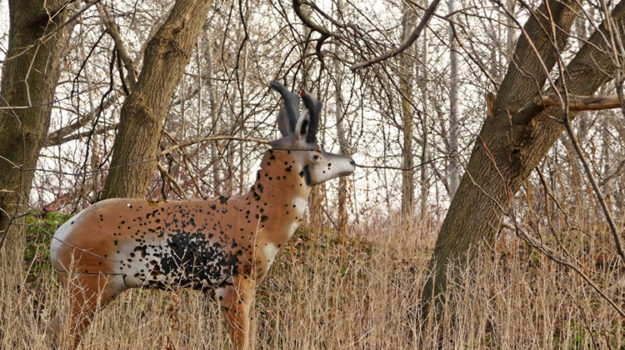
If you really have failed at capitalizing on the above 5 of the 6 bowhunting tactics to get deer in close, you shouldn’t worry. There’s the last one remaining: decoys. These come in handy in the peak of the rut when wary bucks cannot resist the temptation of making love or the prospective of a good fight. Place the decoy strategically in a high population density area for deer. Set yourself up in a good tree and the ideal wind conditions and you will be good to go.
50 to 150 yards was the top answer, and more than half of you have taken a deer past 150 yards.
Reader Favorites
Field-to-table reference desk
From tag to table — official season dates for all 50 states, plus safe doneness temps for your harvest.
| Species | Archery | Firearm |
|---|---|---|
| Deer | Sep–Oct | Nov |
| Elk | Sep | Oct–Nov |
| Turkey | — | Apr–May |
All 50 state wildlife agencies, plus how seasons, tags and licenses work.
Find your state → Network| Doneness | Target |
|---|---|
| Rare | 125–130°F |
| Medium-rare | 130–135°F |
| Well-done | 160°F+ |
Safe pull temps for venison and steak, from Popular BBQ.
View full chart →


![Large festive bowl of ground meat on a rustic wooden table in a Christmas kitchen setting, with a fire burning in the background and holiday decor nearby.] ,](https://popularoutdoorsman.com/wp-content/uploads/2026/11/Ground-venison-768x432.jpg "Ground venison - Popular Outdoorsman")