Duck Season Dates 2026-27: Every State, Zone and Split
Every state’s 2026-27 regular duck season, zone by zone and split by split, read from each state’s own regulations, with the federal limits that set them.
Hunting tips, fishing times, season dates and field-tested gear, every Tuesday.
Unsubscribe anytime.
✓ You're in! Check your inbox to confirm.

Every state's 2026-27 regular duck season, zone by zone and split by split, read from each state's own regulations, with the federal limits that set…
Read More →From tag to table — official season dates for all 50 states, plus safe doneness temps for your harvest.
| Species | Archery | Firearm |
|---|---|---|
| Deer | Sep–Oct | Nov |
| Elk | Sep | Oct–Nov |
| Turkey | — | Apr–May |
All 50 state wildlife agencies, plus how seasons, tags and licenses work.
Find your state → Network| Doneness | Target |
|---|---|
| Rare | 125–130°F |
| Medium-rare | 130–135°F |
| Well-done | 160°F+ |
Safe pull temps for venison and steak, from Popular BBQ.
View full chart →Reader Favorites
Every state’s 2026-27 regular duck season, zone by zone and split by split, read from each state’s own regulations, with the federal limits that set them.
Hang time is a temperature question. One row per temperature band, from below freezing to above 60°F, with the extension service or food safety agency behind each number.
Thirty-eight states require hunter orange in their firearm seasons, six only on some land or for some hunters, and six not at all. Find your state’s amount, who it covers, whether pink counts, and the rule itself.
Deer hunting tips for every phase of the rut, counted from the peak breeding date where you hunt. State agency and university data on when bucks move, where they go and what works in each phase.
Deer shooting hours for all 50 states, each read from the state’s own rule or official guide, plus what happens to your clock times when daylight saving time ends the first Sunday in November.
Deer processing cost runs a median $145 for a skinned, cut and wrapped whitetail across 24 flat-fee shops in 14 states. Here is what processors charge by region, and what the add-ons run.
When to blow a grunt call, when to rattle and when to stay quiet, built on the one real field study of antler rattling and Missouri’s deer-calling guidance.
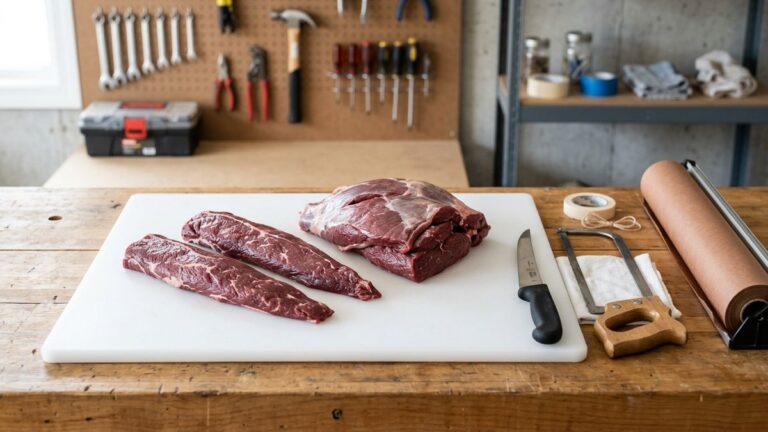
Skin, quarter and butcher a deer at home, with the cooling, aging and freezer numbers from Wisconsin DATCP, Penn State and NDSU Extension, a printable cut sheet and Ohio DNR’s measured meat yield.
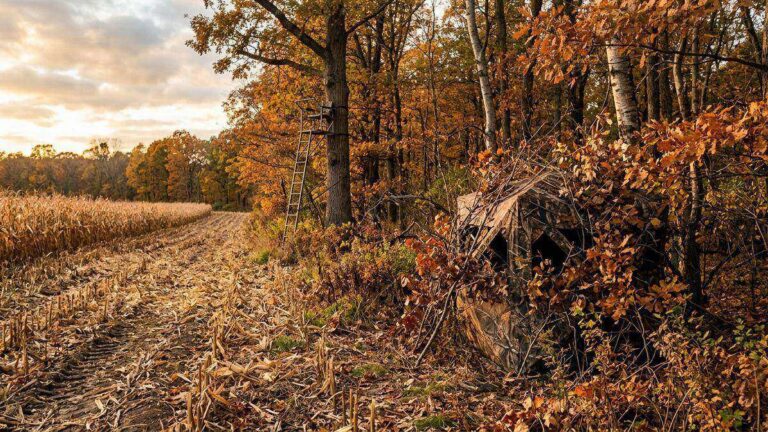
When a ground blind beats a tree stand and when it does not, a decision table that includes box blinds, ground blind setup steps from NDA, and a pre-climb safety checklist from Minnesota DNR, Georgia DNR and the TMA.
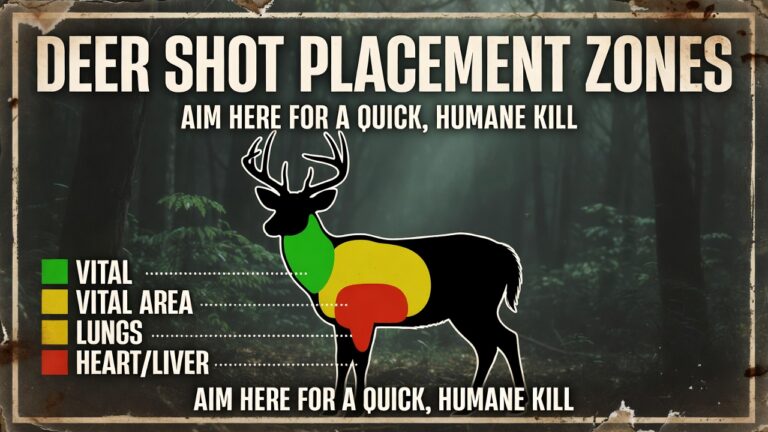
Where to shoot a deer from every angle, rifle and bow: the double-lung zone, the shots to pass on, and how long to wait before tracking.
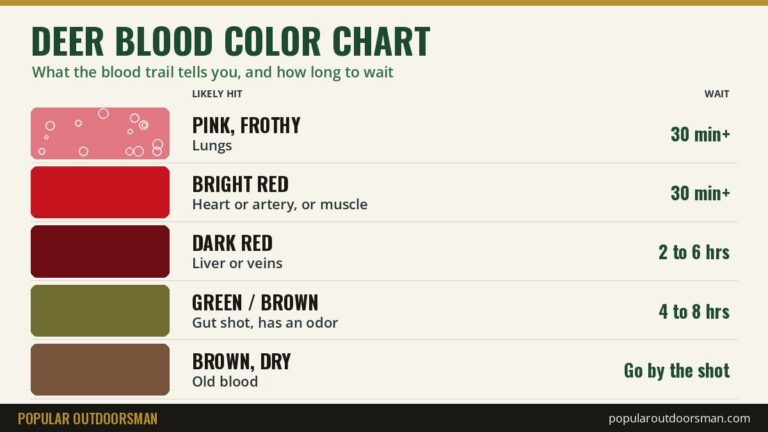
A deer blood color chart for hunters: what pink, bright red, dark red and green-flecked blood mean, how long to wait, and how to follow the trail.
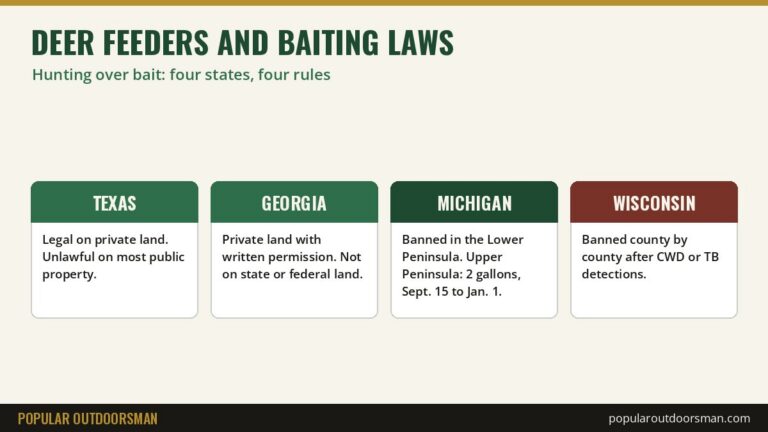
Deer feeder types, what to put in them, how to set one up, and why the baiting rules in Texas, Georgia, Michigan and Wisconsin are so different.