How to Age a Deer on the Hoof: Buck Age by Body
Quick Answer
Last updated: September 15, 2026 · Originally published September 6, 2022
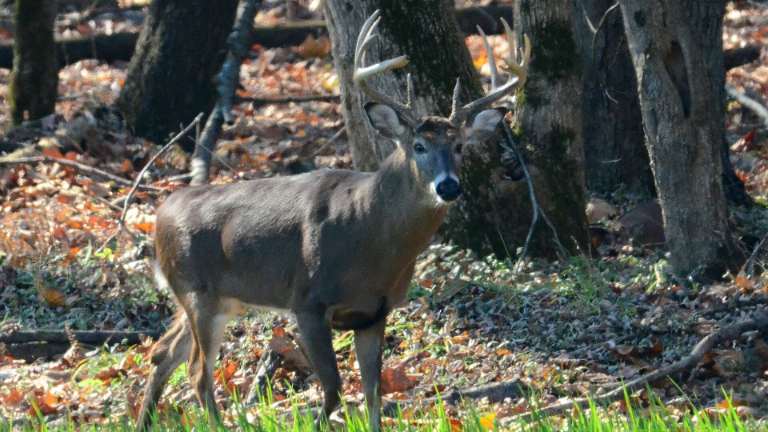
You can estimate a live buck age by body shape, not antlers. A 2.5-year-old looks lean and racehorse-like — thin waist, flat back, neck about as wide as its face. A 3.5-year-old is bigger up front (deeper chest) with a still-thin waist, like a linebacker. A 4.5-year-old and older is blocky front and back, with a thick neck that blends into the shoulders, a sagging belly, swayed back, and short-looking legs.
Field-judging a buck age: quick facts
How do you tell a buck age in the field?
By body characteristics, not antlers: look at the waist, chest depth, neck-to-shoulder junction, belly sag and back line — these change predictably as a buck matures.
What does a 2.5-year-old buck look like?
Lean and athletic — a thin waist, flat back, and a neck roughly as wide as its face; a racehorse build, around 150 lbs.
What does a 3.5-year-old buck look like?
Bigger in the front than the back — a deeper chest with a still-thin waist, a linebacker look, around 170 lbs, with a distinct neck-to-shoulder junction.
How do you spot a mature (4.5+) buck?
A blocky, rectangular body front and back, a thick neck that blends low into the chest, a sagging belly, a swayed back, and legs that look short for the body.
How to age a deer comes down to one rule: you cannot age a buck by his antlers, and the hunters who try are the ones who shoot a 2½-year-old every November and wonder why the neighborhood never grows a giant. Age lives in the body — the legs, the belly, the way the neck runs into the shoulders. Antlers are the last thing you should look at.
Here is how to read a buck in the seconds you actually get, and how to confirm it later with the jawbone.
Why body, not antlers
Antler size tracks age loosely and nothing else tightly. Genetics, soil, rainfall and how hard the deer got hit by winter all push a rack up or down. A well-fed 2½-year-old on river-bottom farmland can carry more bone than a 5½-year-old off a dry ridge. The National Deer Association is blunt about it: do not lean on antler size to age a deer, because big antlers show up on young deer and small antlers show up on old ones.
Body shape is far more honest. A deer’s frame fills out on a schedule, and the parts fill out in a fixed order — legs first, then shoulders and neck, then chest and belly last.
The five looks, by age
1½ years — a doe with antlers
Long legs, thin neck, slim body, and a lanky, unfinished look. There is a clear line where the neck meets the shoulders even in the rut. Antler spread is usually narrower than the ear tips. If your first thought is “that’s a doe” and then you see bone, you are looking at a yearling.
2½ years — the racehorse
Legs still look too long for the body. Some shoulder muscle has arrived and the neck swells a little during the breeding season, but the waist is thin and the whole animal looks athletic rather than heavy. Antler spread often reaches the ear tips. Tarsal glands show moderate staining.
3½ years — the torso catches up
The legs finally look proportional. Shoulders are muscled, the neck swells hard in the rut, and the waist is still lean, which gives that classic front-heavy racehorse silhouette. This buck is carrying 50 to 75 percent of the antler he will ever grow, and the tarsal staining is substantial.
4½ years — legs look short
The body has outgrown the legs. Shoulders are fully muscled, the neck swells heavily enough in the rut to blur into the chest, and the belly line has dropped to about the level of the brisket. He is at 75 to 90 percent of his antler potential. Tarsal staining is heavy and often runs down the leg past the gland.
5½ years and older — the pot belly
Short legs, a deep chest, a sagging belly and a back that has started to swing. Loose skin at the brisket and around the face. The whole deer looks rounded rather than athletic. Now, and only now, is he showing 90 to 100 percent of what his genetics allow.
| Age | Legs and body | Neck in the rut | Antler potential reached |
|---|---|---|---|
| 1½ | Long legs, slim body, lanky | Thin, clearly separate from shoulders | Small fraction |
| 2½ | Legs still long, thin waist | Slight swelling | Well under half |
| 3½ | Proportional legs, lean waist, front-heavy | Highly swelled | 50–75% |
| 4½ | Legs look short, waist drops to chest level | Heavy swelling into the chest | 75–90% |
| 5½+ | Pot belly, sagging back, rounded | Neck and chest read as one piece | 90–100% |
What throws people off
Three things wreck an on-the-hoof call more than anything else.
- The calendar. A buck in early October and the same buck on 8 November are two different-looking animals. Rut swelling adds a year to your estimate if you are not careful, and a post-rut buck in late December looks worn down and older than he is.
- The angle. Judge from the side. A deer walking straight at you hides the belly line and the back, which are the two things that separate a 4½ from a 5½.
- The antlers. Again. Cover the rack with your thumb and the call gets easier.
How to age a deer after the shot
Once the deer is down you can stop guessing. Aging by teeth is the standard method, and the first two calls are close to certain:
- 1½: the third premolar still has three cusps, or is in the middle of being replaced. That deer is a yearling, full stop.
- 2½: all permanent teeth are in, and the back molar shows almost no wear.
- 3½ and older: you are reading wear — how much of the dark dentine shows against the white enamel on the molars. Wear rates vary with soil and diet, so treat everything past 3½ as an estimate, not a fact. Most state wildlife agencies will age a jawbone for you at a check station.
Watch it done on live deer
The National Deer Association’s “Aging Deer in the Field” runs 31 minutes and uses footage of dozens of live, wild bucks, produced with The Bearded Buck. It ends with a 20-buck test, which is the part worth your time — calling them yourself is how the skill actually sticks.
Why any of this matters
Two reasons. The first is that letting a 2½-year-old walk is the only way anybody ever sees him at 4½, and that is where the antler growth actually happens — the jump from 3½ to 5½ is most of the rack. The second is that an accurate age makes your own scoring honest. Once he is down, our deer antler scoring guide and calculator will tell you exactly what he measures.
Common questions
How accurate is aging a deer on the hoof?
Experienced hunters get 1½ and 2½-year-olds right most of the time, because those two look obviously unfinished. Past 3½ the honest answer is that you are sorting deer into “young”, “middle” and “mature” rather than naming an exact year.
Can you age a doe the same way?
Not reliably. Does do not carry the same neck and shoulder changes, so body aging on does is guesswork past the yearling stage. Teeth are the practical method for does.
Does antler spread inside or outside the ears tell you the age?
It is a hint, not an answer. Spread inside the ear tips usually means a yearling and spread past them usually means 2½ or older, but genetics move that line enough that it should never be your only read.
What age is a mature buck?
Most managers call 4½ mature, because that is the point where the body is finished and the antlers are inside 90 percent of their ceiling. A 5½ or older buck is what most hunters mean by “old”.
Keep reading on Popular Outdoorsman
- How to score deer antlers, with a working calculator
- Six bowhunting tactics that get deer in close
- First-time deer hunting guide
- How to tell if a deer has chronic wasting disease
- Venison recipes by cut, on Tag to Table
Aging a buck on the hoof takes a long, unhurried look, and that means being in the stand when deer are moving. The whitetail movement forecast for your county lays out the next seven days hour by hour.
Reader Favorites
Field-to-table reference desk
From tag to table — official season dates for all 50 states, plus safe doneness temps for your harvest.
| Species | Archery | Firearm |
|---|---|---|
| Deer | Sep–Oct | Nov |
| Elk | Sep | Oct–Nov |
| Turkey | — | Apr–May |
All 50 state wildlife agencies, plus how seasons, tags and licenses work.
Find your state → Network| Doneness | Target |
|---|---|
| Rare | 125–130°F |
| Medium-rare | 130–135°F |
| Well-done | 160°F+ |
Safe pull temps for venison and steak, from Popular BBQ.
View full chart →