Why Millennials Should Learn to Hunt
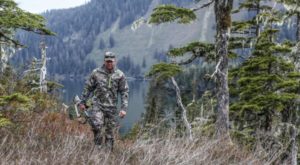
“Snowflakes,” Hell. The Millennials are hunting and conservation’s best hope.
As Generation X ages, we’re learning that one of the great pleasures of middle age is mocking the next generation for being a bunch of oversensitive crybabies…present company definitely included…but the fact of the matter is that the Millennial generation is the best hope for the great American tradition of hunting and the future of our wild spaces. It’s not just because they’re going to be here when we’re gone, either. Millennials as a generation may have their work cut out for them, but their hearts are already in the right place…now let’s get their heads and hands there, too. Here’s why the Snowflake Generation can (and should) become a Conservation Avalanche.
Hunting is the original farm-to-table way to eat.
“Farm-to-table” and “locally sourced” are two of the biggest buzzphrases to come out of the generation born in the 1980s and early 90s. Although sometimes those phrases make my eyes roll so hard I am able to witness my own conception (gross, Dad), here’s the thing: The annoying hipsters have a very good point. It’s called the “locavore” movement, and what it seeks to do is to reduce the amount of non-renewable energy (gasoline) that America needs to move food from one part of the country to the other. If what you’re doing is taking a single deer from your back yard and spending all winter eating it, then what you’re doing is honoring the heart and soul of the locavore movement.
Hunting connects us to the land as little else can.
A lot of what drives the Millennial obsession with the “locavore” movement is a desire to return to authenticity. What they’re looking for is a living experience that isn’t an injection-molded copy of the same strip-mall you can find in every suburb…and that’s a wonderful thing. What non-hunters may not know is that nobody loves and cares for their little patch of Earth like hunters do. Hunters walk their leases and fields in and out of season, scaring off poachers and doing little things to take care of it and the animals that live on it.
So many Millennials were born into a world of little boxes on the hillside, all made out of ticky-tacky and all looking just the same. No wonder they hunger and thirst for a real connection to the Earth…and hunting is what will make that happen. Hunting is what connects us to our heritage and our place in the food chain, and it solidifies our responsibility to the land that sustains us.
Hunting can sustain you during tough times.
The advent of the COVID-19 pandemic has, hopefully, pulled the wool off America’s eyes about just how little it really takes to disrupt our food supply chains. There’s nothing like walking into a grocery store and seeing the butcher counter picked 100% bare of every single speck of fresh protein to make a hipster wonder if those “crazy preppers” don’t have some excellent points of our own. Going home and smugly inspecting the contents of your freezer–shall I start with venison backstraps, or do I want pheasant tonight?–is another of the great joys of the middle-aged hunter…but I’m sure a younger, fitter, more sharp-eyed Millennial could really turn my smugness into envy if he or she wanted to. Fact is, it doesn’t take a global pandemic to make you wish you had a freezer full of healthy, antibiotic-free meat. Anyone would want that (even if they also want to put a barbell through their septum like some kind of prize bull but whatever).
Millennials can and should get interested in meat hunting…let’s do everything we can to help them.




Nice article, and a very timely one, for me at least!
I am, for the first time in my sixty-plus years, very seriously considering hunting!
I’m sort of focused on starting with squirrel hunting.
It was this whole virus thing that started me thinking.
For more than thirty years I have been acquiring numerous guns, both pistols and rifles, but I’ve never shot anything but paper targets!
Thank you.
I stopped large game hunting (elk and mule deer) in the late 80’s. Not from any tree hugging reason, but simply because it was fiscally prohibitive for me. The BLM has laid me off. I started back to school under Federal Dislocated Worker provisions, and I had a family of 4 with another on the way. Spending $300+ for the chance of getting my tag filled, was a gamble I was reluctant to make. After graduation and starting a second career, I was never able to get the time off to return to it (more senior employees always had 1st vacation picks).
I stopped Pheasant hunting in 2004, mainly because the relatives that had good land, died off or retired from farming. Many of the independent farmers in the area are gone, as it’s now corporate owned land, and most do not allow hunting anymore (for whatever reason).
Now, in my 60’s and with degenerative joint disease, it’s no longer an option for me. I simply am incapable of sustaining the physical effort hunting takes. Do I miss it? Yes, especially Pheasant season. One might skunk out getting a Bull, Cow, Buck or Doe from year to year, but I never failed to hit the limit with the birds.
I agree though, it’s up to the next generation to continue the sport and conservation that hunting ensures, and it’s up to us Auld Farts to pass that lesson on.
I don’t disagree with the overall point of the article but be aware that if the numbers are crunched, it may be better for the environment to grow a lot of food where conditions are more ideal and ship it in a relatively efficient 18 wheeler or train car than for 100 people to grow stuff close to you and all drive it 50 or 100 miles in their pick up truck.
With a downturn in business in 1972, my family had protein all winter from a deer we obtained in the Manzano Mtns behind our house.