Tips and Gear for Duck Hunting
Duck hunting is a favorite sport for many people across the country.

Last updated: November 6, 2026 · Originally published January 25, 2018
Here we have prepared a list of tips and gear for duck hunting that should be helpful for both newcomers and serious campaigners in the sport.
Scout the Area

Scouting the grounds can make or break the hunt. Scouting lets you know the spots the birds are using for feeding and resting.
Many people scout the hunting ground one day before the actual hunt. This helps pick a good spot close to the feeding area.
Experienced hunters usually set up at high ground. This allows a good coverage of the ground and a chance to observe the ducks. Familiarize yourself with their flying pattern before taking a shot.
Conceal Yourself Properly
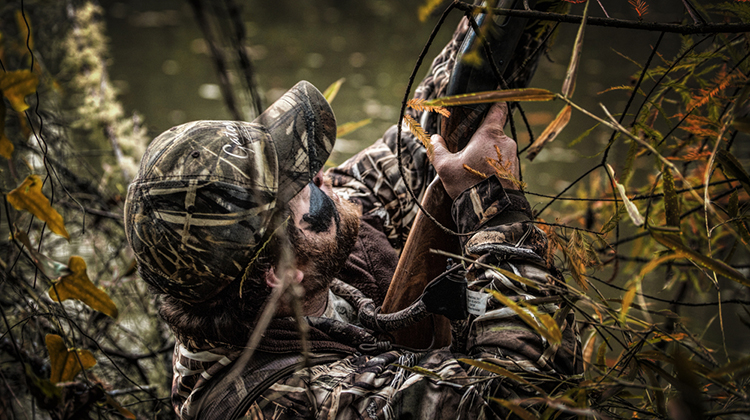
Ducks are very alert to danger with a keen sense of detection to movement on the ground. The slightest bit of movement and the birds will stir and fly, making it extremely difficult to aim or shoot.
Using layout or pit blinds lets you become mostly invisible to the ducks. Most hunters also use a camouflaged layout to hide and blend in with their environment.
Another important thing is to make sure you don’t make any sudden movements, noise or anything that can alert the birds to your presence.
Smart Use of Decoys Where Possible

Setting up proper decoys is very important in duck hunting. Good decoys are placed in small groups with each group well spread out from the next, randomly placed and facing in different directions.
If you are hunting in a big, open area, then you can use more decoys. In a smaller, tightly packed area, use fewer decoys. Birds should be given enough space to land and move around freely. When setting up decoys, be smart and creative.
Take Your Time Shooting

Unlike most other hunting sports, duck hunting is all about patience and timing. You can spend hours watching the birds moving, before even raising your gun to take aim. More than any other sport, duck hunting requires you to make every shot count.
This is because if you shoot and miss, the birds will become aware of danger in the area. It could be hours before they settle back, if at all. It is far more difficult to hunt wary birds than unsuspecting ones.
If you are hunting alone, you might be able to take a shot sooner. In group hunting however, it becomes tricky as some people might not be ready. Use a proper way to communicate when calling out the shot.
Gear for Duck Hunting
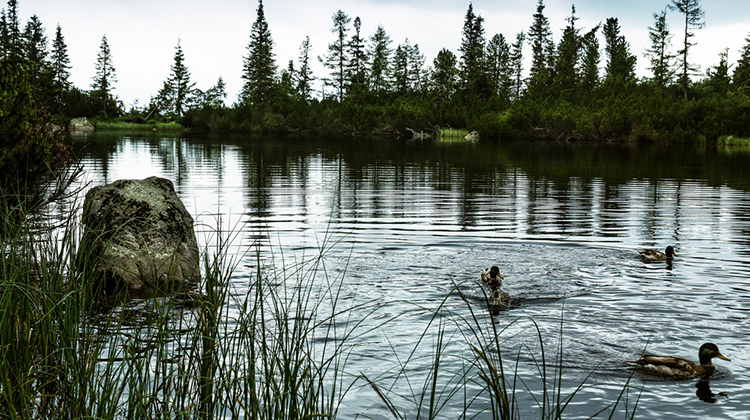
Some of the must-have gear you will need for duck hunting is listed here.
Duck Hunting Blind
The first thing you need for duck hunting is a good blind that conceals your presence to the birds.
A good blind is one that blends in naturally with the hunting ground and doesn’t look out of place. It matches your outfit and should be big enough to give cover and moving space while not so big that it becomes conspicuous for the birds.
A Semi-Automatic Shotgun

A semi-automatic is a good weapon of choice for duck hunting. This type of gun has lower recoil than a shotgun and can be set on burst mode for a good spread which should get you a kill even if your aim is not perfect.
Some of the better ones include Remington’s Versa Max, Beretta’s A400, Browning’s A5 and Benelli’s Super Black Eagle II.
Duck Hunting Waders and Boots

Duck hunting is a sport of patience and you will probably be spending hours sitting and twisting in wet, muddy and messy terrain before getting success. This makes a great pair of waders a must-have for duck hunting.
You will also need a thick pair of hunting boots to retrieve the birds from water after a successful shot.
Duck Calling Whistle

You will not be very successful on a hunt without a duck call. You should carry a good, clean wooden duck call around your neck for attracting the birds near your hiding spot.
Duck and Goose Hunting Decoys

Nothing beats properly placed decoys in attracting ducks and geese. You can use different combinations for the best result. Having a variety of decoys gives you a better chance of success compared to using decoys that are all the same type.
Motorized Decoys

Motorized decoys are considerably better than stationary ones. They give a more realistic look and feel, easy to set up and usually similar in price to regular decoys.
Camouflage Backpack

A backpack will let you fit the necessary equipment like blinds, decoys and ammo inside while keeping your gear easily accessible.
Net and Cordage

Carrying a string of rope and strong netting can always come in handy during a hunt. You can set up a net trap in tree branches or use it as a net blind to give you cover from an angle.
50 to 150 yards was the top answer, and more than half of you have taken a deer past 150 yards.
Reader Favorites
- 10 Must-Have Tools for Survival While Camping
- What Kind of Hunting Do You Do With a Shotgun?
- Important Deer Hunting Tips for a Better Hunting Experience
- Safety Tips to Create Better a Hunting Experience for Everyone
- Campfire Cooking Equipment You Can’t Live Without
- The Ultimate Hiking Gear Checklist to Bring On a Hike
Field-to-table reference desk
From tag to table — official season dates for all 50 states, plus safe doneness temps for your harvest.
| Species | Archery | Firearm |
|---|---|---|
| Deer | Sep–Oct | Nov |
| Elk | Sep | Oct–Nov |
| Turkey | — | Apr–May |
All 50 state wildlife agencies, plus how seasons, tags and licenses work.
Find your state → Network| Doneness | Target |
|---|---|
| Rare | 125–130°F |
| Medium-rare | 130–135°F |
| Well-done | 160°F+ |
Safe pull temps for venison and steak, from Popular BBQ.
View full chart →