Starting a new hobby or a new sport means you have to ensure you have the right supplies and gears.
Last updated: November 6, 2026 · Originally published November 30, 2017
If you have decided to start fishing, you need to invest in the essential tools to get you started. Once you have mastered the basics, you can move on to advance gear and supplies. Here is the recommended fishing gear for beginners to get you started on your new hobby:
Reel & Rod
There are many ways of catching fish like using a cage or a net. However, we are assuming you want to go for the classic method – using a reel and rod. There is a wide range of high quality reels and rods available in the market. To ease your confusion, you should begin with a sturdy basic rod with a reel attached. This is a no-frills and simple option that you would be able to use for years.
How do you string a fishing pole?
Lay the rod flat, open the bail and run the line through the guide closest to the reel. Tie it to the spool with an arbor knot, close the bail, and reel on under steady finger tension until the line sits about 1/8 inch below the spool lip. Thread the remaining guides and tie on your hook. (Massachusetts Division of Fisheries and Wildlife video)
Line & Hooks
Fishing rods typically comes with a line and hooks. Whether it does or doesn’t come with line and hooks, you would still need back up. The basic and simple fishing line most commonly used is a monofilament which is an effective all-purpose line. It is best to avoid using embellished and fancy hooks in the start. Invest in basic and simple products for both line and hooks.
Bait
It is highly unlikely that you would be able to capture a fish without using bait! The most common is live baits. You can opt for mealworms, grasshoppers, maggots, grubs, or earthworms. You don’t even have to buy bait; just dig in your yard to collect worms. If you don’t want to get your hands dirty or don’t have a yard, you can easily get live baits from any bait shop.
Bobbers
Also known as floaters, bobbers assist you in determining when you get bites from a fish. A bobber will sink when a fish takes a bite. The minute this happens, you have to reel in the catch. The most commonly used bobbers are round white and red plastic ones. A slip bobber is another type of bobbers which is typically used by advanced users.
Sinkers
A worm and a hook are too light to sink much deeper. It is essential to add in a weight to your fishing rig so that you can go compensate for this restriction. A sinker helps in adding that extra weight as they are made from lead. However, lead sinkers are being outlawed for environmental reasons. Other sinker options include bismuth, steel, tungsten and brass. Make sure you have a few extra ones as you are bound to lose some while fishing.
Plastic Worms
Although live baits are most effective, it’s always recommended to have a pack of plastic worms with you, especially in case of bass fishing. Plastic worms come in a wide range of sizes and colors. The easiest to use are the plastic worms with long tails.
Lures
Usually, a worm and hook can be enough for your fishing needs. However, in some cases you might want to utilize some advanced lures to pump up your fishing game. There are countless kinds of fishing lures to select from – spoons and spinners, top water lures, and minnow imitations are a few examples. Each lure type is created to behave in a specific manner to attract the attention of the fish. For instance, large and medium sized fishes prefer munching on minnows, and many fishes get attracted to the spinners which create a spinning action when tossed into water. There is no right type of lure; it is more of a personal preference. Try out a few to determine which one works well for you.
Needle Nose Pliers
You would need this to take out the hooks from the fishes you catch.
First Aid Kit
You, hopefully, won’t experience any major injuries or medical emergencies while fishing but small cuts and bruises are possible. For instance, a hook getting caught in the thumb, or scraping your knee if you fall down or other such small injuries. For such incidents, it is always recommended to have a first aid kit with you. Add in a waterproof medical tape, small bandages, Neosporin, and some band aids. This should be enough to tackle any fishing related injuries.
There is no need for a huge or multi layered tackle box if you are a beginner. Get a small container and add in all this basic fishing gear. Keep your box organized and updated so you can go fishing instantly whenever you want. As you start getting a hang of it, you can try out advance gear to take your fishing game to the next level.
Popular Outdoorsman reader poll
Where do you aim on a broadside deer?
Thanks, your vote is in. Results show here next week. Get them first in the Field Brief: sign up free →
Last week’s results
How far was your longest shot on a deer?
50 to 150 yards ★31%
150 to 300 yards28%
Over 300 yards26%
Under 50 yards15%
50 to 150 yards was the top answer, and more than half of you have taken a deer past 150 yards.
Safe pull temps for venison and steak, from Popular BBQ.
View full chart →
James Nicholas
NFA Firearms Manufacturer & Professional Gunsmith
The XDMAN has a talent for taking complex firearms subject matter and breaking it down into an easy-to-understand format that all experience levels can relate to. James is an 07/02 NFA Firearms Manufacturer, a Professional Gunsmith with over 20 years of experience, and a Firearms Writer, Photographer and Firearms Expert. Connect with him on Instagram, X, and Facebook as @therealxdman.
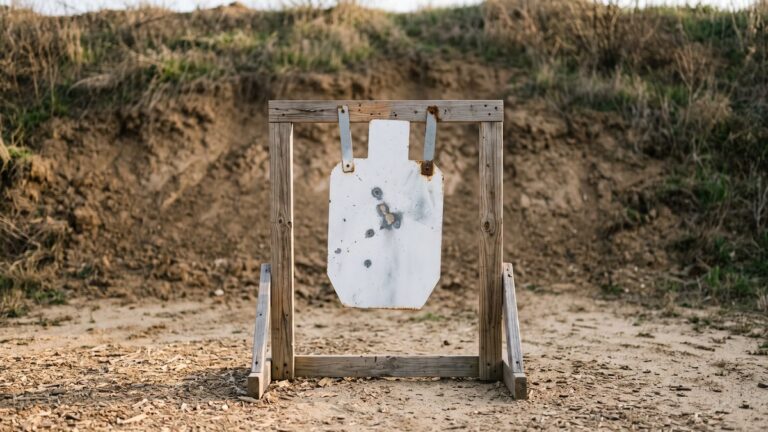
Shooting Targets USA’s published minimum distances for steel, row by row from .22 to magnum rifles and for both plate thicknesses, plus the ammo that never touches steel and how to hang a plate so the spray goes down.
The 360 Buckhammer in Magnum Research’s 10-inch BFR revolver: maker specs, what the velocity drops to from a revolver, and how five Midwest handgun deer rules read against it.
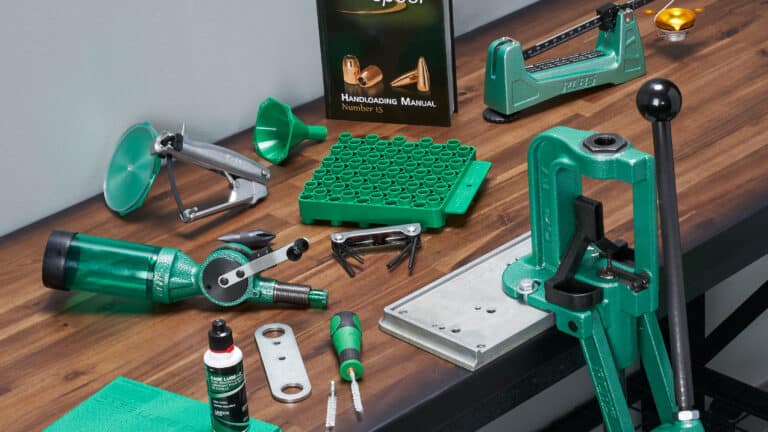
RCBS’s Rock Chucker Supreme Elite Kit carries 13 items. Here is what each one does, what is not on the list, and the shell holder your cartridge needs.
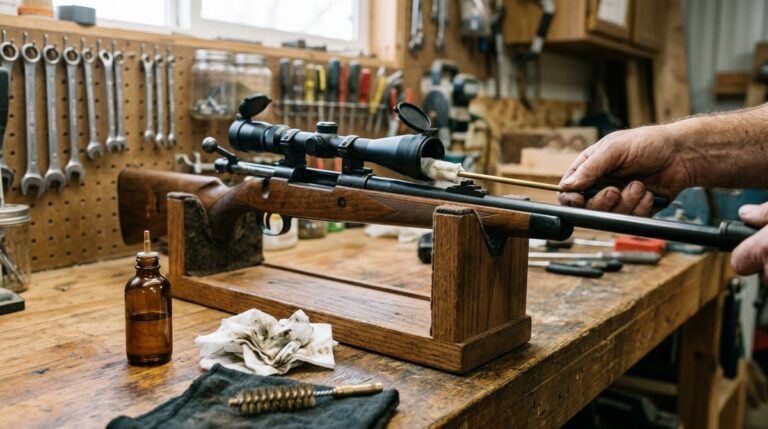
How to clean a rifle: a simple field-to-bench routine that keeps your zero, stops corrosion, and takes ten minutes — with the bolt-action step-by-step and the gear that does the work.
Yes — .300 Blackout is at its best on hogs, deer, and predators at woods-to-field range, and it is the easiest centerfire to shoot suppressed. The complete suppressed hunting setup: load, rifle, suppressor, glass, and field gear.
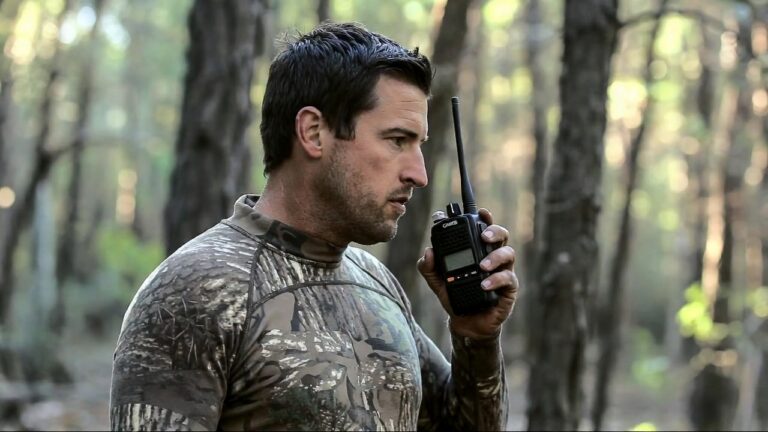
●First SeasonNew to this? Start here.Last updated: November 6, 2026 · Originally published September 28, 2026 GMRS radios compared for 2026 on range, family use and licensing, with the practical limits that manufacturer range claims never mention. popularbbq.comSmoked venison backstrap: pull at about 128°FRest to 130 to 135°F for medium-rare, smoke at 225°F, then sear…