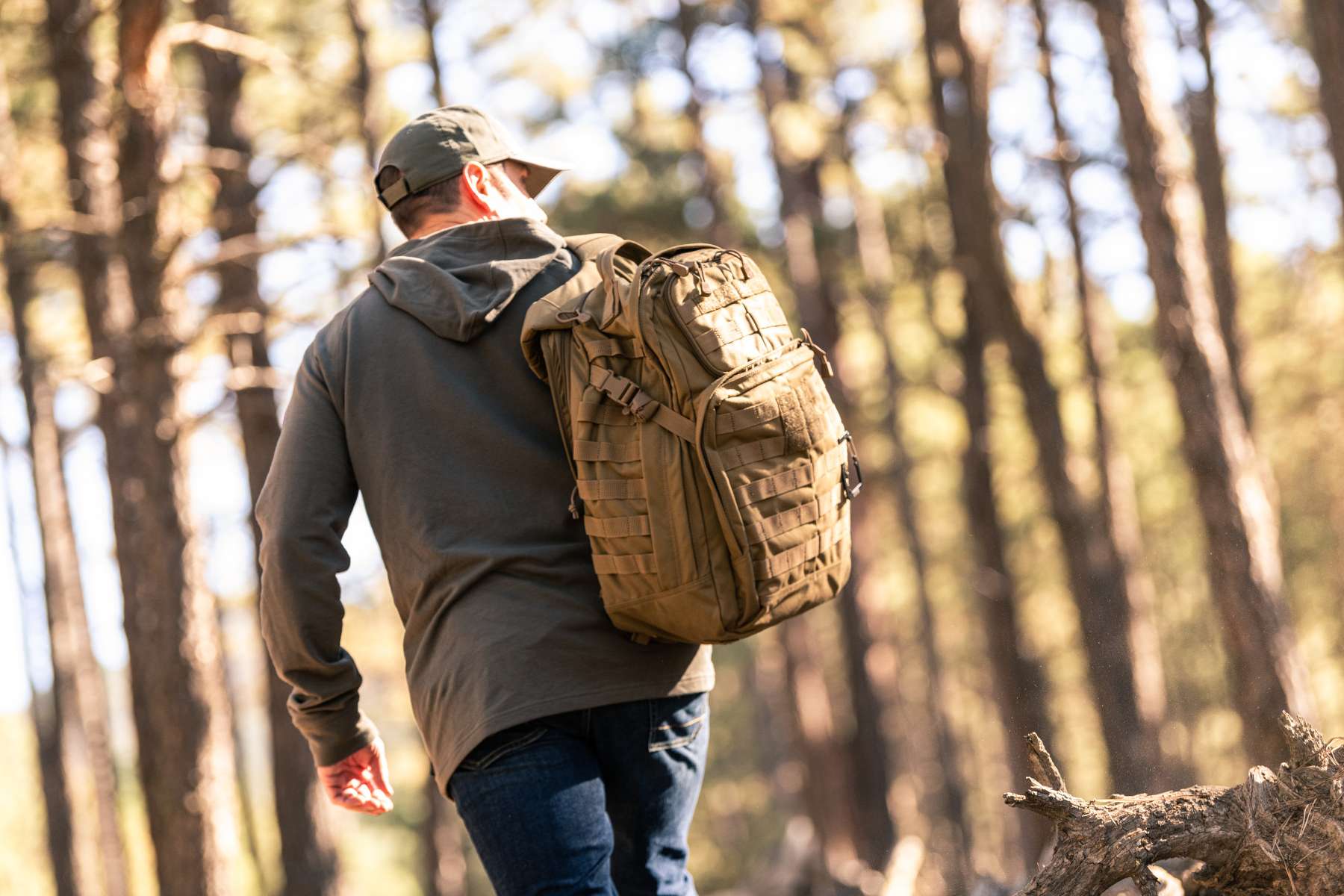
Best Bug-Out Bag Checklist 2026: Everything You Need for 72-Hour Survival
Last updated: October 9, 2026 · Originally published September 19, 2026
A bug-out bag is the pack you grab in the first 30 seconds: one bag carrying everything you need for 72 hours when staying home is not an option.
A bug-out bag is the pack you grab in the first 30 seconds of an emergency — the single bag that has to carry everything you need to survive for 72 hours when you can’t stay home. Whether you’re evacuating ahead of a wildfire, fleeing a flood zone, or responding to any disaster that forces you from your property, a properly assembled bug-out bag checklist could be the difference between managing the crisis and fighting to survive it.
The challenge with most bug-out bag lists is that they’re either too minimal — missing critical items — or so comprehensive that the resulting bag weighs 60 pounds and is impossible to carry under stress. This guide finds the balance: every essential item organized by survival priority, with weight targets, substitution options, and the reasoning behind each choice so you understand why each item earns its spot.
Use this checklist to audit your current bag, build a new one from scratch, or share with family members building their own emergency kits. The 72-hour standard reflects FEMA’s guidance that emergency services may be unavailable for the first three days following a major disaster — your bag is designed to bridge that gap.
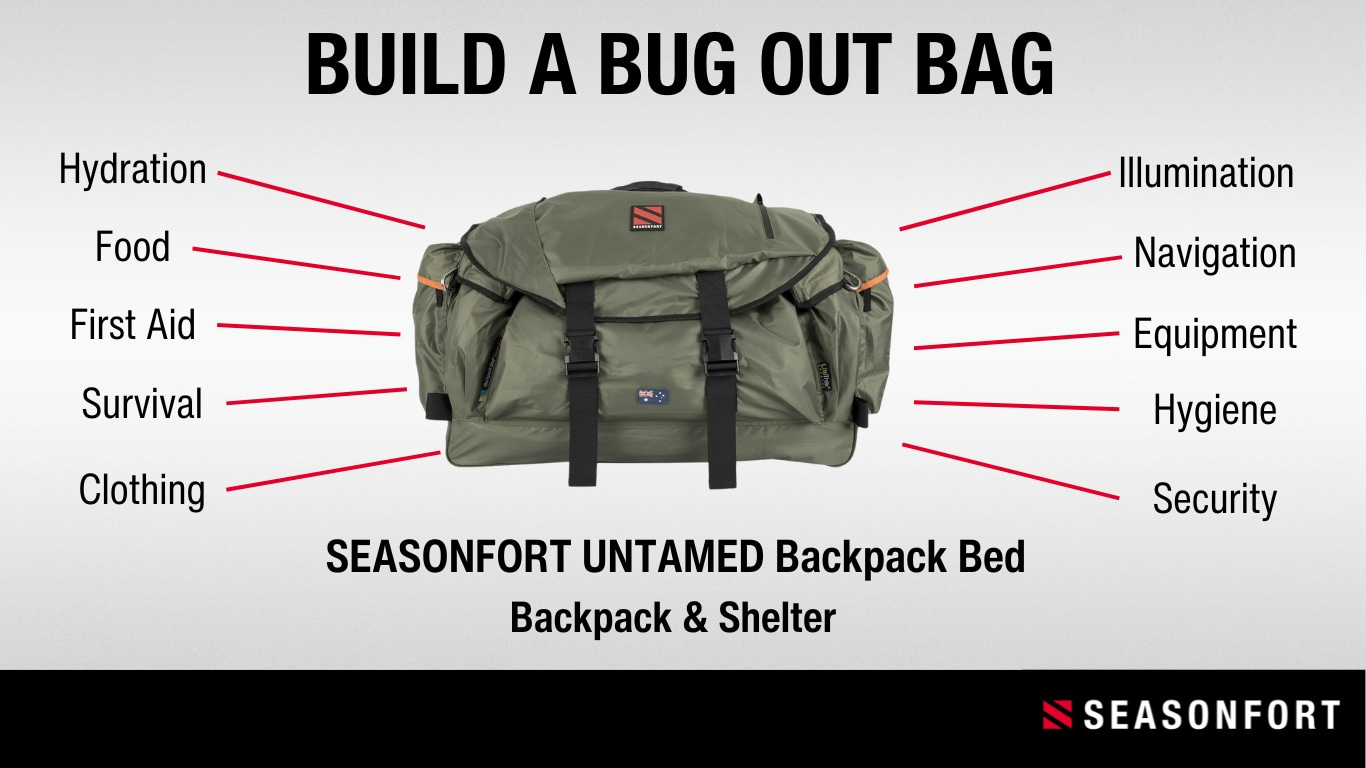
What Goes in a Bug-Out Bag: The Survival Priority Framework
Professional survival instructors organize emergency gear by the Rule of Threes: humans can survive roughly three minutes without air, three hours without shelter in extreme conditions, three days without water, and three weeks without food. Your bug-out bag should be organized and packed in the same priority order — not alphabetically or by category, but by how quickly each failure kills you.
The five survival priorities that structure a well-organized bug-out bag:
- Shelter and protection: Surviving exposure — rain, wind, cold, or heat — is your first priority once immediate danger has passed. This includes your bag itself, shelter items, and protective clothing.
- Water and purification: A 72-hour bug-out requires at least 1 liter of water per person per day at minimum, plus purification capability for sourcing additional water in the field.
- Fire and signaling: Fire provides warmth, water purification via boiling, cooking capability, and signaling for rescue. Multiple fire-starting methods are not optional.
- Food and nutrition: Caloric intake sustains physical and mental performance under stress. Emergency food should be calorie-dense, have long shelf life, and require minimal preparation.
- Navigation and communication: Knowing where you’re going and being able to call for help are essential for survival beyond the immediate escape phase.
Every section of this bug-out bag checklist is organized around these priorities. Each item includes not just what to pack, but why it matters and what weight targets to maintain.
Choosing the Right Bag
Before filling a bug-out bag, you need the right container. A 40–60 liter capacity is the sweet spot for a complete 72-hour kit — large enough to hold all essentials, small enough to carry at speed on difficult terrain. When evaluating bags, look for:
- Hydration bladder compatibility (internal sleeve for a 2–3 liter reservoir)
- MOLLE webbing for modular attachment of pouches and tools
- Compression straps to stabilize loads and prevent shifting during movement
- Padded, adjustable hip belt to transfer weight from shoulders to hips on long carries
- Integrated rain cover or compatible aftermarket cover
- Multiple exterior pockets for frequently accessed items
Weight target for your complete loaded bug-out bag: 15–25 lbs for adults, adjusted for physical fitness and expected terrain. Above 25 lbs, fatigue becomes a significant survival liability on a long evacuation. Below 15 lbs, critical items are likely missing. Weigh your loaded bag before considering it complete.


Water and Food Priorities in Your Bug-Out Bag
Water is your most critical survival resource, and it’s the one item you can’t substitute, improvise, or go without. The body begins losing cognitive and physical performance with just 2% dehydration — a level easily reached during a stressful physical evacuation. Every bug-out bag needs both stored water and the means to produce clean water from field sources.
Water Storage and Purification
For a 72-hour bag, carry 2–3 liters of water minimum — either in a hydration bladder, hard-sided water bottle, or collapsible container. This is your guaranteed supply before you locate and purify additional water in the field.
Water purification options — carry at least two methods:
- Pump or squeeze filter: LifeStraw, Sawyer Squeeze, or Katadyn BeFree. These filter biological contaminants (bacteria, protozoa) from natural water sources. The Sawyer Squeeze filters up to 100,000 gallons over its lifetime; weight is approximately 3 oz. The LifeStraw personal filter is a direct-drink option for moving water.
- Purification tablets: Potable Aqua or Aquatabs tablets handle viruses that mechanical filters miss. Two tablets per liter with a 30-minute wait time. Extremely lightweight backup at less than 1 oz for a pack of 50 tablets — no reason not to carry both.
- Stainless steel single-wall water bottle: A single-wall stainless bottle allows boiling water directly over fire — the oldest and most reliable purification method. Also functions as a cooking vessel and hot water container for warming cold hands and rehydrating freeze-dried food.
Practice using all three methods before packing them. Purification tablets require no skill, but squeeze filters require correct technique — particularly avoiding contamination of the clean output side with the dirty input side. Learn this before you need it.
For detailed field purification technique, see our guide on how to purify water in the wild.
Emergency Food: Calories and Shelf Life
Bug-out bag food must meet three criteria: calorie-dense, long shelf life, and minimal preparation requirement. You may not have access to fire, clean water for cooking, or time for complex meals during an active evacuation. Simple is better.
The 72-hour calorie target is approximately 1,500–2,000 calories per day per person — a total of 4,500–6,000 calories for the complete three-day kit. Packing options ranked by preparation simplicity:
- Energy bars and meal replacement bars: Clif, RX Bar, or DATREX emergency ration bars (2,400 kcal packaged in a single watertight brick). No preparation required — eat and move. Target 3–4 bars per day for a light-duty evacuation; more for sustained physical exertion.
- Trail mix and nuts: High caloric density at approximately 160–170 kcal per oz, no preparation, extremely compact. One pound of mixed nuts and dried fruit provides roughly 2,500–2,700 kcal and covers both fat and carbohydrate needs.
- Jerky and dried meat: Protein-dense at 80–100 kcal per oz, compact, no refrigeration required. Beef, turkey, or salmon jerky adds meaningful protein to an otherwise carbohydrate-heavy emergency food kit and improves sustained energy without spiking blood sugar.
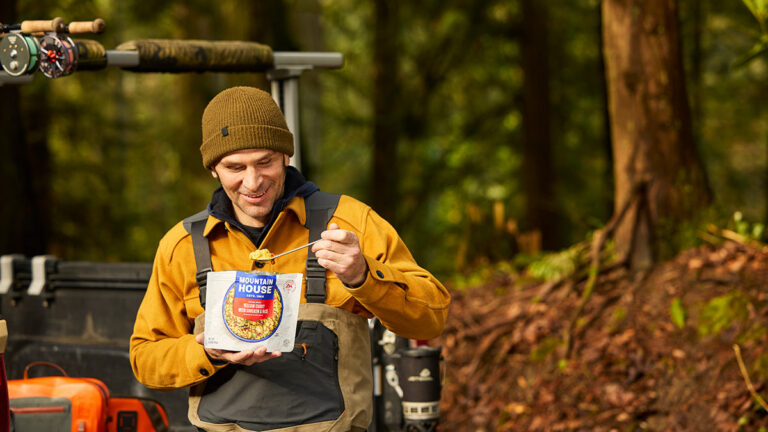
- Freeze-dried meals: Mountain House or Wise Company pouches offer excellent caloric density and 25+ year shelf life, but require 1.5–2 cups of hot water per meal. This adds dependency on fire or a stove and clean water availability. Best as a supplement to no-prep options rather than a primary food source.
Check and rotate all food items every 12 months to maintain fresh dates. Mark the rotation date on the outside of your bag with a permanent marker so you don’t have to open it to know when the contents expire.
Navigation and Communication Tools
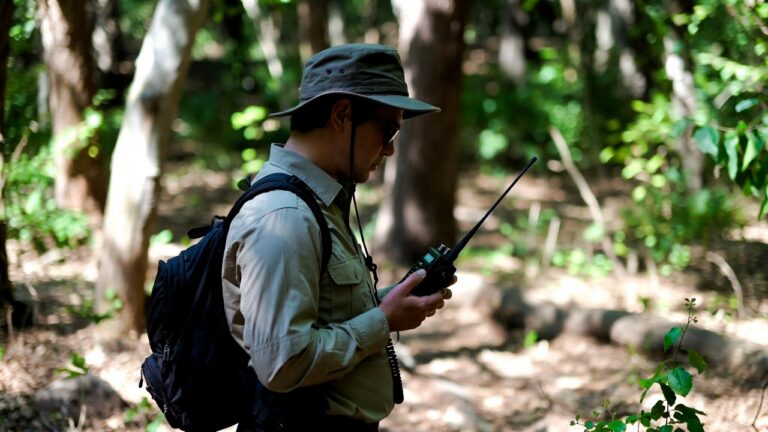
Knowing where you are and being able to communicate your location are survival essentials that most bug-out bag checklists underweight. Digital devices fail under stress, battery drain, water exposure, and physical impact. Your navigation and communication kit must work without cell towers, GPS satellites, or the internet.
Navigation Essentials
- Paper topographic map: A detailed USGS 7.5-minute topo map covering your home county and at least two surrounding counties. These maps show roads, waterways, elevation, and terrain features at approximately 6×9 mile detail. Know the major routes, water sources, high ground, and your family’s pre-designated rally points before any emergency occurs. Paper maps work when nothing else does.
- Silva or Suunto baseplate compass: A quality baseplate compass combined with your topo map enables reliable land navigation without electronics. The technique of taking a bearing, following it, and triangulating your position is learnable in an afternoon and reliable for life. Practice before packing. For step-by-step technique, see our guide on how to navigate without GPS.
- Printed emergency contact list: A laminated card with all critical phone numbers, addresses, and family rally points. Memory fails dramatically under acute stress. Contacts stored only in a cell phone become inaccessible the moment the phone dies or is lost.
Communication Gear
- Emergency whistle: A Fox 40 Classic or similar high-decibel pealess whistle carries 500+ yards and requires almost no energy output. Three blasts is the universal distress signal. Weight: less than 0.5 oz. Attach to a shoulder strap of your pack for immediate access.
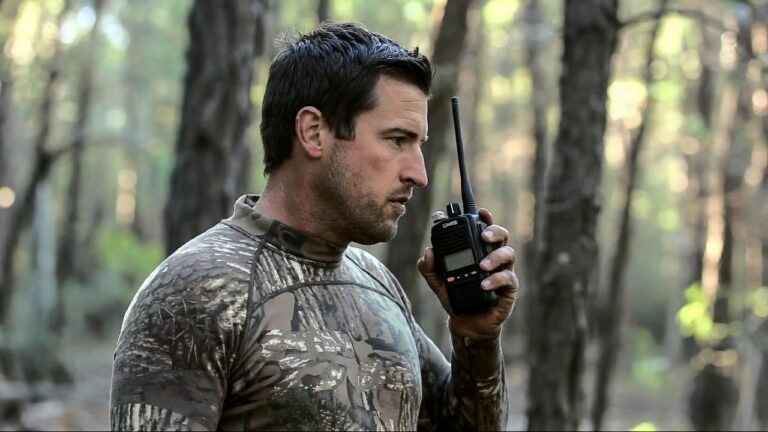
- Battery-powered NOAA emergency radio: A radio that receives National Weather Service emergency broadcasts when all other communication infrastructure is down. Look for hand-crank backup charging and AM/FM/NOAA capability. The Midland ER310 covers all three bands and charges via solar, hand crank, and USB.
- Portable battery bank: A 10,000–20,000 mAh USB battery bank, kept fully charged, allows charging cell phones and USB-powered communication devices through the first days of an emergency before power infrastructure is restored. Weight: 7–12 oz. Replace every 3 years as lithium battery capacity degrades.
- Signal mirror: An acrylic or glass signal mirror can reflect sunlight to aircraft and ground teams at distances exceeding 10 miles in daylight — far beyond whistle range. The SOL Rescue Flash Mirror weighs 1.2 oz and includes a sighting hole for accurate targeting.
First Aid and Medical Supplies
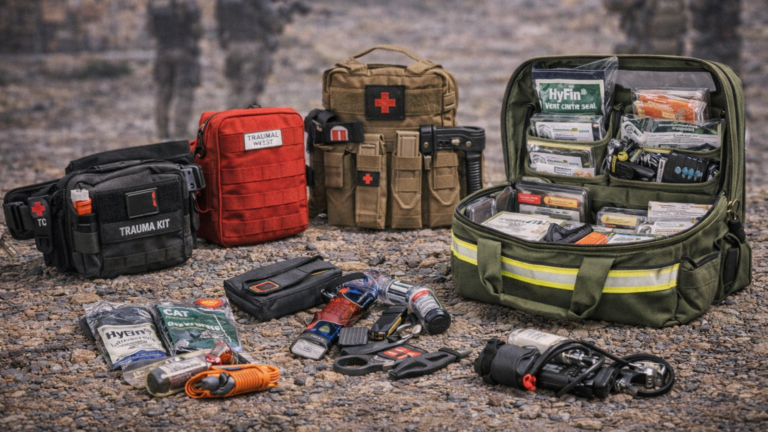
A bug-out bag’s first aid kit needs to address two distinct medical categories: trauma injuries from the physical demands of evacuation (cuts, punctures, sprains, fractures) and personal medical needs (prescription medications, epinephrine for severe allergies, asthma management). Both are equally critical.
Trauma First Aid Essentials
- CAT tourniquet (Combat Application Tourniquet): For life-threatening extremity bleeding that cannot be controlled with direct pressure alone. The CAT is the same device carried by U.S. military personnel and most law enforcement first responders. Practice applying it one-handed on your own arm — this is the relevant scenario when you’re the injured party. Replace every 3–5 years as the windlass mechanism can degrade.
- Israeli pressure bandage: An elastic pressure bandage with a built-in pressure bar for controlling major wound bleeding. More effective and easier to apply correctly than improvised field dressings for large wound coverage.
- Hemostatic gauze: QuikClot Combat Gauze or similar hemostatic gauze that accelerates blood clotting for deep puncture wounds where a pressure bandage provides insufficient coverage. Standard in law enforcement individual first aid kits.
- SAM splint: A moldable aluminum-foam splint for immobilizing fractures and sprains. Handles wrist, ankle, forearm, and finger injuries. Weight: 3 oz. Doubles as a cervical collar in a pinch.
- Nitrile gloves (4+ pairs): Protect both patient and provider from cross-contamination. Carry more than you think you need — gloves are used once per contact and discarded.
General Medical Supplies
- Assorted adhesive bandages (20 pieces in various sizes, including knuckle and fingertip sizes)
- Medical tape (1-inch roll) for securing dressings and improvising support strapping
- Antiseptic wipes and a small Betadine solution bottle for wound cleaning before dressing
- Ibuprofen (anti-inflammatory for pain and swelling) and acetaminophen (non-NSAID pain management)
- Diphenhydramine (Benadryl) for allergic reactions — can also function as a sleep aid under high-stress conditions
- Imodium (loperamide) for diarrhea — critical in field conditions where intestinal infection from water is possible and dehydration is an active threat
- Any personal prescription medications — minimum 7-day supply, rotated every 90 days with your regular prescription cycle
- Personal items: eyeglasses backup, contact lens solution if applicable, epi-pen if prescribed
For a complete guide to building a field-capable medical kit, see our review of the best first aid kits for 2026.
Shelter and Protection Gear
Exposure kills faster than dehydration, hunger, or almost any other survival hazard outside of immediate physical danger. In cold, wet, or windy conditions, hypothermia can develop within hours in a person without adequate shelter. Your bug-out bag shelter kit doesn’t need to be elaborate — it needs to work immediately, without tools or advanced skills.
Emergency Shelter Options
- Mylar emergency bivy: The minimum shelter item every bug-out bag should carry. A bivy (body-sized sleeping bag shape) retains 90% of body heat and is fully waterproof. The SOL Escape Bivy weighs 3.8 oz and compresses to fist size. More effective than a flat space blanket because it eliminates convective heat loss on all sides — you’re inside it, not wrapped in it.
- Lightweight tarp or military poncho: An 8×10 foot silnylon tarp (10–14 oz) or a military-style poncho that doubles as a rain shelter. Combined with paracord and natural anchor points, a tarp provides full-weather overhead protection and can be pitched in under 10 minutes without a frame or poles.
- 550 paracord (50–100 feet): Essential for tarp rigging, gear securing, improvised gear repair, and a hundred other camp and survival applications. Weight: 4–7 oz for 100 feet. No survivalist’s bag should leave home without it.
- Sleeping bag liner: A fleece or silk liner adds 10–15°F of warmth to any sleep system and weighs 8–12 oz. In mild weather, a liner plus your bivy may be sufficient for a night out. In cold weather, it extends the effective range of a lighter sleeping bag.
For full shelter construction techniques — including tarp configurations, debris hut construction, and natural material shelter in multiple environments — see our complete guide to building a survival shelter.
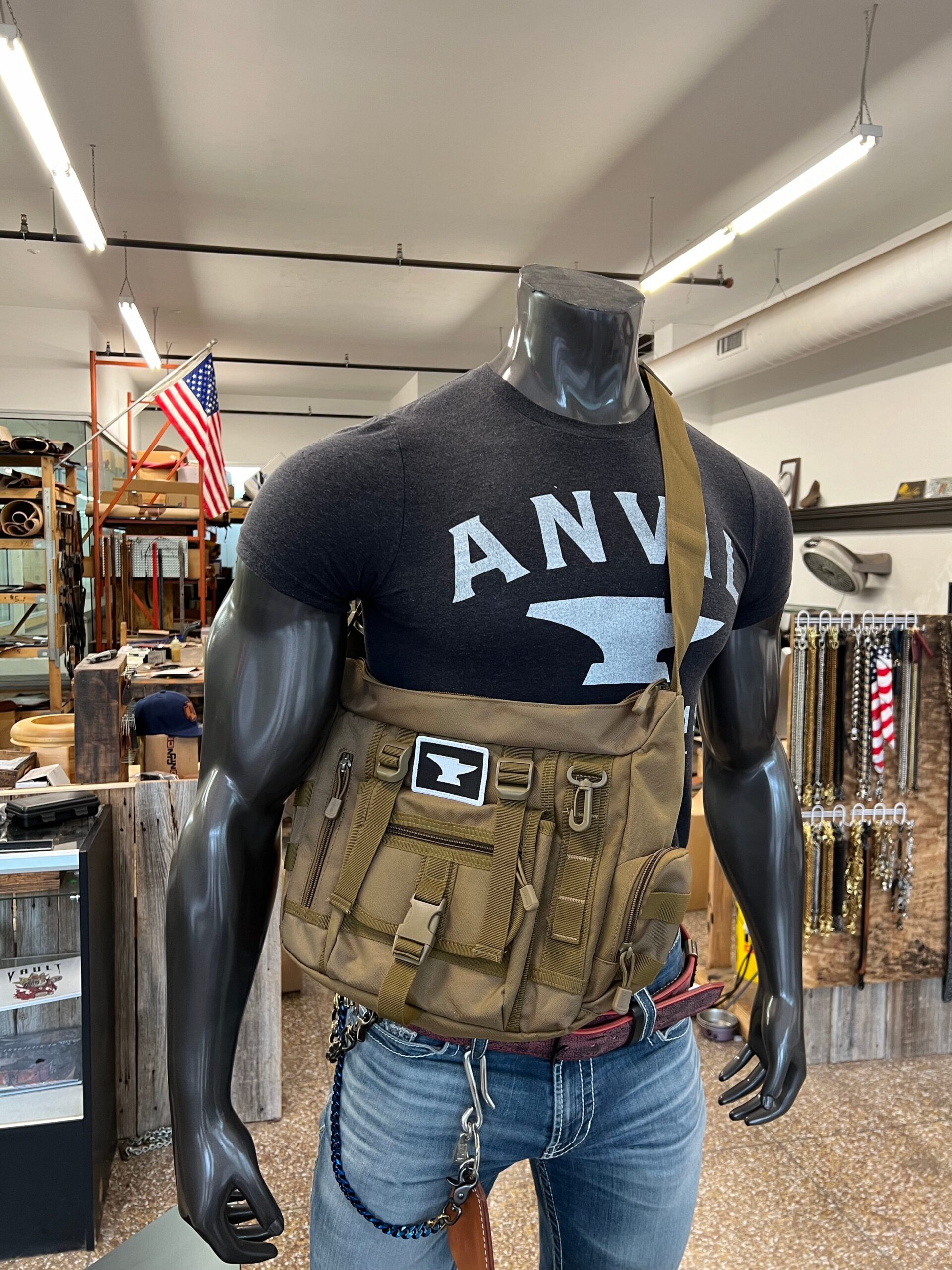
Bug-Out Bag Clothing Essentials
Pack a complete change of weather-appropriate clothing in waterproof compression sacks to keep contents dry regardless of conditions encountered. The layering system:
- Base layer: Moisture-wicking long-sleeve top and bottom. Merino wool or synthetic polyester — never cotton, which absorbs water and loses all insulating value when wet.
- Mid layer: Lightweight fleece jacket or down vest for insulation during stops and cold nights. Down is warmer per ounce when dry; synthetic insulation maintains warmth when wet.
- Outer shell: Rain jacket with taped seams and a full-zip design. This is your weather protection layer — it doesn’t need to be warm, just waterproof and wind-resistant.
- Extra socks (2–3 pairs): Merino wool or synthetic — wool regulates temperature and resists odor better than synthetic. Wet feet cause blisters, trench foot, and significantly impaired movement over time.
- Gloves and hat: Lightweight liner gloves and a knit beanie. The head and hands are disproportionate heat loss points — covering both dramatically extends comfortable operating time in cold conditions.
Tools and Cutting Implements
A compact set of core tools multiplies survival capability across every other category — they help build shelter, prepare food, start fires, administer first aid, and improvise solutions to problems you haven’t anticipated. Don’t overpack tools; focus on versatility and durability over category coverage.
Cutting Tools
- Fixed-blade knife: A full-tang fixed-blade knife in the 4–6 inch blade range is the single most useful survival tool available. The Morakniv Companion or Companion Heavy Duty delivers reliable performance without weight or cost penalty (under $30). A fixed blade is structurally stronger than a folding knife — no pivot point to fail under heavy use. Carry your fixed blade on your belt or shoulder strap, not buried in your bag.
- Folding saw: A Silky Pocketboy or Bahco Laplander folding saw (2–4 oz) cuts branches for shelter construction and firewood processing far more efficiently than a knife can. Combined with a fixed-blade, these two cutting tools handle 95% of shelter, fire, and food prep cutting tasks.
- Multi-tool: A Leatherman Wave+ or Gerber MP600 provides pliers, wire cutters, multiple screwdriver bits, scissors, a file, and a secondary blade in one package. Essential for urban evacuations, vehicle-related tasks, and any gear repair needs that exceed what a knife handles.
Fire Starting Tools
- Bic lighters (2–3): The most reliable, fastest, and lowest-cost fire-starting tool available. Carry three. Weight is negligible at 0.5 oz each. A single Bic in good condition provides hundreds of reliable ignitions over months of regular use. Rotate every 2 years before fuel degrades.
- Ferrocerium rod (fire steel): Produces a hot (approximately 5,000°F) spark in wet, cold, and windy conditions where a butane lighter fails due to low fuel pressure. The Light My Fire Army 2.0 (0.8 oz) functions after complete submersion. Combined with proper dry tinder, it starts fires in conditions that defeat lighters.
- Packaged tinder: WetFire cubes, commercial fatwood shavings, or homemade petroleum jelly cotton balls sealed in a waterproof container. Natural tinder may be wet, unavailable, or require more preparation time than you have. Commercial tinder ensures fire-starting capability in the worst conditions.
Illumination
- Headlamp: A USB-rechargeable headlamp (Black Diamond Spot 400 or Petzl Actik Core) leaves both hands free for navigation, medical care, and camp tasks. The hands-free design is a meaningful advantage over a flashlight for every task that takes longer than a quick look. Carry spare AAA batteries if your model supports them as backup.
- Emergency glow sticks: 12-hour duration glow sticks require no batteries, produce no heat, and provide ambient hands-free light for campsite marking, emergency signaling, and low-light navigation. Backup to the headlamp; pack 2–3.
Documentation and Money
In the chaos of an emergency evacuation, losing access to critical documents can compound the disaster for weeks or months after the initial crisis passes. A documentation kit adds almost no weight or bulk to a bug-out bag and delivers enormous value in recovery scenarios.
Documents to Waterproof and Carry
Store all documents in a dedicated waterproof document pouch — a zip-lock bag works in a pinch, but a waterproof nylon sleeve with a roll-top closure is more durable. Include:
- Photo ID copies: Color photocopies of driver’s license and passport. These are needed for shelter admission, evacuation assistance, and identity verification at any official checkpoint. Originals should be carried on your person, not in the bag.
- Insurance cards and policy numbers: Health, homeowner’s or renter’s, and vehicle insurance card copies. Required for hospital admission, insurance claims, and disaster assistance applications.
- Emergency contact card (laminated): Names, phone numbers, and addresses for all immediate family members, one out-of-state contact, and your pre-designated family rally points. This is the single most valuable document in the kit — the one that reconnects separated family members when cell networks are saturated or down.
- Medical information summary: Blood type, known allergies, current medications with dosages, and your doctor’s contact information. Critical if you need emergency medical treatment from providers with no access to your records.
- Bank account access information: Not full account numbers — a record of your bank’s name, account type, and a contact number. Enough to access funds and prove identity if cards are lost.
- Property documentation: A copy of your lease, deed, or proof of address for disaster assistance applications and insurance claims processing.
Cash and Financial Preparedness
Include $500–$1,000 in cash, in mixed denominations with emphasis on small bills ($1, $5, $10, and $20). During power outages and communications network disruptions, ATMs won’t dispense and credit and debit card readers won’t process transactions. Cash is universally accepted for fuel, food, temporary lodging, and emergency supplies in the immediate aftermath of a major disaster when digital payment infrastructure has failed.
Keep small bills specifically — businesses operating during a disaster typically can’t make change and will decline large bills if the transaction value doesn’t justify it. A $50 bill for $12 of supplies may be refused when a $10 and two $1s are not.
Bug-Out Bag Quick Reference Checklist
Use this section as a printable inventory checklist. Check off items as you pack them:
Water and Food
- ☐ 2–3 liters of water (hydration bladder or bottles)
- ☐ Water filter (Sawyer Squeeze, LifeStraw, or similar)
- ☐ Water purification tablets (30+ tablet pack)
- ☐ Single-wall stainless steel water bottle (for boiling)
- ☐ 4,500–6,000 calories of food (3-day supply)
- ☐ Can opener or spork
Shelter and Clothing
- ☐ Mylar emergency bivy or quality space blanket
- ☐ Lightweight tarp or rain poncho
- ☐ 550 paracord (50–100 feet)
- ☐ Complete change of weather-appropriate clothing
- ☐ Rain jacket with taped seams
- ☐ Extra socks (2–3 pairs, wool or synthetic)
- ☐ Gloves and knit beanie
Fire and Illumination
- ☐ 2–3 Bic lighters
- ☐ Ferrocerium fire steel
- ☐ Waterproof packaged tinder
- ☐ Headlamp with spare batteries
- ☐ Emergency glow sticks (2–3)
First Aid
- ☐ CAT tourniquet
- ☐ Israeli pressure bandage
- ☐ Hemostatic gauze
- ☐ Assorted bandages and medical tape
- ☐ Nitrile gloves (4+ pairs)
- ☐ OTC medications (ibuprofen, antihistamine, anti-diarrheal)
- ☐ Personal prescription medications (7-day supply minimum)
- ☐ SAM splint
Tools
- ☐ Fixed-blade survival knife
- ☐ Multi-tool
- ☐ Folding saw
- ☐ Duct tape (small roll)
- ☐ Work gloves
Navigation and Communication
- ☐ Paper topographic map (home area and surroundings)
- ☐ Baseplate compass
- ☐ Emergency whistle
- ☐ NOAA emergency radio
- ☐ Signal mirror
- ☐ Battery bank (10,000+ mAh, fully charged)
Documentation and Money
- ☐ Photo ID copies (waterproof pouch)
- ☐ Emergency contact card (laminated)
- ☐ Insurance card copies
- ☐ Medical information summary
- ☐ $500–$1,000 cash (mixed denominations)
Bug-Out Bag Maintenance Schedule
A bug-out bag sitting untouched for years is not a functional bug-out bag — it’s a false sense of security. Build a maintenance calendar and treat it the same way you treat vehicle maintenance: scheduled, not optional, and logged.
- Every 6 months: Check water supply for leaks or container wear. Test batteries in headlamp and radio. Recharge battery bank to full. Verify lighters have fuel. Spot-check food for expired items.
- Annually: Replace all food items with fresh stock. Rotate prescription medications with your current prescription cycle. Inspect all gear for physical damage, wear, or mold. Update laminated documents if contact information, insurance, or medical information has changed.
- Seasonally: Adjust clothing layers for current season. A winter kit in a cold climate needs significantly heavier insulation than a summer kit in the same location. Keep two seasonal insulation modules — swap on the first day of November and the first day of April.
For a complete walkthrough on building a household emergency kit beyond the individual bug-out bag, see our guide to how to build a 72-hour emergency kit.
Frequently Asked Questions About Bug-Out Bags
How much water should I carry in a bug-out bag?
Plan for at least 1 liter per person per day, though 2–3 liters is better if weight allows. A 3-liter hydration bladder gives you an immediate 3-day water supply at minimum intake. Add a Sawyer Squeeze or LifeStraw filter for sourcing water from natural water bodies in the field, plus a pack of purification tablets as a backup for virus coverage. The three-method approach — stored water, mechanical filter, chemical treatment — ensures you have clean water regardless of what field conditions you encounter.
Should I include cash in my bug-out bag?
Yes — include $500–$1,000 in mixed denominations with emphasis on small bills. During power outages and network disruptions, ATMs and card readers won’t work. Cash is universally accepted when digital payment infrastructure fails. Update your cash supply every 12 months to prevent bill wear and keep the supply current. Store it in a waterproof pouch inside the bag, separate from your document pouch.
What’s the ideal weight for a bug-out bag?
Target 15–25 lbs for adults, depending on physical fitness and expected terrain. Heavier bags cause fatigue on long evacuations, impair decision-making under physical load, and significantly increase injury risk on uneven terrain. If your loaded bag exceeds 25 lbs, audit every item using survival priorities: if it doesn’t contribute directly to shelter, water, fire, food, or communication, it probably doesn’t belong. Under 15 lbs suggests missing items — especially in water, shelter, or medical categories where weight-per-function cannot be compromised.
Published by Chad Dyer, President, Brand Avalanche Media, Inc. Popular Outdoorsman is an independent editorial publication. Product recommendations reflect editorial judgment based on field testing and specifications review.


Reader Favorites
Field-to-table reference desk
From tag to table — official season dates for all 50 states, plus safe doneness temps for your harvest.
| Species | Archery | Firearm |
|---|---|---|
| Deer | Sep–Oct | Nov |
| Elk | Sep | Oct–Nov |
| Turkey | — | Apr–May |
All 50 state wildlife agencies, plus how seasons, tags and licenses work.
Find your state → Network| Doneness | Target |
|---|---|
| Rare | 125–130°F |
| Medium-rare | 130–135°F |
| Well-done | 160°F+ |
Safe pull temps for venison and steak, from Popular BBQ.
View full chart →