Blue Raccoon Photo: The Woman Who Really Found It
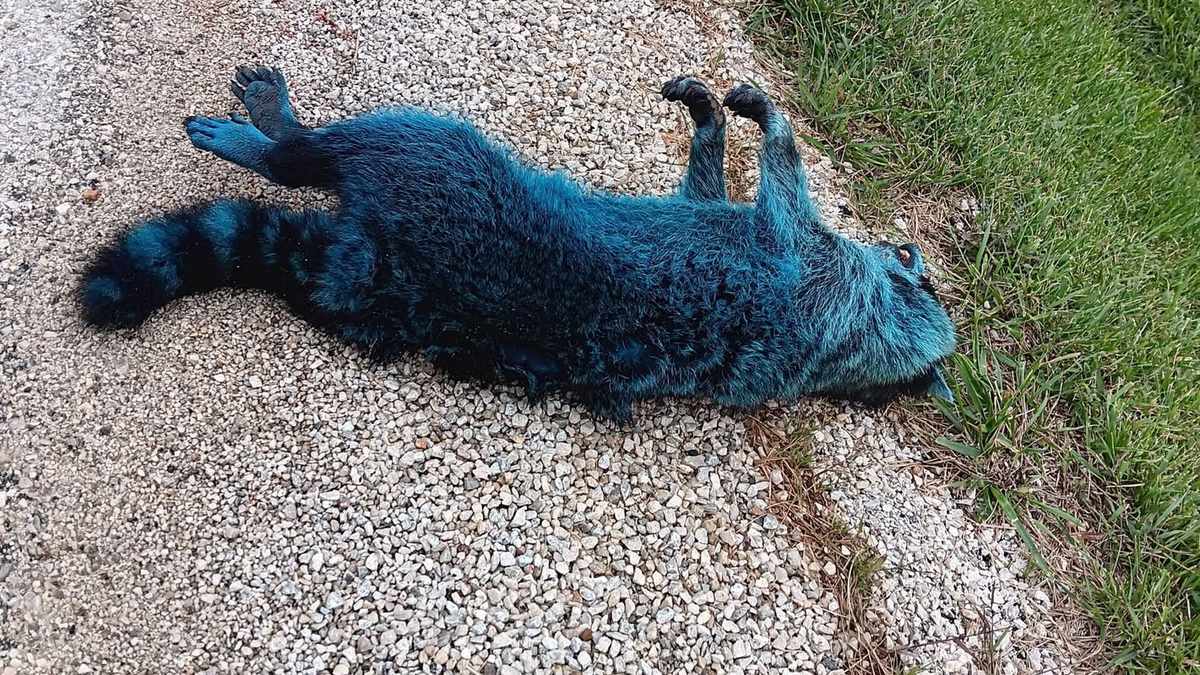
Nicole Carroll took the viral blue raccoon photos after finding the animal dead on her way to help a friend who farms. Copies spread on X and Facebook without her name on them. Nobody has confirmed the cause, but pond dye, blue porta-potty deodorizer and blue-dyed rodent poison are the likeliest explanations.
Last updated: October 9, 2026 · Originally published September 19, 2026
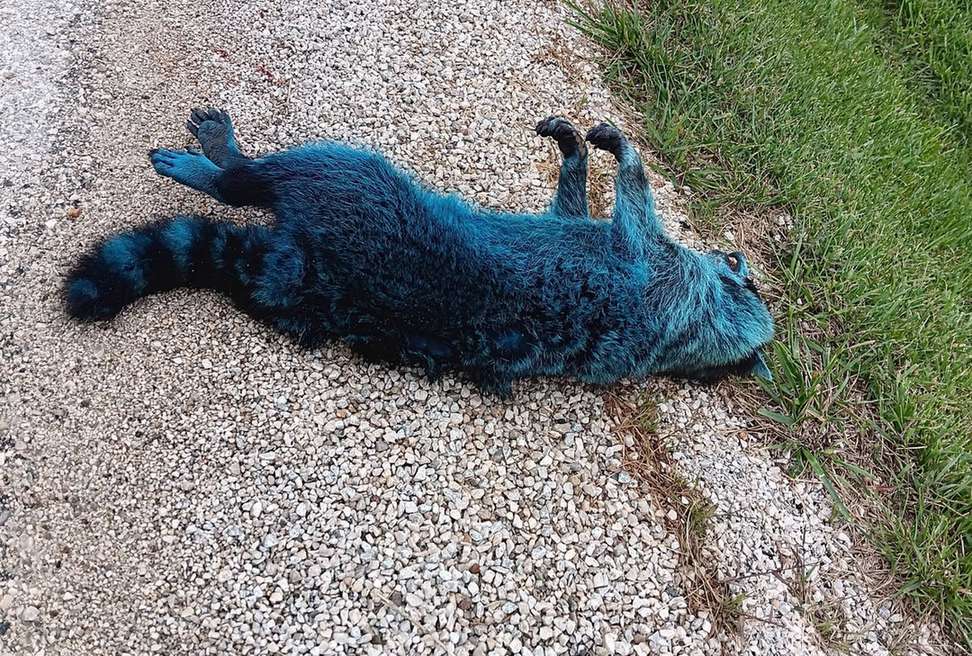
If you spent any time online this week, you probably saw the blue raccoon. Two photos of a dead raccoon with fur a bright blue you would expect on a sports jersey, not on something that lives in a creek bottom. Hundreds of thousands of people saw them. Far fewer saw the name of the woman who took them.
Her name is Nicole Carroll. This is her story, what a hunter and angler makes of those photos, and how to find the person who actually posted them first.
Who Found the Blue Raccoon?
Nicole Carroll found the raccoon dead on her way to help a friend who is a farmer. She was curious why it was blue, so she took two photos and posted them to her Facebook page around September 17, 2026, with this caption:
“Okay ya all I have seen alot of things BUT A BLUE RACCOON…… sorry I know it’s a sad sight but I have to know why it is that blue!!!!!”
That is an honest reaction. She did not pretend to know the answer. She asked.
People answered. By September 19, her original post had about 8,300 reactions, 5,700 comments and more than 1,800 shares. You can see Nicole’s original post on her Facebook profile.

Why Is the Raccoon Blue?
Short answer: nobody has confirmed the cause. What we have are theories, and some are better than others.
Pond dye. The most-liked comment on Nicole’s post points at pond dye, the blue colorant sold to shade farm ponds and backyard water features. Methylene blue came up by name too. Anyone who fishes farm ponds has seen water tinted that unnatural blue. A raccoon spends its nights working the edges of water. If one waded or rolled through a pond that had just been dosed, a coat that color is not hard to picture.
Porta-potty deodorizer. The blue liquid in portable toilet tanks is a strong dye. Raccoons climb into anything that smells like food, and a job-site toilet smells like a lot of things. One commenter said his brother found a raccoon on a job site that looked just like this after a porta-john.
Paint. Spilled or dumped paint gets raised a lot in the comments. It is possible, but paint tends to clump and mat fur in patches. The more even the color, the more a liquid dye makes sense.

Rodent poison. This is the one hunters should think hardest about. Some rodent poisons are dyed bright blue on purpose, so people can tell the bait apart from food. In 2025, the California Department of Fish and Wildlife warned hunters after wild pigs in Monterey County turned up with neon-blue fat under the skin. The cause was diphacinone, a blood-thinning rodent poison, and the blue came from the dye in the bait, as reported by National Geographic and Popular Science. The state’s warning covered deer, bear and geese as well as pigs, and noted that cooking the meat does not remove the poison.
Could that be what happened here? It is a possibility, not a finding. The pigs were blue inside. This raccoon’s color shows on its fur. A raccoon that ate poisoned bait and then lay dying in spilled bait could, in theory, look like this. So could one that simply got into dye. Only a test would tell.
As a hunter, that is the part that sticks with me. We are the ones who open animals up. If you ever field-dress something and find fat that color, do not eat it, and call your state wildlife agency.
Can Raccoons Be Naturally Blue?
No. Blue is not a raccoon color.
The State University of New York College of Environmental Science and Forestry describes the raccoon as “a grizzled gray, brownish gray, or yellowish gray” above, with paler underparts. It adds that “rufous, albino, and black color phases occur but are rare” (SUNY ESF). Rufous means reddish, the cinnamon-colored raccoons people sometimes photograph. You will also see blond raccoons and washed-out, nearly white leucistic ones pop up now and then.
Every one of those variants runs from black through brown to reddish-yellow, because that is the range of the pigment that colors mammal fur. None of them is blue. A raccoon that color did not grow that way. Something got on it, or in it.
What to Do If You Find a Dyed or Discolored Animal
Here is the short list if you come across something like this:
- Do not touch it with bare hands. The CDC lists raccoons among the wild animals that carry rabies in the United States (CDC).
- Keep kids and pets away. Raccoons also carry raccoon roundworm, and the CDC’s advice is to avoid contact with raccoons and their feces (CDC).
- Note the location. A pin drop, a mile marker or a nearby road name is enough.
- Take photos from where you stand. Wide shots and close shots both help.
- Call your state DNR or wildlife agency. Kentucky’s Department of Fish and Wildlife Resources, for example, tells people not to touch or approach wildlife acting strangely and to call the agency to report sick or dead animals (KDFWR). Most states have a similar line.
If you already touched it, wash with soap and water and talk to a doctor. Hunters already know this reporting habit from sick deer; it works the same way here. Our guide to chronic wasting disease testing walks through how state agencies handle samples from harvested animals.
The Comments That Took Over
Nicole’s comment section turned into its own event. A few threads rose to the top:
- Alexia K. started the leading theory: “Pond dye aka methylene blue would DEFINITELY do this.” About 2,300 reactions and 194 replies.
- Jeremy S. asked the question half the internet was thinking: “He crawled in a port-a-potty?!?!?” About 2,100 reactions.
- Haley L. asked if it got into “Dalton Aint Worried” pond dye. About 1,700 reactions.
- Emily R. went with a Trailer Park Boys reference: “Was it partying with mr.lahey?” About 1,300 reactions.
- Jenna D. suggested reporting it to the DNR in case they want the photos as evidence. About 980 reactions and 174 replies. That is the best advice in the thread.
- Abby R. compared it to the blue dog in the toilet scene from Meet the Fockers. About 875 reactions.
- Coy B. said his brother once found a raccoon on a job site that was “stark blue just like this” after a porta-john. About 395 reactions.
Put together, the crowd landed on two main suspects: pond dye and porta-potty deodorizer. Coy’s story is the closest thing to a firsthand match anyone offered.
How the Photos Got Copied
This is where the story turns. Within a day, Nicole’s photos were everywhere, and most of the copies did not mention her.
On X, the sports account @Hoopss, with 829,000 followers, posted the same caption and photos on September 18 without credit. It passed 382,000 views and 1,900 likes. X readers attached a community note calling it a stolen post and linking back to Facebook. “Blue Raccoon” then trended on X.
On Facebook, Michael Meadows posted the same photos as “Blue raccoon spotted in West Virginia,” written as his own roadside find. That copy drew about 490 reactions and 267 shares, and it is currently the top Google result for “blue raccoon.”
Other reposts copied Nicole’s caption word for word without credit: the WHOOPTY DOO group (several times), Brownskin Kisha Kole, the page Real Talk, which stamped its own “@Real Talk” watermark on her photos, and Kay Shobe.
| Account | Platform | Credited Nicole? | Reach |
|---|---|---|---|
| Nicole Carroll (original post) | Yes (her own) | About 8,300 reactions, 5,700 comments, 1,800+ shares | |
| @Hoopss | X | No | 382,000+ views, 1,900 likes |
| Michael Meadows | No | About 490 reactions, 267 shares | |
| WHOOPTY DOO group | No | Posted several times | |
| Brownskin Kisha Kole | No | 51 shares | |
| Real Talk | No | Added its own watermark | |
| Kay Shobe | No | About 19 reactions |
Reach figures as of September 19, 2026. If you shared one of the copies, the easiest fix is to share Nicole’s original instead.
Meet Red’s Crafty Things
Here is the part the copies left out. Nicole Carroll is the owner of Red’s Crafty Things, a handmade craft page on Facebook. In her words there: “Brings my heart joy to see others smile at the things I create for them!”
A lot of people smiled, winced or scratched their heads at her photos this week. If you were one of them, the least we can do is send a little of that attention back to her. Follow her craft page, look through what she makes, and message her if you want something custom.
Follow Red’s Crafty Things on Facebook
And if you want the real thing instead of a copy, see Nicole’s original post.
Frequently Asked Questions
Why is the raccoon blue?
Nobody has confirmed it. The likeliest explanations are pond dye, the blue deodorizer used in porta-potty tanks, or blue-dyed rodent poison. Raccoons do not grow blue fur, so the color came from something outside the animal.
Who took the blue raccoon photo?
Nicole Carroll took both photos and posted them on Facebook around September 17, 2026. She is the owner of the handmade craft page Red’s Crafty Things. Many copies on X and Facebook did not credit her.
Is the blue raccoon real?
The photos are real photos of a dead raccoon that Nicole found on her way to help a farmer friend. The color is real too, but it is not natural. Something dyed or stained the animal.
Where was the blue raccoon found?
Nicole found it on her way to help a friend who farms. Her post does not name a location. The “West Virginia” label came from a Facebook copy of her photos, not from her post.
Can raccoons be naturally blue?
No. Raccoons are normally gray, brownish gray or yellowish gray. Rare reddish, albino and black raccoons occur, but no natural raccoon color is blue.
What should you do if you find a blue animal?
Do not touch it with bare hands, keep pets away, note the location, take photos and call your state DNR or wildlife agency. Raccoons can carry rabies and raccoon roundworm.
Final Thoughts
A dead raccoon on the side of the road is a sad sight, and Nicole said so. What made this one different was the color, and what made the story bigger was how fast other accounts took her photos and ran with them.
The blue raccoon is still a mystery. My money is on dye from a pond or a porta-potty, with rodent poison as the one worth ruling out. If a wildlife agency tests it, that answer should be shared as widely as the photos were. Until then, if you want to share the blue raccoon, share Nicole’s post, and give Red’s Crafty Things a follow while you are there.
Sources
- Nicole Carroll, original Facebook post: facebook.com/nicole.carr.5243/posts
- Nicole Carroll, Facebook profile: facebook.com/nicole.carr.5243
- Red’s Crafty Things, Facebook page: facebook.com/red.s.crafty.things
- National Geographic, blue wild pigs in Monterey County and diphacinone: nationalgeographic.com
- Popular Science, blue pigs in California: popsci.com
- SUNY College of Environmental Science and Forestry, Raccoon: esf.edu
- CDC, About Rabies: cdc.gov/rabies
- CDC, Preventing Raccoon Roundworm: cdc.gov/baylisascaris
- Kentucky Department of Fish and Wildlife Resources, Rabies: fw.ky.gov
- Popular Outdoorsman, Chronic Wasting Disease Testing in 2026: popularoutdoorsman.com

Reader Favorites
- The Conservation Fund: Removal Of Eklutna Dam Complete
- The Crawdad That Could Eat the Great Lakes
- Great American Outdoors Act Needs Your Help, Bipartisan Support
- 3 Reasons to Leave Young Wildlife Alone
- Unions, U.S. Fish & Wildlife Service Join Forces For Conservation
- Poachers, Beware: Operation Game Thief is ON
Field-to-table reference desk
From tag to table — official season dates for all 50 states, plus safe doneness temps for your harvest.
| Species | Archery | Firearm |
|---|---|---|
| Deer | Sep–Oct | Nov |
| Elk | Sep | Oct–Nov |
| Turkey | — | Apr–May |
All 50 state wildlife agencies, plus how seasons, tags and licenses work.
Find your state → Network| Doneness | Target |
|---|---|
| Rare | 125–130°F |
| Medium-rare | 130–135°F |
| Well-done | 160°F+ |
Safe pull temps for venison and steak, from Popular BBQ.
View full chart →