Best First Aid Kit 2026: Complete, Compact, and Wilderness-Ready Options Compared
Last updated: October 9, 2026 · Originally published September 28, 2026
A first aid kit is only useful if it is with you and carries what the situation needs, which is where cheap bandage-only kits fall down.
A first aid kit is only useful if it’s with you when something goes wrong — and only useful if it has what the specific situation requires. The gap between a dollar-store kit with 12 bandages and a purpose-built wilderness kit with hemostatic gauze and a tourniquet is the gap between being prepared and being equipped.
This guide covers the best first aid kits in 2026 for home, car, wilderness, and tactical use, with a full breakdown of what every kit should contain and what specialty additions matter for different environments. Pair this with the 72-hour emergency kit and bug-out bag checklist for a complete emergency preparedness foundation.
What Every First Aid Kit Needs: The Core Components
Before evaluating any pre-built kit, understand what a functional first aid kit must include. Missing any of these categories creates a gap that will matter at the worst possible moment.
Wound Care and Bleeding Control
- Adhesive bandages: 30+ pieces minimum, assorted sizes (fingertip, knuckle, and standard rectangular)
- Sterile gauze pads: 4×4 inch, 10+ pieces — used for wound coverage, pressure dressings, and wound packing
- Medical tape: 2 rolls (1-inch and 2-inch widths) — secures gauze and wound dressings
- Elastic bandage (ACE wrap): 2 — pressure dressing and sprain support
- Antiseptic wipes (benzalkonium chloride or alcohol): 20+ — wound cleaning before dressing
- Antibiotic ointment (Neosporin or equivalent): 2+ packets or 1 tube — infection prevention on minor wounds
- Butterfly closure strips: 10+ — for wound edges that need approximation without sutures
Infection Prevention and Hygiene
- Nitrile examination gloves: 6+ pairs (size L and XL — gloves too small limit dexterity)
- CPR face shield or pocket mask — infection barrier for rescue breathing
- Eye wash (sterile saline solution): for chemical exposure or debris
- Blister treatment (moleskin or gel pads): particularly important in any kit that may be used during extended travel or evacuation
Tools
- Tweezers: splinter removal, tick removal, wound debris — get stainless steel, not plastic
- Medical scissors (trauma shears): cutting clothing and bandages without touching wounds
- Safety pins: multiple uses, including securing slings and splint materials
- Digital thermometer
Medications
- Ibuprofen (400mg): pain and inflammation
- Acetaminophen (500mg): pain and fever
- Diphenhydramine (Benadryl 25mg): allergic reactions, mild antihistamine, sleep aid under stress
- Antacid tablets: GI distress under stress is common
- Imodium (loperamide): anti-diarrheal — critical for preventing dehydration from GI illness in field settings
- Electrolyte packets: rehydration support for any fluid loss scenario
Reference
- First aid manual — wilderness or comprehensive emergency edition, not a fold-out card


Best First Aid Kits 2026 by Category
1. Adventure Medical Kits Sportsman Series — Best Overall Wilderness Kit
Adventure Medical Kits builds kits designed for actual field use, and the Sportsman series is their outdoor-focused lineup calibrated for hunters, anglers, and wilderness travelers who need real wound management capability at reasonable weight.
The Sportsman 300 covers a group of 1–4 people for trips up to 7 days with comprehensive wound care, blister treatment, SAM splint, compression bandage, and a detailed instruction manual organized by injury type. The 400 adds additional wound closure, moleskin, and a more complete medication selection for larger groups or longer trips.
- Wound care: Gauze, closure strips, moleskin, irrigation syringe
- Tools: Trauma shears, tweezers, thermometer, safety pins
- Immobilization: SAM splint, elastic bandage
- Weight: 12 oz (300) / 17 oz (400)
- Price: $35–$55
- Best for: Hunting, fishing, backcountry hiking, any wilderness trip over 24 hours
2. MyMedic MyFak — Best Comprehensive Home and Car Kit
The MyMedic MyFak (My First Aid Kit) is the best-organized pre-built general-purpose kit available. Its color-coded, modular interior separates wound care, medications, and tools into accessible compartments — a design detail that matters when someone is injured and stress is high.
The MyFak Pro adds hemostatic gauze and tourniquet capability, making it the crossover recommendation for anyone who wants trauma management beyond standard wound care without going to a full IFAK (Individual First Aid Kit).
- Organization: Color-coded modular pouches, waterproof ripstop outer bag
- Contents: 85+ pieces including comprehensive wound care, medications, tools
- MyFak Pro adds: QuikClot hemostatic gauze, tourniquet, chest seal
- Price: $70 (standard) / $120 (Pro)
- Best for: Home, vehicle, family use, anyone wanting a step up from drugstore kits
3. North American Rescue Individual First Aid Kit (IFAK) — Best Tactical/Trauma Kit
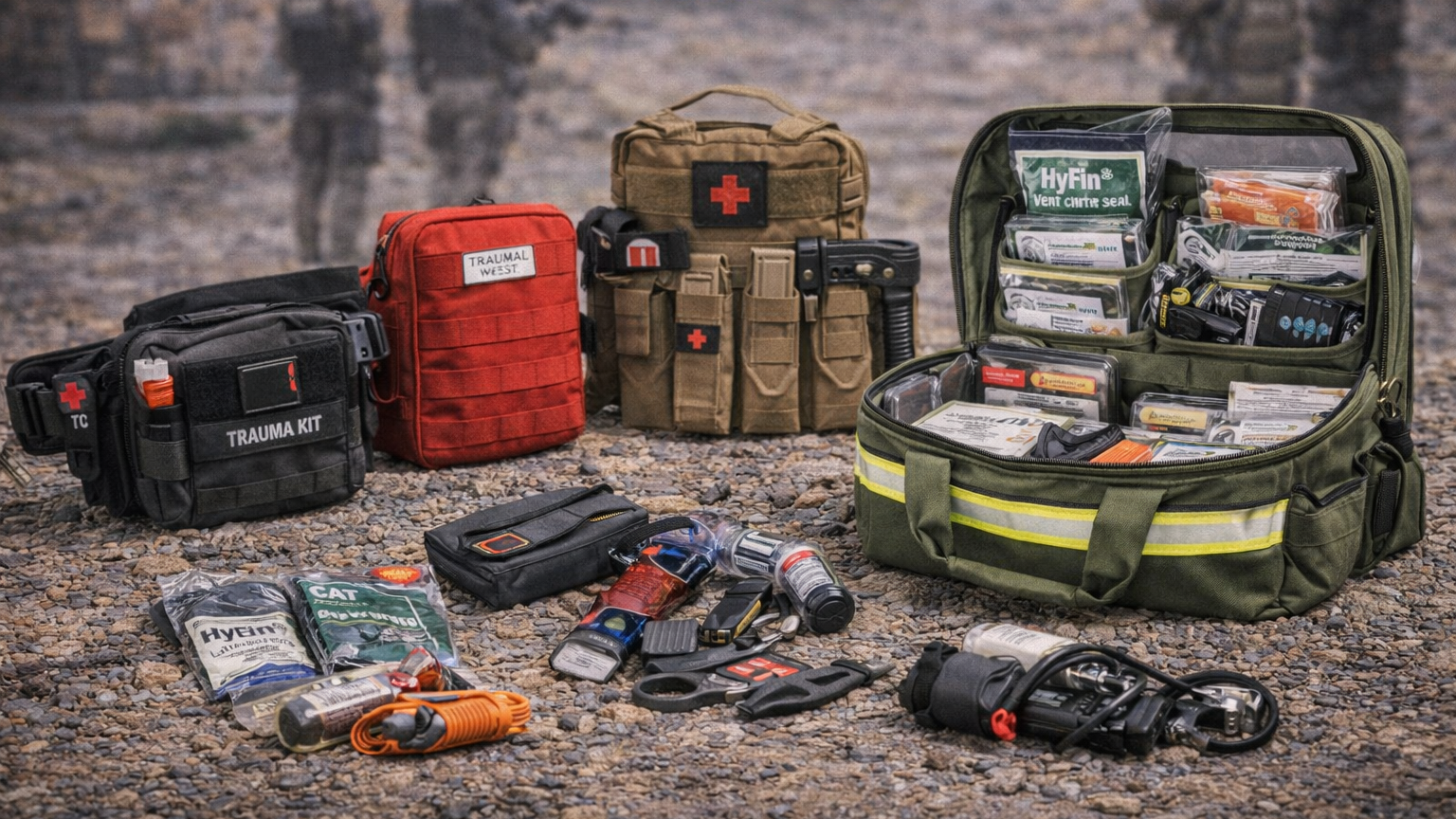
North American Rescue supplies military IFAKs to U.S. Army and Marine units. The commercial version of their IFAK II is the standard recommendation for civilians who want genuine trauma management capability — tourniquet application, wound packing, chest wound management — in a compact format that attaches to a pack or belt.
- CAT Tourniquet: Combat Application Tourniquet (CAT) — the gold standard for extremity hemorrhage control
- Hemostatic gauze: Combat Gauze or equivalent for wound packing
- Chest seal: Hyfin Vent for penetrating chest wounds
- Nasopharyngeal airway (NPA): Airway management
- Price: $60–$80 (IFAK pouch with contents)
- Best for: Hunters, shooters, backcountry operators, anyone with Stop the Bleed training
Important: the IFAK is a trauma supplement, not a general-purpose first aid kit. Keep a general kit for day-to-day needs and add the IFAK for high-consequence environments.
4. Johnson & Johnson All-Purpose First Aid Kit — Best Budget Home Kit
For households that want basic first aid coverage at minimal cost, the Johnson & Johnson All-Purpose kit provides adequate wound care for typical home injuries without specialty items. It covers cuts, scrapes, burns, and minor sprains with standard bandages, gauze, and antibiotic ointment.
- Contents: 140 pieces — adhesive bandages, gauze, antibiotic ointment, antiseptic wipes, tape, burn cream
- Price: $15–$25
- Best for: Home medicine cabinet baseline, office use, starter kit before upgrading
Specialty Additions for Specific Environments
Wilderness and Backcountry
- SAM splint: Moldable aluminum splint for fracture immobilization. One size fits all limbs. Reusable. No wilderness first aid kit is complete without one.
- Irrigation syringe: 20–35cc with 18-gauge tip — wound irrigation with clean water prevents infection significantly better than antiseptic wipe alone.
- Tincture of benzoin: Adhesive enhancer for butterfly strips and tape on sweaty or wet skin.
- Dental kit: Temporary filling material (Dentemp) for cracked or lost fillings. Dental emergencies in backcountry settings are painful and incapacitating without temporary treatment.
- Blister kit: Moleskin, gel pads, and Leukotape P (the most durable blister prevention tape available). Blisters are the most common field injury — treating early prevents progression to debilitating wounds.
Vehicle and Home
- Mylar emergency blanket: Hypothermia treatment for vehicle breakdown or accident victims. See our guide to best emergency blankets.
- Instant cold pack: Non-refrigerating cold pack for sprains and blunt trauma when ice isn’t available.
- Blood pressure cuff (manual): For home kits in households managing cardiovascular conditions.
High-Risk and Tactical Environments
- Tourniquet (CAT or SOFTT-W): The single most important addition for shooting ranges, hunters, or anyone in environments where arterial bleeding from extremity wounds is possible. Tourniquet application training (Stop the Bleed course, TCCC) is as important as having the device.
- QuikClot or Celox hemostatic gauze: For deep wound packing where direct pressure alone doesn’t control bleeding.
- Chest seal (Hyfin Vent or similar): For penetrating chest wounds — occludes the wound while allowing air to escape through one-way valve.

Storage and Maintenance
Container Selection
First aid kits fail when contents are damaged, expired, or inaccessible. Container requirements:
- Waterproof or water-resistant — particularly for vehicle and field kits that will be exposed to weather
- High-visibility color (red or orange) or clear labeling so any person, not just the kit owner, can locate it under stress
- Organized interior with dedicated compartments — fumbling through a pile of loose supplies in an emergency costs critical time
Annual Inspection Checklist
- Replace all expired medications
- Replace used or depleted supplies
- Check that adhesive strips haven’t dried out (sealed individually; exposed strips lose adhesion over time)
- Verify tourniquet hasn’t degraded (check webbing and windlass integrity)
- Update any personal medications stored with the kit
Frequently Asked Questions About First Aid Kits
What should be in a basic first aid kit?
A functional basic first aid kit contains assorted adhesive bandages (30+ pieces), sterile gauze pads (10+ pieces), medical tape (2 rolls), elastic bandage, antiseptic wipes, antibiotic ointment, nitrile gloves, tweezers, medical scissors, pain relievers (ibuprofen and acetaminophen), antihistamine (diphenhydramine), CPR face shield, and a first aid manual. This covers the full range of common household and minor field injuries. For wilderness or high-risk environments, add hemostatic gauze, tourniquet, SAM splint, and irrigation syringe.
How often should I replace first aid supplies?
Inspect annually and replace immediately after use. Medications expire — check all OTC medication dates during the annual inspection and replace anything within 6 months of expiration. Adhesive strips lose their adhesion over time, particularly in hot storage environments like vehicles. Elastic bandages lose elasticity. Hemostatic gauze and tourniquets have longer service lives but should be inspected for material integrity annually. Replace the entire kit every 3–5 years if supplies haven’t been used, even if individual items appear intact.
Should I include prescription medications in a first aid kit?
Yes, for personal kits. Include all personal prescription medications with dosage instructions, the prescribing physician’s contact information, and allergy information. Keep EpiPens current and stored in a temperature-stable environment — heat degrades epinephrine. For asthma, include a rescue inhaler. Label prescription medications clearly and store them separate from OTC medications to prevent accidental use by others accessing the kit.
Published by Chad Dyer, President, Brand Avalanche Media, Inc. Popular Outdoorsman is an independent editorial publication. Product recommendations reflect editorial judgment based on field experience and specifications review.


Reader Favorites
Field-to-table reference desk
From tag to table — official season dates for all 50 states, plus safe doneness temps for your harvest.
| Species | Archery | Firearm |
|---|---|---|
| Deer | Sep–Oct | Nov |
| Elk | Sep | Oct–Nov |
| Turkey | — | Apr–May |
All 50 state wildlife agencies, plus how seasons, tags and licenses work.
Find your state → Network| Doneness | Target |
|---|---|
| Rare | 125–130°F |
| Medium-rare | 130–135°F |
| Well-done | 160°F+ |
Safe pull temps for venison and steak, from Popular BBQ.
View full chart →