Best Freeze-Dried Food 2026: Top Brands for Emergency Prep, Camping, and Long-Term Storage
Freeze-dried food brands compared for 2026 on calories, shelf life and cost per serving rather than the number of servings on the box.
Freeze-dried food represents the most practical long-term food storage solution available to civilians. Nothing else combines a 25–30 year shelf life with nutritional retention, lightweight portability, and actually edible meals in a single product category. When the power goes out for a week, when a hurricane displaces your family, or when you’re three days into a backcountry hunt and fresh food is a memory, freeze-dried meals perform when everything else has failed.
This guide covers the best freeze-dried food brands and products in 2026 across every use case: emergency food storage, backpacking and camping, long-term prepping, and individual ingredient storage for cooking. It also covers the freeze-drying process, realistic shelf life expectations, cost-per-serving analysis, and the palatability differences between brands that matter when you’re actually eating this food under stress. For a complete emergency preparedness food plan, pair this with the best emergency food storage guide and the 72-hour emergency kit guide.
How Freeze-Drying Works and Why It Matters
The Freeze-Drying Process
Freeze-drying (lyophilization) removes moisture from food through sublimation — converting water directly from ice to vapor without passing through liquid phase. The process: food is flash-frozen, then placed in a vacuum chamber where temperature is gradually raised. Ice crystals sublimate out of the food, leaving 98–99% of the original food structure and nutrients intact. The result is food that weighs 70–90% less than fresh, rehydrates quickly with hot or cold water, and retains the flavor, texture, and nutritional profile of the original with minimal degradation.
This is fundamentally different from dehydration, which uses heat to evaporate moisture. Heat degrades vitamins (particularly B vitamins and Vitamin C), breaks down enzymes, and partially cooks the food during the process. Freeze-dried strawberries taste and look like real strawberries. Dehydrated strawberries taste and look like leather strips. The difference in nutrient retention and palatability is significant.
Shelf Life: What the Numbers Mean
The 25–30 year shelf life claimed by premium freeze-dried food brands assumes specific storage conditions: temperatures consistently between 55–70°F, low humidity, sealed oxygen-free packaging (vacuum-sealed Mylar with oxygen absorbers), and protection from light. These conditions are achievable in a basement, climate-controlled storage room, or cool interior closet — but not in a garage that reaches 120°F in summer or a damp storage unit.
Realistic shelf life under typical home storage: at 70°F average temperature, 20–25 years for most products. At 80°F average, 10–15 years. Each 10°F increase in storage temperature roughly halves effective shelf life. Storing your emergency food supply in a cool, consistently-temperatured space is as important as the quality of the food itself.
Once opened: most freeze-dried products should be consumed within 2–4 weeks of opening the primary container. Reseal tightly and minimize air exposure. Single-serving pouches eliminate this concern — open only what you’ll use.
Best Freeze-Dried Food Brands 2026
1. Mountain House — Best Overall Freeze-Dried Meals
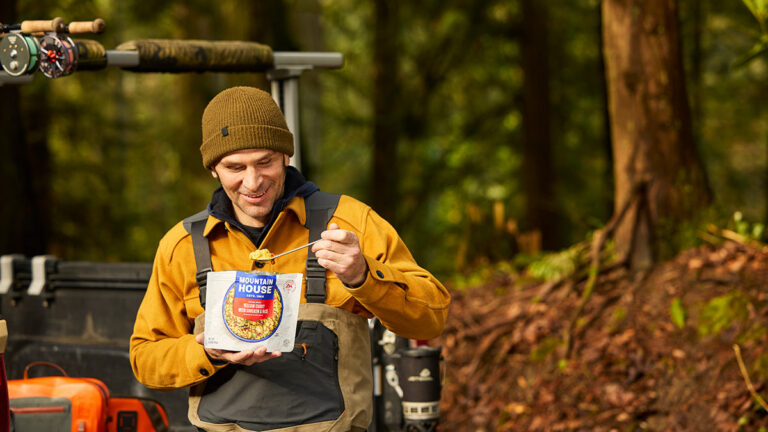
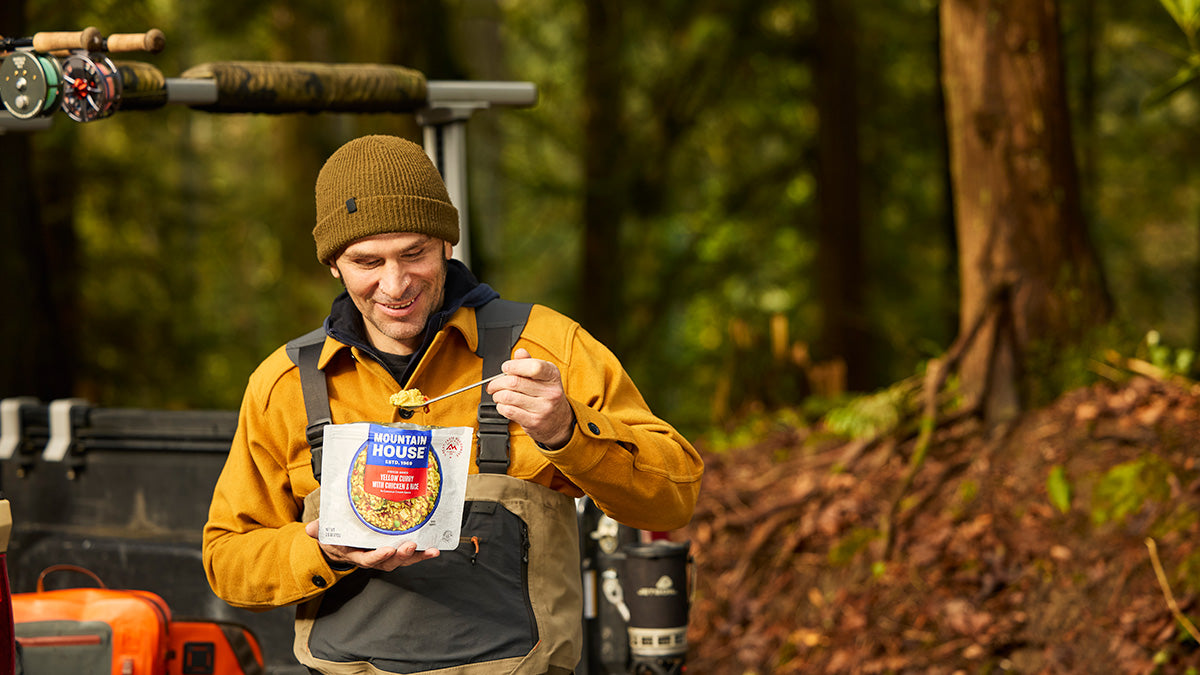
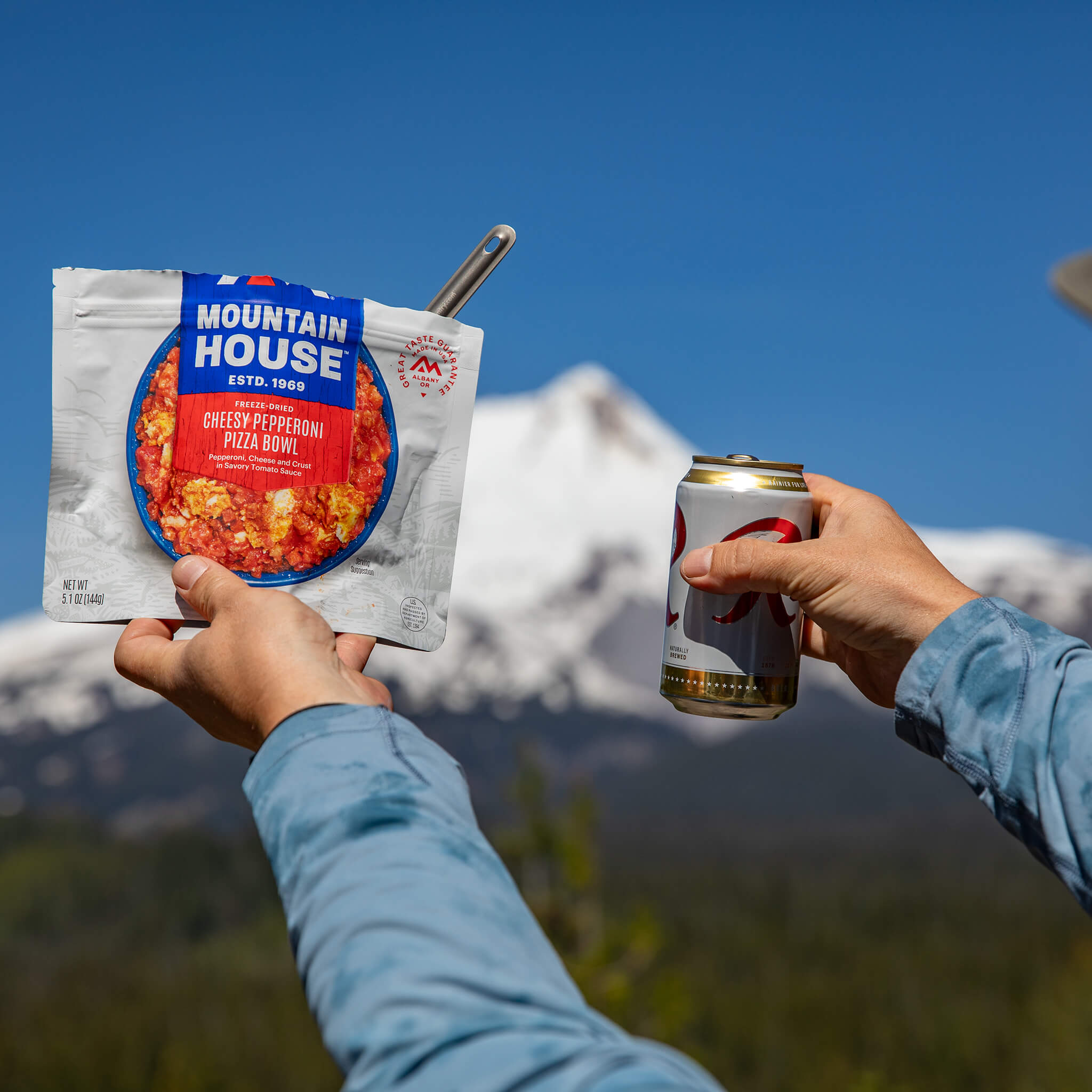
Mountain House has been the benchmark freeze-dried meal brand since 1969. Their products are used by the US military, search and rescue teams, and serious outdoor enthusiasts worldwide — the real-world validation that distinguishes a actually tested product from a marketing claim. Mountain House’s freeze-drying is done at their own Albany, Oregon facility, giving them quality control that contract-manufactured brands cannot match.
Mountain House meals taste noticeably better than the category average. Their chicken teriyaki, lasagna with meat sauce, and beef stew are legitimately palatable — not just “edible under survival conditions” but meals people request on camping trips by choice. Mountain House backs their cans with a 30-year taste guarantee (not just shelf life — taste, which requires higher quality standards).
- Shelf life: 30 years (cans), 5 years (pouches)
- Calories per serving: 250–500 depending on meal
- Rehydration time: 8–10 minutes with boiling water
- Price range: $8–$14 per serving (pouches), $45–$75 per #10 can (multiple servings)
- Best products: Chicken Teriyaki with Rice, Beef Stew, Lasagna with Meat Sauce, Granola with Milk and Blueberries
- Best for: Emergency storage, backpacking, hunting camps, anyone who won’t compromise on taste
One practical note: Mountain House pouch serving sizes are undersized for active adults. Budget 1.5–2 pouches per meal for a working adult under stress or physical activity.
2. Backpacker’s Pantry — Best Gourmet Freeze-Dried Meals
Backpacker’s Pantry occupies the premium end of the freeze-dried meal market, with recipes designed by culinary professionals rather than food scientists optimizing for shelf life. Their pad thai, Cuban coconut black beans, and Louisiana red beans and rice are actually distinctive meals that taste intentional rather than industrial. Backpacker’s Pantry also offers the widest selection of vegan and gluten-free options in the freeze-dried meal category.
The trade-off: Backpacker’s Pantry products cost more per serving than Mountain House and are not available in large #10 cans designed for bulk storage. They’re the right choice for the person who wants quality eating in the backcountry or a varied rotation in their emergency food supply — not for bulk cost-efficient storage.
- Shelf life: 5–7 years (pouches)
- Calories per serving: 250–600 depending on meal
- Price range: $10–$18 per serving
- Best products: Pad Thai with Tofu, Cuban Coconut Black Beans and Rice, Three Sisters Stew
- Best for: Backpackers, quality-focused emergency rotations, dietary restriction accommodation
3. Augason Farms — Best Budget Bulk Freeze-Dried Ingredients
Augason Farms produces the best value freeze-dried and dehydrated ingredient products for bulk emergency storage. Rather than complete meals, their core product line focuses on individual ingredients: freeze-dried vegetables (corn, peas, carrots), freeze-dried fruits (strawberries, raspberries), dehydrated dairy products (butter powder, cheese powder), and staple grains. This approach allows significantly lower cost per calorie than complete meal brands and provides the ingredient flexibility to cook real meals rather than relying on pre-mixed single-dish pouches.
The limitation: Augason Farms complete meals don’t match Mountain House or Backpacker’s Pantry for taste. Use Augason Farms for bulk ingredient storage and foundation calories; use Mountain House or Backpacker’s Pantry for complete meals in your rotation.
- Shelf life: 25–30 years (#10 cans), 2–5 years (pouches)
- Price range: $1.50–$4 per serving (significantly lower than meal brands)
- Best products: Freeze-Dried Corn, Freeze-Dried Strawberries, Morning Moo’s Milk Alternative, Butter Powder
- Best for: Bulk calorie storage, emergency food budgets, ingredient-based cooking during extended outages
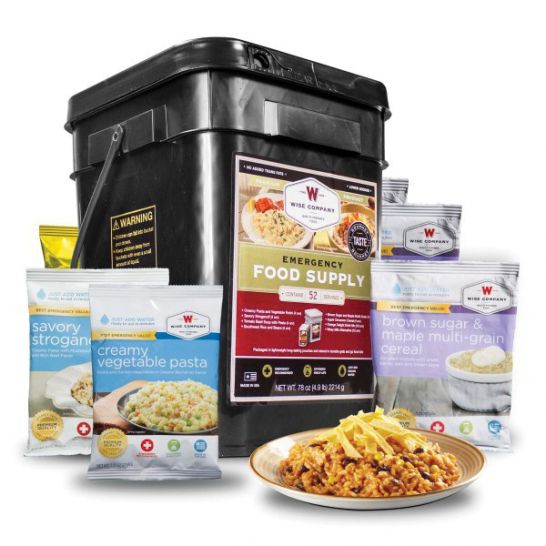
4. ReadyWise — Best Value Complete Emergency Food Kits
ReadyWise (formerly Wise Company) offers the best value for pre-assembled emergency food kits — 72-hour, 1-month, and 1-year supply packages that provide a complete calorie count at a lower price point than assembling equivalent Mountain House inventory. Their meals are serviceable rather than exceptional, but they represent a practical entry point for emergency food preparedness without significant research overhead.
ReadyWise kits are frequently available at Costco and are a good starting point for households that want a “buy it once” emergency food solution. Supplement with Mountain House products for variety and taste quality over time.
- Shelf life: 25 years
- Price range: $1.50–$3.50 per serving (lower than premium brands)
- Kit options: 72-hour (4-person), 30-day (1-person), 1-year (1-person)
- Best for: Emergency food preparedness beginners, cost-conscious bulk storage, Costco shoppers
5. Thrive Life — Best Freeze-Dried Individual Ingredients
Thrive Life focuses on single-ingredient freeze-dried products of higher quality than Augason Farms: freeze-dried chicken, beef, and shrimp that rehydrate with significantly better texture than their competitors’ equivalents. Their freeze-dried meats, in particular, are the best available for use in cooking — they rehydrate into recognizable protein that integrates naturally into recipes rather than producing the rubbery or mushy texture common in other brands’ freeze-dried meats.
- Shelf life: 25 years (#10 cans)
- Price range: $4–$12 per serving (premium for ingredient quality)
- Best products: Freeze-Dried Chicken, Freeze-Dried Shrimp, Freeze-Dried Corn, Freeze-Dried Mixed Vegetables
- Best for: Cooks who want usable protein in extended emergency storage, quality-focused ingredient buyers
Caloric Planning for Emergency Food Storage
Daily Calorie Requirements
Emergency food planning requires realistic caloric targets. A sedentary adult needs approximately 1,600–2,000 calories per day to maintain weight and cognitive function under stress. An active adult doing physical work during a disaster scenario — moving debris, heating with wood, managing animals — requires 2,500–3,500 calories. Plan for 2,000 calories minimum per adult per day; add 500 calories per day for each physically active adult in your household.
Children’s caloric needs vary significantly by age. A 10-year-old requires approximately 1,400–1,600 calories; a teenage male may need 2,500–3,000 calories. Don’t average these numbers — plan per individual. Emergency stress increases caloric requirements for children proportionally more than adults due to growth demands continuing regardless of food supply disruption.
Cost Per Serving Analysis
Freeze-dried food cost analysis requires comparing cost per actual calorie rather than cost per serving (which varies wildly in caloric content). Using typical 2026 pricing:
Mountain House pouch meals: approximately $2.50–$3.50 per 100 calories. Augason Farms bulk ingredients: approximately $0.50–$1.50 per 100 calories. ReadyWise kits: approximately $0.75–$1.25 per 100 calories. Thrive Life premium ingredients: approximately $2–$4 per 100 calories.
For a 30-day supply at 2,000 calories per person per day, budget approximately $300–$600 using a mixed strategy (Augason Farms bulk plus Mountain House for complete meals), or $600–$1,200 using premium Mountain House exclusively.
Storage and Rotation Best Practices
First In, First Out
Emergency food supply rotation follows the same principle as commercial food service: first in, first out. When you add new products, place them behind existing inventory. Use the oldest inventory first in regular camping, hunting trips, and meal planning — then replace what you use. A food supply that gets used and rotated remains fresh; a supply that sits untouched for 20 years degrades regardless of shelf life claims.
Storage Location Requirements
The ideal storage environment is cool (55–65°F), dry (below 15% relative humidity), dark, and protected from rodents and insects. A basement interior room away from exterior walls often meets these requirements. Avoid garages, attics, and exterior storage buildings where temperature fluctuates dramatically. Cans and sealed Mylar pouches provide rodent resistance; cardboard boxes do not.
Frequently Asked Questions About Freeze-Dried Food
What’s the shelf life of freeze-dried food?
Premium freeze-dried food stored in sealed #10 cans with oxygen absorbers at 55–70°F achieves a 25–30 year shelf life. Mountain House specifically backs their cans with a 30-year taste guarantee. Open packages should be consumed within 2–4 weeks, resealed tightly between uses. Shelf life is dramatically reduced by high storage temperatures — each 10°F increase above 70°F roughly halves effective shelf life. The 25–30 year claims assume ideal storage conditions, which are achievable with proper planning but not guaranteed in all storage locations.
Do freeze-dried meals taste good?
Quality varies significantly by brand. Mountain House and Backpacker’s Pantry produce actually palatable meals that people choose to eat on recreational trips, not just in emergencies. Budget brands (ReadyWise, some Augason Farms complete meals) are edible and nutritionally adequate but noticeably processed in taste and texture. Palatability matters more than it appears to during pre-emergency planning — people under stress eat less when food is unpalatable, which compounds the physical effects of disaster scenarios. Spending on better-tasting food is not a luxury for emergency preparedness; it’s a practical investment in calorie intake compliance.
How much water does freeze-dried food require?
Most freeze-dried meals require 1–2 cups of water per serving. Hot water (near boiling) rehydrates in 8–10 minutes and produces better texture. Cold water rehydration works but takes 20–30 minutes and results in slightly inferior texture. Water availability must be factored into emergency food planning — a 30-day food supply for one person requires approximately 60–120 additional liters of water for food preparation beyond drinking water needs. Include a water filtration capability (Sawyer Squeeze, LifeStraw, or equivalent) in every emergency kit that includes freeze-dried food.
Published by Chad Dyer, President, Brand Avalanche Media, Inc. Popular Outdoorsman is an independent editorial publication. Product recommendations reflect editorial judgment based on research and specifications review.
Reader Favorites
Field-to-table reference desk
From tag to table — official season dates for all 50 states, plus safe doneness temps for your harvest.
| Species | Archery | Firearm |
|---|---|---|
| Deer | Sep–Oct | Nov |
| Elk | Sep | Oct–Nov |
| Turkey | — | Apr–May |
All 50 state wildlife agencies, plus how seasons, tags and licenses work.
Find your state → Network| Doneness | Target |
|---|---|
| Rare | 125–130°F |
| Medium-rare | 130–135°F |
| Well-done | 160°F+ |
Safe pull temps for venison and steak, from Popular BBQ.
View full chart →