Best Emergency Radio 2026: NOAA, Hand-Crank, and Multi-Band Picks Compared
Last updated: October 9, 2026 · Originally published September 28, 2026
In the first 30 minutes of a tornado warning or a storm outage, the information you get decides everything. These radios still deliver it.
When a tornado warning is issued, a hurricane makes landfall, or a winter storm knocks out power, the information you receive in the first 30 minutes determines the decisions that keep your family safe. Cell networks saturate and fail in regional emergencies. Internet goes dark with the power. A dedicated emergency radio, but keeps working — it receives NOAA Weather Radio broadcasts continuously, alerts you to watches and warnings automatically, and requires no infrastructure beyond radio waves and a power source you carry with you.
This guide covers the best emergency radios in 2026 across every category: NOAA-only weather radios, hand-crank multiband portables, and full-featured multi-band receivers. It also covers power source tradeoffs (hand-crank vs. battery vs. solar), SAME alert programming, and what features actually matter for emergency preparedness. For a complete communications plan, pair this with the ham radio beginner’s guide and the best GMRS radios guide.
What Makes an Emergency Radio Different
Not all radios are emergency radios. Here’s what separates a dedicated emergency radio from a standard AM/FM portable:
NOAA Weather Radio (NWR) Reception
NOAA Weather Radio broadcasts on seven dedicated VHF frequencies (162.400–162.550 MHz) 24 hours a day, 7 days a week, from over 1,000 transmitters covering 95% of the US. Broadcasts include current conditions, forecasts, and emergency alerts for severe weather, AMBER alerts, civil emergencies, and hazardous material spills. An emergency radio that receives NWR bands is fundamentally different from a radio that doesn’t — it puts you on the same information network used by emergency managers.
SAME (Specific Area Message Encoding) Alerts
SAME technology allows you to program your emergency radio to alert only for your specific county. Without SAME, a radio set to alert for all broadcasts wakes you up for every watch and warning in a multi-state region — a scenario that trains people to disable alerts. With SAME programmed correctly, the radio stays silent until a warning is issued for your exact county.
Alert Tone
All NOAA-capable radios play a distinctive two-tone alert before emergency broadcasts. The most important emergency radio feature is simply that this tone wakes you when the radio is on standby — ensuring you receive the warning regardless of what else is happening at the moment.


Power Source Tradeoffs
Battery-Powered (AA or AAA)
Standard alkaline batteries are the most practical primary power source for emergency radios. They’re available everywhere, have a shelf life of 7–10 years, and provide consistent voltage throughout their discharge cycle. The practical recommendation: power your emergency radio on batteries during an emergency, keep a pack of fresh backup batteries in the same storage bag, and rotate batteries annually.
Lithium AA batteries are worth the additional cost for emergency kits — they last 3–4x as long as alkaline at cold temperatures, have a 20-year shelf life, and maintain voltage better under heavy load.
Hand-Crank
Hand-crank generators are present on virtually every multifunction emergency radio. They work when no batteries or power are available, which is their value. The practical limitation: hand-cranking is labor-intensive for sustained listening. A 1-minute crank typically provides 10–30 minutes of radio time depending on the model. Hand-crank is best treated as a last-resort backup, not a primary power source.
Solar Panel
Built-in solar panels on emergency radios are small and slow — they trickle-charge an internal battery over hours rather than minutes. On a clear day in direct sun, most built-in solar panels can offset light battery drain during use, but not replace it. Solar is a useful supplementary charging option in a sustained power outage scenario, but should not be the primary power expectation.
USB Charging (Internal Battery)
Many modern emergency radios include a USB-charged internal lithium battery alongside AA battery backup. This is the best configuration for practical emergency use: charge the internal battery before a known storm, run on internal battery during the event, and keep AA batteries as backup when the internal battery depletes.
Best Emergency Radios 2026
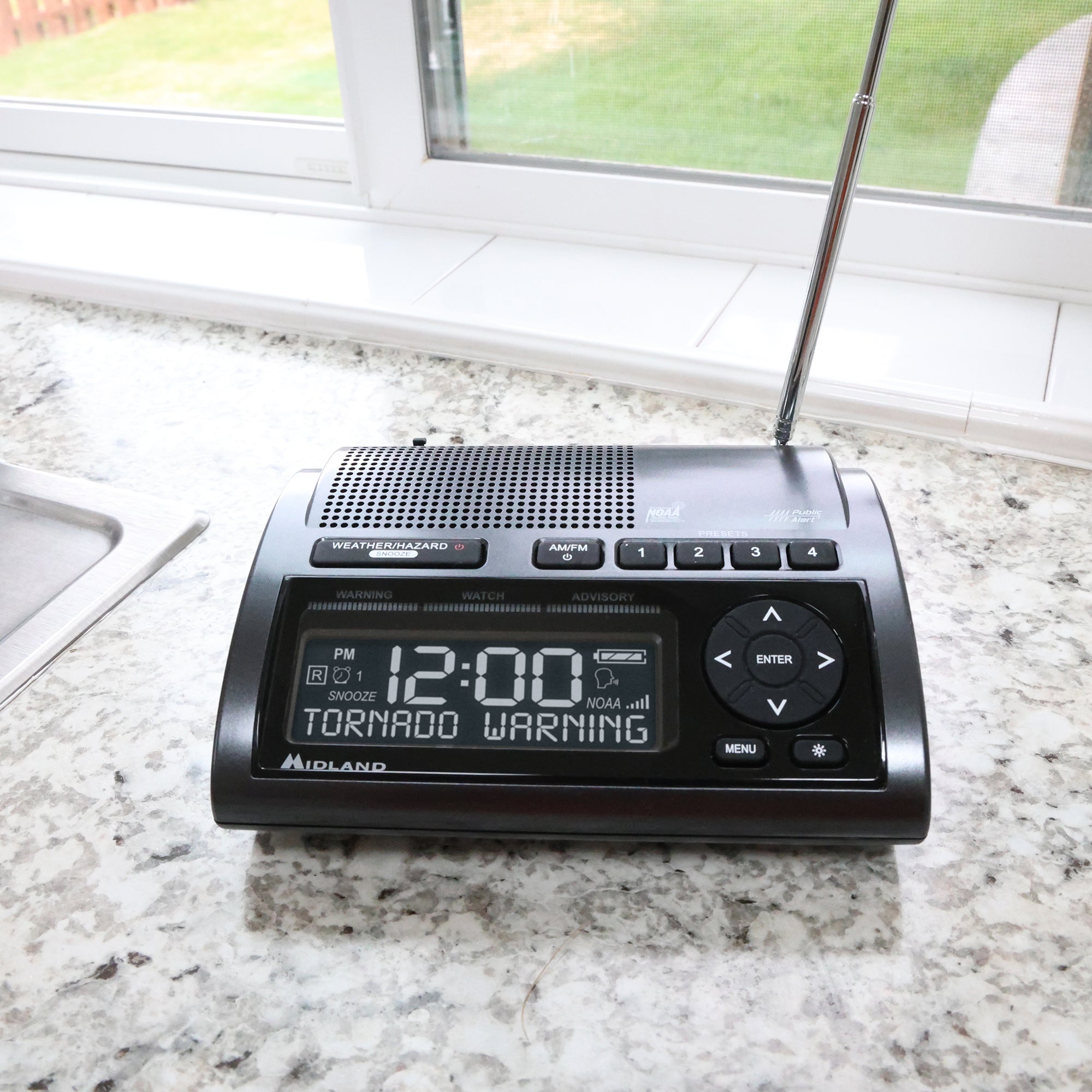
1. Midland WR400 — Best Home Emergency Radio
The Midland WR400 is the best dedicated home emergency radio for anyone who wants comprehensive NOAA coverage with SAME programming and a loud, reliable alert. It covers all seven NOAA weather frequencies, allows SAME programming for up to 25 counties (useful for households near county lines), and includes a color-coded hazard alert display that shows the alert type visually — useful in noisy households or for anyone with hearing limitations.
- NOAA reception: All 7 NWR frequencies
- SAME programming: Up to 25 counties
- Power: AC adapter, backup AA batteries (6)
- Alert features: Color-coded display, loud siren alert, voice annunciation of alert type
- Price: $50–$70
- Best for: Home use, bedside alert, families with multiple county coverage needs
2. Kaito KA500 — Best All-Around Portable Emergency Radio
The Kaito KA500 is the most comprehensive portable emergency radio available at its price point. It covers AM, FM, shortwave (SW), NOAA weather, and includes a hand-crank generator, built-in solar panel, internal lithium battery (USB rechargeable), and AA battery backup — making it actually functional regardless of what power source is available.
The KA500’s shortwave reception is a meaningful addition for serious emergency preparedness: SW broadcasts from international stations provide news during regional infrastructure failures when domestic stations go off-air. FEMA and Red Cross both recommend SW-capable radios for extended emergency use.
- Bands: AM, FM, 5 shortwave bands, NOAA weather
- Power: Hand-crank, solar, USB (internal lithium), AA (3)
- Additional features: LED flashlight, phone charging output (emergency only)
- Weight: 12.3 oz
- Price: $50–$65
- Best for: Bug-out bags, 72-hour kits, all-hazards preparedness, extended power outages
3. Eton FRX5-BT — Best Feature-Rich Portable
The Eton FRX5-BT adds Bluetooth audio streaming to the full emergency radio feature set — a practical addition for extended power outages when you want to listen to stored music or podcasts alongside emergency broadcasts. It includes AM, FM, NOAA weather, hand-crank, solar, USB charging, and a bright LED flashlight. The Eton build quality is noticeably higher than budget alternatives, with a rubberized housing that handles drops and field conditions well.
- Bands: AM, FM, NOAA weather
- Power: Hand-crank, solar panel, USB (internal battery), AA (3)
- Additional features: Bluetooth, LED flashlight, USB phone charging output
- Weight: 14.1 oz
- Price: $60–$80
- Best for: Households wanting premium build quality, extended outage comfort, Bluetooth audio
4. Midland ER310 — Best Compact Emergency Portable
The Midland ER310 is the most compact serious emergency radio available — it fits in a jacket pocket and covers NOAA weather, AM, FM, and includes hand-crank and USB charging. Its CREE LED flashlight and SOS strobe are more powerful than those on competing compact radios. The ER310’s SAME alert capability and compact form make it the top recommendation for a personal emergency kit or 72-hour bag where space is limited.
- Bands: AM, FM, NOAA weather
- Power: Hand-crank, USB (internal battery)
- Additional features: CREE flashlight, SOS strobe, USB phone charging
- Weight: 9.6 oz
- Price: $45–$60
- Best for: Bug-out bags, 72-hour kits, compact personal emergency kit
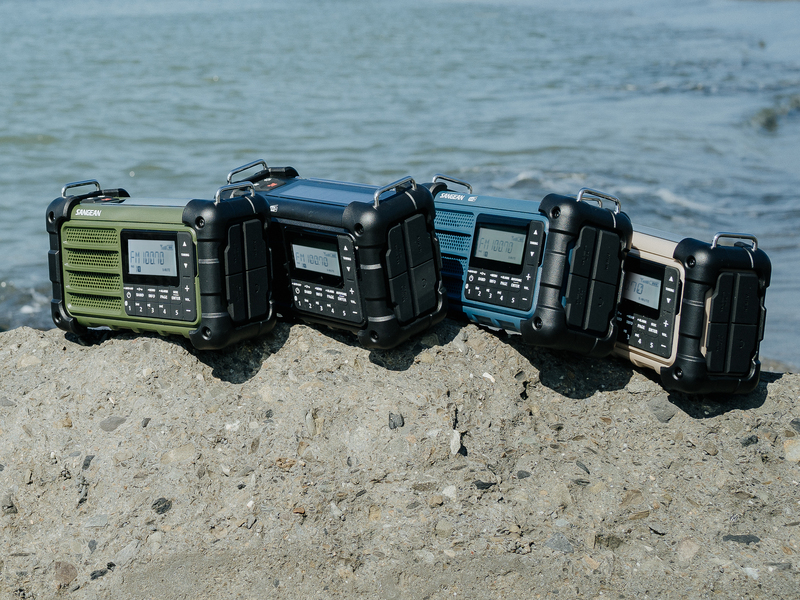
5. Sangean MMR-99 — Best Premium Emergency Radio
The Sangean MMR-99 is the premium choice for buyers who want the best reception, build quality, and features without compromise. It covers AM, FM, NOAA weather, includes SAME alert programming, a high-performance internal speaker, USB-C charging, hand-crank, solar, and a bright LED flashlight. Sangean’s radio engineering heritage produces noticeably better AM and FM reception than mass-market emergency radios — meaningful in rural areas where station signals are weaker.
- Bands: AM, FM, NOAA weather
- Power: Hand-crank, solar, USB-C (internal battery), AA (3)
- SAME programming: Yes
- Price: $80–$110
- Best for: Rural households, buyers prioritizing reception quality and build longevity
Emergency Radio Setup and Programming
Programming SAME Alerts
Every household should program SAME codes for their county before a weather emergency. SAME codes are 6-digit FIPS codes — find yours at weather.gov/nwr/counties. Program the code into your radio’s SAME function, test the alert, and confirm your radio sounds when a watch or warning is issued for your area. This step takes 5 minutes and is the difference between a radio that alerts you correctly and one you disable after false alarms.
Placement for Overnight Use
Emergency radios only protect sleeping households if they’re positioned where the alert tone is audible in bedrooms with doors closed. Test alert volume from your bedroom with the radio in its intended location before the first storm of the season. If the alert can’t be heard clearly, move the radio closer to the bedroom or add a second unit.
Frequently Asked Questions About Emergency Radios
What’s the difference between a weather radio and a regular AM/FM radio?
A weather radio specifically receives NOAA Weather Radio broadcasts on seven dedicated VHF frequencies (162.400–162.550 MHz), enabling automatic SAME alerts for your county when watches or warnings are issued. A standard AM/FM radio provides news and entertainment but doesn’t receive NOAA frequencies and has no alert capability unless local stations broadcast the emergency. During a weather emergency, a weather radio provides authoritative warnings 15–30 minutes faster than most broadcast media.
Should I choose hand-crank or battery-powered emergency radios?
Battery-powered operation is more practical for sustained emergency use — hand-cranking provides only 10–30 minutes of operation per minute of effort and is tiring for extended monitoring. The best configuration is a radio with an internal USB-rechargeable battery as the primary power source, with AA battery backup for when the internal battery depletes. Hand-crank becomes the fallback when all other power is exhausted. Precharge the internal battery before any forecast severe weather event.
Can emergency radios receive international broadcasts?
Models with shortwave (SW) bands receive international broadcasts from BBC World Service, Voice of America, Radio Free Europe, and hundreds of other shortwave stations. Shortwave capability is a meaningful emergency preparedness feature because international broadcasters often continue transmitting when regional infrastructure fails. The Kaito KA500 covers five shortwave bands at a competitive price. Standard NOAA weather radios do not include shortwave — they operate only on the seven NWR VHF frequencies.
Published by Chad Dyer, President, Brand Avalanche Media, Inc. Popular Outdoorsman is an independent editorial publication. Product recommendations reflect editorial judgment based on field experience and specifications review.


Reader Favorites
Field-to-table reference desk
From tag to table — official season dates for all 50 states, plus safe doneness temps for your harvest.
| Species | Archery | Firearm |
|---|---|---|
| Deer | Sep–Oct | Nov |
| Elk | Sep | Oct–Nov |
| Turkey | — | Apr–May |
All 50 state wildlife agencies, plus how seasons, tags and licenses work.
Find your state → Network| Doneness | Target |
|---|---|
| Rare | 125–130°F |
| Medium-rare | 130–135°F |
| Well-done | 160°F+ |
Safe pull temps for venison and steak, from Popular BBQ.
View full chart →