Winter Survival Kit Checklist for Car and Backcountry
A winter survival kit keeps you warm, helps rescuers find you and carries you until help arrives, in a stuck car or on a trail.
Originally published: November 27, 2026
Cold weather punishes small mistakes. A slide into a ditch on a back road, a wrong turn on a snowshoe loop, a dead battery at a trailhead: in October each one is an inconvenience, and in January each one starts a clock. A winter kit slows that clock down. It buys warmth while the heater is off, light and color so a plow driver sees the car, and food and water while somebody clears the road. The car version and the pack version split along those lines, and the right kit is the one that matches where you get stuck.
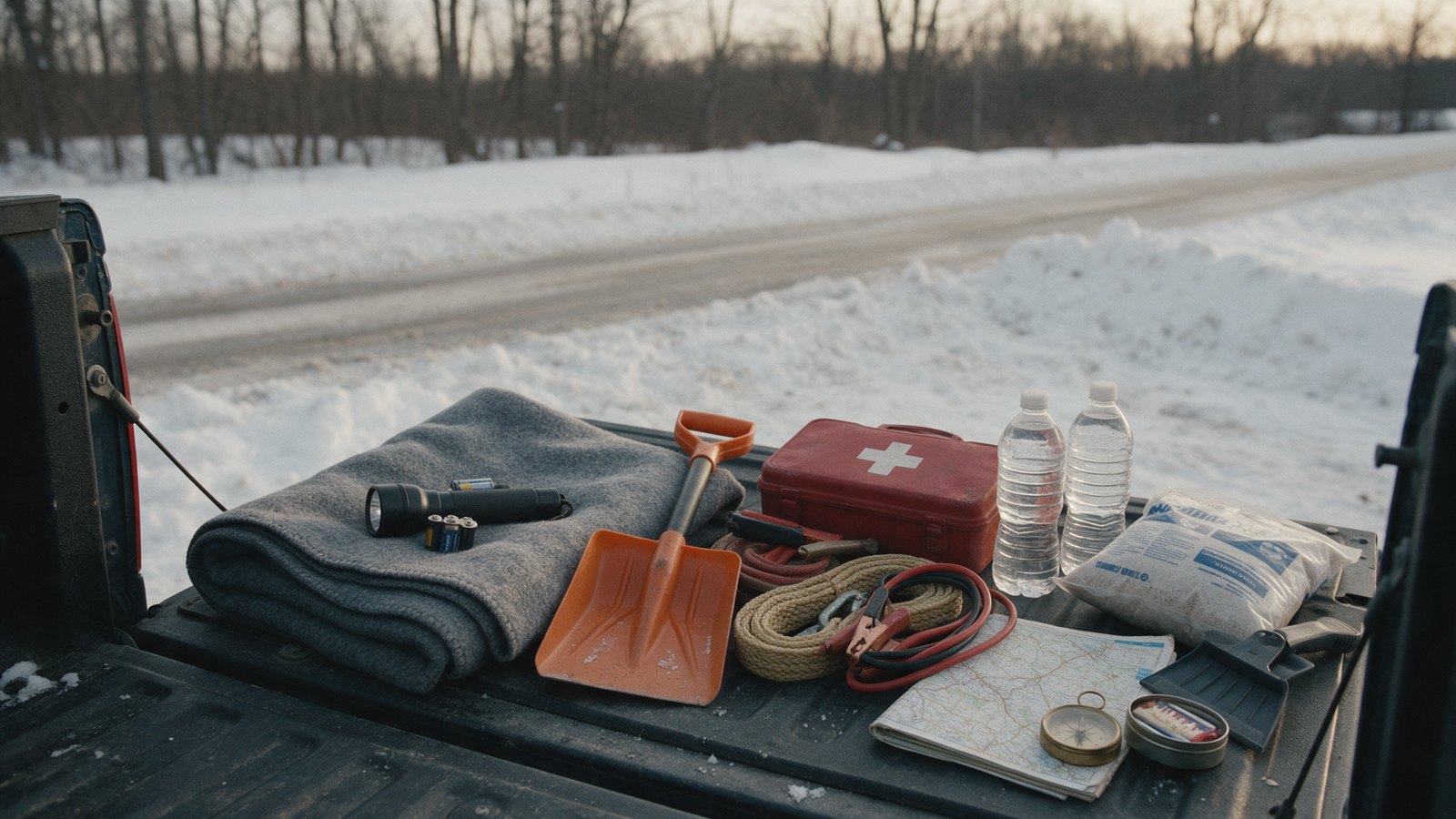
The whole car kit fits in one plastic tote and takes an evening to put together, and most of it is already in the garage: an old sleeping bag, the shovel, a bag of cat litter. I would rather haul a tote I never open all winter than dig a wheel out with a windshield scraper. The National Weather Service, the American Red Cross and the National Park Service each publish a list, and the three overlap far more than they differ.
Winter Survival Kit at a Glance
- Car kit: blankets, flashlight and batteries, first aid kit, high-calorie food, water, dry clothing, shovel, scraper, tow rope, jumper cables, sand or cat litter, phone and charger.
- Backcountry kit: the NPS Ten Essentials, with extra layers and a way to make fire and melt snow.
- If your car gets stuck: stay in the vehicle, run the engine about 10 minutes an hour, and keep the exhaust pipe clear of snow.
- Hypothermia starts when body temperature drops below 95°F, and it can happen in air as warm as 60°F.
What Goes in a Winter Car Survival Kit?
The car list starts with warmth, light and traction, then adds the dull items that get a wheel unstuck. The National Weather Service publishes it on its winter storm page:
- Mobile phone, charger and batteries
- Blankets or sleeping bags
- Flashlight with extra batteries
- First aid kit
- Knife
- High-calorie, non-perishable food
- Extra clothing to keep dry
- A large empty can to use as an emergency toilet, plus tissues, toilet paper and paper towels
- A small can and waterproof matches to melt snow for drinking water
- A sack of sand or cat litter for traction
- Shovel
- Windshield scraper and brush
- Tool kit
- Tow rope
- Battery booster cables
- Water container
- Candle and matches, for light and, in an emergency, lifesaving heat
- Compass and road maps, because a phone’s battery will not last
The last two are the ones people skip. A paper map in the glovebox looks ridiculous right up until the phone dies, which is why the NWS says not to depend on a mobile device with limited battery life. The candle is the other one, and a single flame inside a closed car is real heat. I compared Mylar against wool in our emergency blanket guide if you want the warmth question settled first.

What Does the Red Cross Add?
Three days of supplies you can carry, two weeks of supplies at home: that is what the American Red Cross adds on top of the car kit. Its winter storm safety page splits them this way:
- A Go-Kit with “at least three days of supplies you can carry with you,” including backup batteries and chargers for phones and medical devices.
- A Stay-at-Home Kit with “at least two weeks of supplies.”
- At least one gallon of drinking water per person per day.
- A one-month supply of needed medications and medical supplies.
- For the vehicle: “a blanket, warm clothing, a first aid kit, and boots.”
Boots are the item worth underlining. The shoes most people drive in are fine on the gas pedal and useless for digging a tire out of a drift, and wet feet is how a cold afternoon turns into a frostbite problem. I walked through the three-day version in our 72-hour emergency kit guide, and the get-home bag is the same idea built to ride in the car year-round. Stocking the house at the same time? Current Homesteading’s 72-hour emergency kit for homesteads covers that side.
What Goes in a Backcountry Winter Kit?
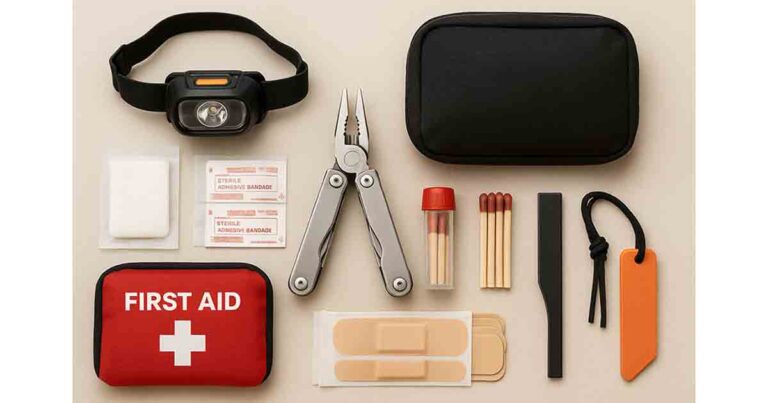
On foot the list leans harder on clothing, because there is no heater and no battery to fall back on. The National Park Service’s Ten Essentials are built for “minor injuries, sudden weather changes, or unexpected emergencies”:
- Navigation: map, compass and GPS, with a physical map as backup and an extra phone battery.
- Sun protection: sunglasses, sunscreen and a hat.
- Extra clothing: jacket, hat, gloves, rain shell and layers that reflect “the most extreme conditions you could encounter.” Bright clothing helps search and rescue spot you.
- Illumination: a flashlight and a headlamp, plus extra batteries, to find your way out or to signal for help.
- First aid supplies, checked for expiration dates.
- Fire: waterproof matches or a lighter and fire starters.
- Repair kit and tools: duct tape, knife, multi-tool.
- Nutrition: an extra day’s supply of no-cook food.
- Hydration: water and a way to treat more.
- Emergency shelter: a tent, tarp, bivy sack or emergency space blanket.
Winter changes how that kit gets used more than what goes in it. Snow is water you have to spend fuel on, and eating it unmelted lowers your body temperature, which is the opposite of the plan. If the weather closes in, the NWS guidance for being caught in a storm is a lean-to, windbreak or snow cave for protection from the wind, then a fire for heat and to attract attention. Our survival shelter guide covers the building part.
What Should You Do if Your Car Gets Stuck in Snow?
Stay with the car. It is shelter, it is a windbreak, and it is what a search crew is looking for, which is why the NWS puts it bluntly: “Stay in the vehicle! If you leave your vehicle, you will become disoriented quickly in wind-driven snow and cold.” Then:
- Run the motor about 10 minutes each hour for heat.
- Open a window a little while the motor runs, to avoid carbon monoxide poisoning.
- Clear snow from the exhaust pipe.
- Turn on the dome light at night while the engine runs, so rescuers can see you.
- Tie a bright cloth, preferably red, to the antenna or door.
- Once the snow stops falling, raise the hood to signal that you need help.
Clear that exhaust pipe EVERY time you start the engine, not just the first time. Snow drifts back over it while you sit, and carbon monoxide gives no warning at all. (The cracked window is the same rule wearing a different coat.)
How Do You Spot Frostbite and Hypothermia?
Frostbite announces itself once, as redness or pain in a patch of skin, and then goes quiet. The other signs, which the NWS lists from the CDC on its extreme cold page, are “a white or grayish-yellow skin area,” skin that “feels unusually firm or waxy,” and numbness. Fingers, toes, nose and ears go first. Do not rub frostbitten skin, and do not warm it with hot water, a heater or a fire: numb skin burns before it can feel the heat.
Hypothermia is body temperature below 95°F, and it does not need a blizzard: it can happen in air as warm as 60°F, particularly in water or after a long stretch outside in the wrong clothes. Get the person somewhere warm, warm the center of the body first, and get medical help. What about cold that comes from water instead of air? I covered that side in our piece on hypothermia-halting tips.
Car Kit vs. Backcountry Kit
What decides which column you build from is whether you will be sitting with a heater and a battery, or carrying every ounce on your back.
| Need | Car kit (NWS, Red Cross) | Backcountry kit (NPS Ten Essentials) |
|---|---|---|
| Warmth | Blankets or sleeping bags, extra dry clothing, boots | Extra layers for the worst conditions, emergency shelter |
| Light | Flashlight, extra batteries, candle | Headlamp, extra batteries |
| Water | Water container; small can to melt snow; 1 gallon per person per day (Red Cross) | Water and treatment supplies |
| Food | High-calorie, non-perishable | Extra day of no-cook food |
| Fire | Waterproof matches, candle | Waterproof matches or lighter, fire starters |
| Navigation | Compass and road maps | Map, compass, GPS |
| Getting unstuck | Shovel, scraper, sand or cat litter, tow rope, booster cables, tool kit | Repair kit, knife, multi-tool |
| First aid | First aid kit | First aid kit, checked for expiration |
| Communication | Phone, charger, batteries | Extra phone battery; tell someone your plan |
What Should You Do Before You Leave?
Most winter trouble is settled before the engine starts. Top off all fluids, check the lights, heater and wipers, and keep the gas tank near full, which the NWS ties to ice in the tank and fuel lines rather than to range. Avoid traveling alone, tell someone your timetable and both routes, and call 511 for road conditions, a Department of Transportation service every state offers. Road status matters more than the forecast when the destination is public land down a gravel road, and our guide to checking winter road status covers what to look at.
The same rule holds on foot. Tell someone where you are going and when to expect you back. A kit buys time. Someone who knows where to look is what ends the wait.
Pack the car kit before the first storm, not during it, and check it every fall: batteries, food dates, the first aid kit and the shovel you lent the neighbor. The Field Brief, our Tuesday newsletter, sends cold-weather prep all winter, free at this sign-up page.
Behind the shoulder was the clear top answer, picked by 70% of you.
Frequently Asked Questions
What should be in a winter car emergency kit?
The NWS list covers blankets or sleeping bags, a flashlight with spare batteries, a first aid kit, high-calorie food, water, dry clothing, a shovel, a scraper, sand or cat litter, a tow rope, booster cables, and a phone with a charger.
Should you stay in your car if stranded in snow?
Yes. The NWS says to stay in the vehicle because you will become disoriented quickly in wind-driven snow. Run the engine about 10 minutes an hour with a window cracked and the exhaust pipe clear.
How much water should a winter emergency kit have?
The Red Cross says at least one gallon of drinking water per person per day. Its Go-Kit covers at least three days.
Can you eat snow for water in a survival situation?
Melt it first. The NWS warns that eating unmelted snow lowers your body temperature, which is why its car kit includes a small can and waterproof matches for melting snow.
At what temperature can hypothermia happen?
The NWS says hypothermia can occur in air as warm as 60°F, especially in water or after long exposure without proper clothing. It is defined as body temperature below 95°F.
Sources: National Weather Service, Prepare! Don’t Let a Winter Storm Take You by Surprise; National Weather Service, What To Do If You’re Caught in a Winter Storm; National Weather Service, During Extremely Cold Weather; American Red Cross, Winter Storm Safety; National Park Service, The 10 Essentials.
Reader Favorites
Field-to-table reference desk
From tag to table — official season dates for all 50 states, plus safe doneness temps for your harvest.
| Species | Archery | Firearm |
|---|---|---|
| Deer | Sep–Oct | Nov |
| Elk | Sep | Oct–Nov |
| Turkey | — | Apr–May |
All 50 state wildlife agencies, plus how seasons, tags and licenses work.
Find your state → Network| Doneness | Target |
|---|---|
| Rare | 125–130°F |
| Medium-rare | 130–135°F |
| Well-done | 160°F+ |
Safe pull temps for venison and steak, from Popular BBQ.
View full chart →