Best Emergency Blankets 2026: Mylar, Wool, and Survival Picks
Last updated: October 9, 2026 · Originally published September 28, 2026
An emergency blanket is the most weight-efficient survival gear you can carry: a mylar sheet weighs 1.4 ounces and packs to a deck of cards.
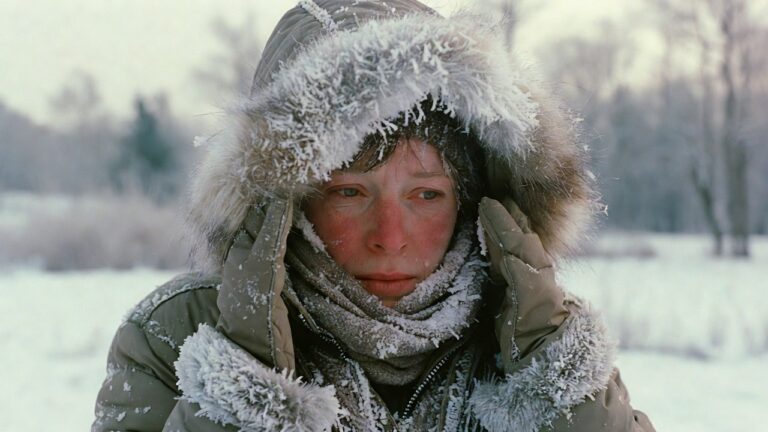
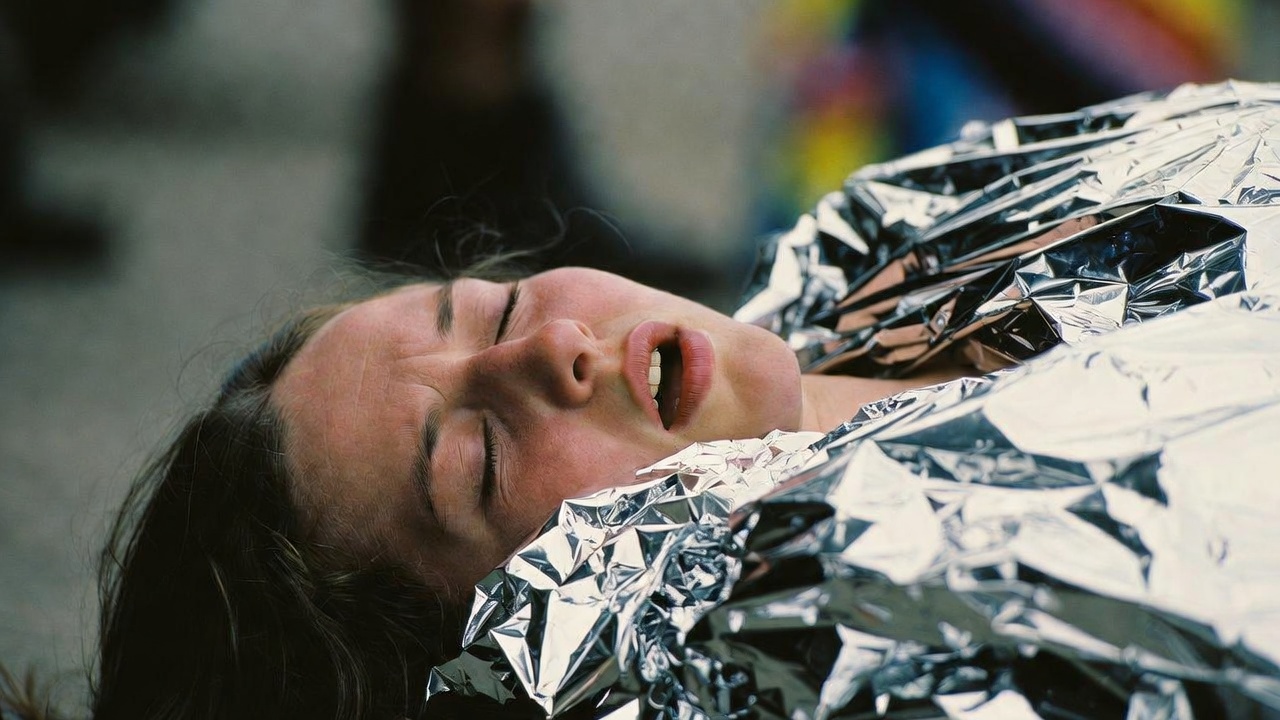
An emergency blanket is the single most calorie-efficient piece of survival gear you can carry. A standard mylar blanket weighs 1.4 ounces, compresses to the size of a deck of cards, costs under $5, and reflects 80–90% of your radiated body heat back at you. In a hypothermia scenario — the most common weather-related killer in the outdoors — an emergency blanket buys time. The right blanket, used correctly, can be the margin between core temperature maintenance and a cascade failure that becomes a fatality.
This guide covers the best emergency blankets in 2026 across every use case: ultralight backpacking, vehicle emergency kits, home preparedness, and extended survival scenarios. It explains the physics of heat retention, the practical differences between mylar and wool, when each type is appropriate, and the specific brands that outperform the category average. For a complete emergency preparedness foundation, pair this guide with the survival shelter guide, the 72-hour emergency kit guide, and the best emergency food storage guide.
How Emergency Blankets Work
Reflective Technology and Heat Retention
The human body loses heat through four mechanisms: conduction (contact with cold surfaces), convection (wind moving over skin), evaporation (moisture leaving the skin surface), and radiation (infrared heat emitting from the body into the surrounding environment). Emergency blankets target the radiation pathway specifically.
Mylar emergency blankets are made from a biaxially oriented polyethylene terephthalate (BoPET) film with a vacuum-deposited metallic coating — typically aluminum. This coating creates a surface with very low emissivity, meaning it reflects rather than absorbs radiated infrared energy. When the reflective side faces the body, the blanket returns approximately 80–90% of radiated heat. The remaining 10–20% escapes through conduction at contact points and gaps.
The critical misunderstanding about mylar blankets: they reflect heat, but they provide minimal insulation against conduction. A person lying on snow wrapped in a mylar blanket is still losing heat rapidly through contact with the ground. The complete protocol for preventing hypothermia requires insulation beneath the body (a sleeping pad, leaves, pine boughs, or any material that creates an air gap between the body and cold ground) combined with the reflective blanket above and around.
Mylar vs. Wool vs. Synthetic Fleece
Each blanket type occupies a distinct role in emergency preparedness, and the most complete kit includes representatives from multiple types rather than one category exclusively.
Mylar (metallized film) blankets dominate the packability and weight category. A single mylar blanket weighs 25–60 grams, compresses to roughly 4×3×1 inches, and costs $1–$6 each. The limitation: mylar provides no insulating value and is prone to tearing, condensation trapping against the skin, and noise that can compromise a rescue situation or hunting scenario. Most single-use mylar blankets survive one deployment before they degrade enough to lose effectiveness.
Wool blankets provide genuine insulation — 2–4 cm of lofted fiber creates air pockets that resist thermal transfer by conduction. Wool’s defining advantage over synthetics is its behavior when wet: wet wool retains 70–80% of its insulating value as fibers crimp and maintain air pockets even saturated. Wet synthetic fibers (polyester, fleece) collapse and lose most of their insulating value. For environments where rain, river crossings, or perspiration accumulation are expected, wool is categorically superior. The trade-off is weight: a wool blanket suitable for a single person weighs 2–4 lbs versus 1.4 oz for a mylar blanket.
Synthetic and hybrid blankets combine a mylar reflective layer with polyester batting or fleece backing, providing both reflective heat retention and modest conductive insulation in a more durable, multi-use package. These weigh more than pure mylar but less than wool and typically survive multiple deployments.


Best Emergency Blankets 2026
1. SOL Emergency Blanket — Best Overall Mylar Emergency Blanket
The SOL (Survive Outdoors Longer) Emergency Blanket is the benchmark single-use mylar blanket for serious emergency preparedness. SOL’s film is heavier gauge (12 microns) than the ultra-thin 10-micron film used in bulk-pack no-name blankets, which produces meaningfully better tear resistance without significant weight penalty. The result is a blanket that stays functional through deployment rather than shredding when you try to wrap it around a moving patient.
SOL prints handling instructions directly on the blanket and color-codes the reflective and matte sides, eliminating the confusion about which side faces in that causes people to use their emergency blankets backwards. The matte side has better grip against clothing; the reflective side faces inward for heat retention or outward for signaling.
- Size: 56 × 84 inches
- Weight: 1.4 oz (40g)
- Packed size: 4.2 × 2.7 × 0.6 inches
- Heat retention: 80% radiated body heat
- Reusable: Single use (degrades after deployment)
- Price: $4–$7 each, or $20–$30 for 10-pack
- Best for: Every emergency kit, backpacking, vehicle kit, primary mylar option
Buy a 10-pack and distribute across every kit, vehicle, and backpack you own. At this price and weight, there’s no reason not to have one everywhere.
2. SOL Heavy Duty Emergency Blanket — Best Reusable Mylar Blanket
The SOL Heavy Duty Emergency Blanket occupies the middle ground between single-use mylar and full wool — a multi-use blanket that survives repeated deployments without the weight and bulk of wool. Its film is 15 microns thick with reinforced stitching along the edges, and the material is tearable rather than shredding outright when stress is applied. Many users report 10–15 deployments before the metallic coating degrades.
The heavy duty version is significantly larger (60 × 96 inches vs. 56 × 84 for the standard) — large enough to wrap two people in close quarters or fold double for additional insulation. It also works as a functional ground sheet when placed matte-side down, providing a vapor barrier between the body and cold, wet ground.
- Size: 60 × 96 inches
- Weight: 3.8 oz (108g)
- Packed size: 4.4 × 3.1 × 0.9 inches
- Reusable: Yes — 10–15 deployments typical
- Price: $12–$18
- Best for: Bug-out bags, 72-hour kits, scenarios where pack space is limited but a durable option is needed
3. Pendleton National Park Wool Blanket — Best Wool Emergency Blanket
A purpose-built Pendleton wool blanket is the correct wool option for a vehicle emergency kit, home emergency kit, or cabin. Pendleton’s blankets are made from 82% pure virgin wool with a tight weave that provides both insulation and significant wind resistance. At 4.4 lbs, this is not a backpacking option — it’s a vehicle-trunk and home-kit staple that provides genuine survival-grade insulation in wet and cold conditions where mylar blankets are inadequate.
Wool blankets at this quality level last decades with minimal maintenance. A Pendleton blanket purchased today will outlast the person who buys it. The value proposition over a lifetime is strong even at the $150–$200 price point: this is a one-time purchase for a piece of gear that is actually irreplaceable in cold-wet survival scenarios.
- Size: 64 × 80 inches
- Weight: 4.4 lbs
- Material: 82% virgin wool / 18% cotton
- Insulation when wet: Retains 70–80% of dry insulating value
- Reusable: Yes — indefinitely with proper care
- Price: $150–$200
- Best for: Vehicle emergency kit, home emergency kit, base camp, cold-wet environments
For a more budget-conscious wool option, any 100% wool military surplus blanket (USGI, British Army, or German Bundeswehr) provides comparable insulation at $30–$60 and is built to similar survival-use standards.
4. Grabber Outdoors Space All-Weather Blanket — Best Hybrid Emergency Blanket
The Grabber All-Weather Blanket is the standard recommendation when a single blanket needs to handle multiple scenarios: it combines a mylar reflective outer with a polyester-blend inner layer, producing both radiated heat reflection and modest conductive insulation in a design that survives repeated use. The reinforced grommets at all four corners allow it to serve as an emergency shelter tarp, ground cover, or rain fly — functions that a standard mylar blanket cannot perform.
The all-weather design also includes a polyethylene vapor barrier layer that prevents ground moisture from wicking into the blanket from below. This matters significantly in environments with morning dew, snow, or wet ground — the most common scenarios where emergency blankets are actually deployed.
- Size: 60 × 96 inches
- Weight: 12 oz (340g)
- Layers: Mylar outer / polyester batting / polyethylene vapor barrier
- Grommets: 4 corner grommets for tarp use
- Reusable: Yes — designed for repeated use
- Price: $20–$30
- Best for: Bug-out bags, extended emergency scenarios, multipurpose use as shelter tarp and blanket
5. Swiss Safe 5-in-1 Emergency Mylar Blankets (4-Pack) — Best Budget Bulk Option
The Swiss Safe 4-pack is the correct choice when quantity matters more than premium construction — stocking vehicle kits, first aid bags, school emergency kits, and workplace preparedness supplies. The 10-micron mylar film is standard grade rather than the heavier SOL construction, but at under $2 per blanket, the value is exceptional for low-use, long-storage applications.
Swiss Safe blankets are packaged with a whistle, compass, and fire starter in the bundle, making them a reasonable baseline kit addition for every vehicle and travel bag. The extras are basic quality but functional in genuine emergencies.
- Size: 52 × 84 inches
- Weight: 1.8 oz per blanket
- Film thickness: 10 microns
- Reusable: Single use
- Price: $8–$12 for 4-pack (~$2 per blanket)
- Best for: Bulk stocking, vehicle kits, first aid supplies, distributing across multiple bags

Proper Usage for Maximum Effectiveness
Reflective Side Orientation
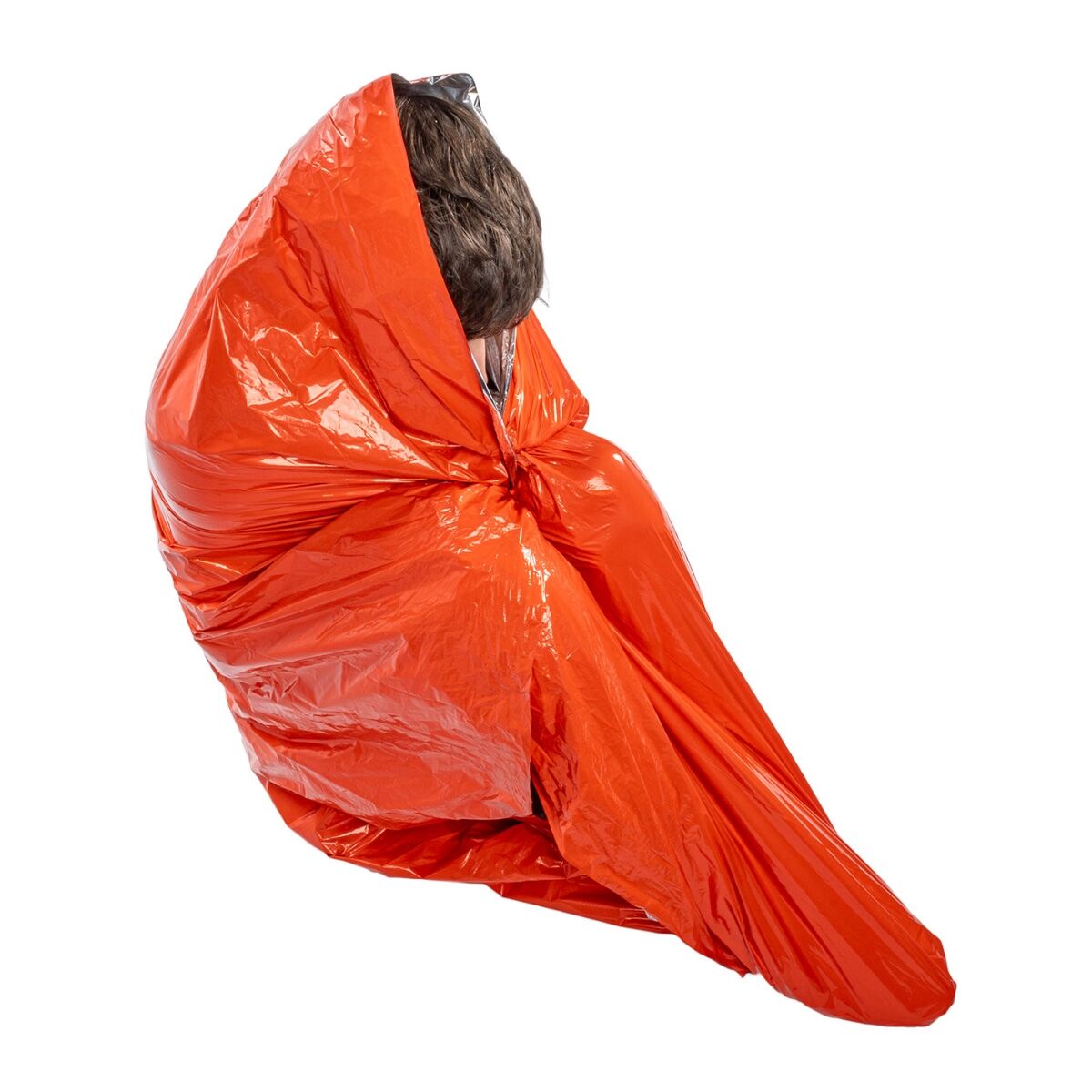
Use the blanket with the reflective (shiny) side facing inward, toward the body. This orientation reflects radiated body heat back at the person. The common mistake is deploying the shiny side outward — which is the correct orientation only for signaling aircraft or rescuers, not for retaining heat. Some blankets (including SOL) are printed with explicit instructions and color-coding; on unmarked blankets, the shiny side always faces the heat source you want to retain.
Ground Insulation Is Critical
The most important survival principle for preventing hypothermia is that ground insulation is more important than blankets above. A person lying on cold ground loses heat through conduction at a rate that a reflective blanket above cannot compensate for. Before deploying an emergency blanket in a cold environment, create a ground barrier: a second blanket or tarp beneath the patient, a pile of leaves 6–8 inches deep, a sleeping pad, or any available material that creates an insulating air gap between the body and the ground surface.
Head Coverage
The head accounts for 40–45% of total body heat loss in cold environments due to its high vascularity and the absence of shivering response in facial muscles. Any emergency blanket deployment in cold conditions must include head coverage. Wrap the blanket over the head with only the face exposed, or use a separate hat combined with the blanket wrapped over the crown.
Preventing Moisture Accumulation
Mylar blankets trap both heat and moisture — perspiration has nowhere to escape through the impermeable film. In cold environments where the risk is hypothermia, this moisture accumulation is acceptable and even beneficial short-term. In mild or warm environments, trapped moisture can cause chilling as it accumulates and then evaporates when the blanket is opened. Ventilate the edges slightly in warm conditions and monitor for excessive sweating under the blanket.
Building a Complete Warmth and Shelter Kit
The Right Combination
The most effective emergency kit includes both mylar and wool or hybrid blankets serving complementary roles. A single-use mylar blanket handles immediate heat retention and signaling in any acute scenario. A wool or heavy-duty hybrid blanket serves as the primary shelter in extended survival scenarios — multi-day situations where a single-use mylar blanket would degrade on day one.
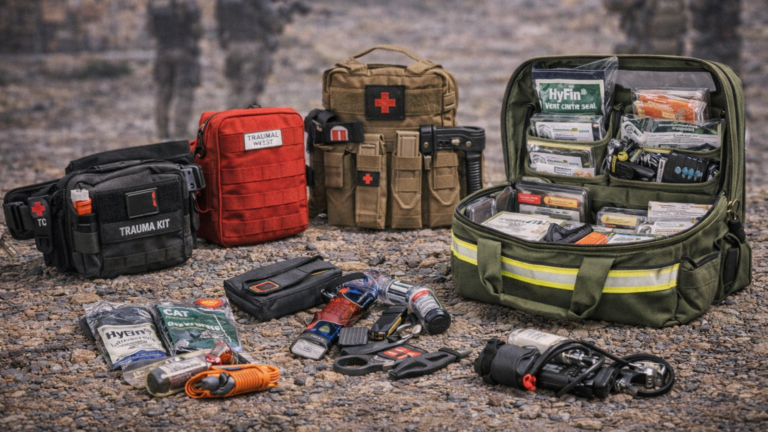
For a two-person emergency kit, the practical loadout is: two SOL standard mylar blankets (immediate use, 2.8 oz total), one Grabber all-weather hybrid blanket (extended use, ground cover, shelter tarp), and one good wool blanket or sleeping bag rated to local winter temperatures for vehicle or home kit use. This combination covers every realistic scenario from a 30-minute wait for rescue to a multi-day shelter-in-place scenario.
Storage and Shelf Life
Unopened mylar blankets in factory packaging maintain full effectiveness for 10–20 years when stored away from UV light, moisture, and extreme heat. Vehicle storage above 150°F (common in summer) degrades metallic coatings over time — rotate vehicle kit mylar blankets every 3–5 years. Wool blankets stored in a dry location with cedar blocks or mothballs to deter moths last indefinitely. Hybrid blankets with polyester batting should be inspected annually for moisture intrusion and replaced if the batting has shifted or clumped.
Frequently Asked Questions About Emergency Blankets
How effective are mylar emergency blankets?
Mylar blankets reflect 80–90% of radiated body heat back to the person when used correctly (shiny side inward). They are highly effective at preventing heat loss through radiation — the primary heat loss mechanism in above-freezing cold environments. But mylar provides no insulation against conductive heat loss through contact with cold surfaces. The complete use protocol requires ground insulation beneath the body combined with a mylar blanket above and around. Used correctly, a mylar blanket can prevent hypothermia progression in the critical first hours before rescue arrives. Used without ground insulation, its effectiveness is significantly reduced in truly cold conditions.
Should I choose mylar or wool emergency blankets?
Both, ideally. Mylar blankets (25–60g, $1–$7 each) are the correct choice for backpacking, EDC kits, and any scenario where weight and space are the primary constraints. They are single-use but highly effective for immediate thermal emergencies. Wool blankets (1–4 lbs, $30–$200) provide genuine conductive insulation, insulate when wet (critical in rain or water crossing scenarios), and last decades. For vehicle kits, home emergency kits, and any context where weight is not a constraint, wool or a hybrid blanket is the primary option with mylar as backup and signaling tool. A comprehensive kit includes both types.
How do I use a mylar blanket correctly?
Wrap snugly with the reflective (shiny) side facing inward toward the body, covering as much surface area as possible including the head, leaving only the face exposed. Before wrapping, place insulation beneath the body — a second blanket, tarp, leaves, or any material that prevents contact with cold ground. Seal the edges as much as possible to prevent convective heat loss from wind entering at gaps. In warm conditions, ventilate slightly to prevent excessive moisture accumulation. If signaling aircraft or rescuers, flip the blanket to expose the reflective side outward and move it to catch and redirect sunlight.
Published by Chad Dyer, President, Brand Avalanche Media, Inc. Popular Outdoorsman is an independent editorial publication. Product recommendations reflect editorial judgment based on field experience and specifications review.


Reader Favorites
Field-to-table reference desk
From tag to table — official season dates for all 50 states, plus safe doneness temps for your harvest.
| Species | Archery | Firearm |
|---|---|---|
| Deer | Sep–Oct | Nov |
| Elk | Sep | Oct–Nov |
| Turkey | — | Apr–May |
All 50 state wildlife agencies, plus how seasons, tags and licenses work.
Find your state → Network| Doneness | Target |
|---|---|
| Rare | 125–130°F |
| Medium-rare | 130–135°F |
| Well-done | 160°F+ |
Safe pull temps for venison and steak, from Popular BBQ.
View full chart →