Best Emergency Food Storage 2026: Freeze-Dried, Canned, and Shelf-Stable Compared
Last updated: October 9, 2026 · Originally published September 28, 2026
Emergency food storage is not one product but a layered system, built from categories with different shelf lives, calorie densities and costs.
Emergency food storage isn’t a single product — it’s a layered system built from different food categories with different shelf lives, caloric densities, preparation requirements, and costs. The right approach for a family of four storing 30 days of food is fundamentally different from a solo hiker building a 72-hour kit.
This guide covers the three primary emergency food storage categories — freeze-dried meals, canned goods, and dry staples — with a direct comparison of the top brands, a practical rotation strategy, and a cost-per-serving analysis that cuts through the marketing to show what each option actually costs per calorie.
For anyone building a comprehensive emergency food supply, start with our guide to the 72-hour emergency kit and the bug-out bag checklist for the foundation before layering long-term food storage on top.
Emergency Food Storage: The Three-Tier System
Effective emergency food storage uses three tiers that work together — no single tier covers all scenarios, and a well-built supply draws from all three.
Tier 1: Freeze-Dried Meals (25-30 Year Shelf Life)
Freeze-dried meals represent the highest shelf-life, highest-cost tier of emergency food storage. The freeze-drying process removes 98–99% of moisture while preserving nutritional content, flavor, and texture in a way that conventional dehydration cannot. A properly sealed freeze-dried meal stored in a cool, dry location retains 90%+ of its nutritional value for 25–30 years.
Best for: Long-term storage where rotation is impractical, planned emergency supply that won’t be touched for years, and preparedness-focused buyers who want set-and-forget storage.
Requires: Hot water for preparation. Freeze-dried meals are not no-cook options — the rehydration process requires boiling or near-boiling water, and the results degrade significantly with cold water.
Tier 2: Canned Goods (3–5 Year Shelf Life)
Commercial canned goods are the most cost-efficient emergency food tier per calorie and require no special storage beyond a cool, dry pantry. Modern canned food — particularly high-acid items like tomatoes and low-acid items like tuna, chicken, beans, and vegetables — typically remains safe and nutritionally adequate well past the printed “best by” date, with 3–5 years as the practical rotation window before texture and flavor degrade.
Best for: The backbone of any emergency food supply, everyday pantry rotation (eat what you store, store what you eat), and no-prep-required caloric foundation.
Pull-tab lids: For emergency food storage, prioritize pull-tab cans for protein (tuna, chicken, sardines, beans) to eliminate the can-opener requirement during field conditions.
Tier 3: Dry Staples (1–25 Year Shelf Life, Depending on Packaging)
White rice, dried beans, pasta, rolled oats, and flour form the caloric backbone of long-term emergency food storage at the lowest possible cost. Bulk white rice stored in sealed Mylar bags with oxygen absorbers has a 25-year shelf life. Bulk dried beans store for 10+ years. Pasta in factory-sealed packaging remains good for 5–10 years.
Best for: Maximum caloric density per dollar, large-household storage where cost is the primary constraint, and experienced preparedness buyers who know how to cook from scratch.
Requires: Water and heat for preparation. Dry staples are not emergency options without a reliable cooking source.


Best Freeze-Dried Emergency Food Brands
1. Mountain House — Best Overall Freeze-Dried
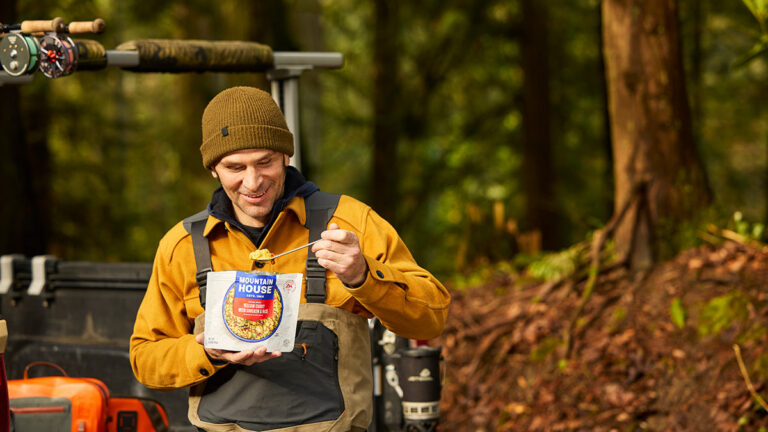
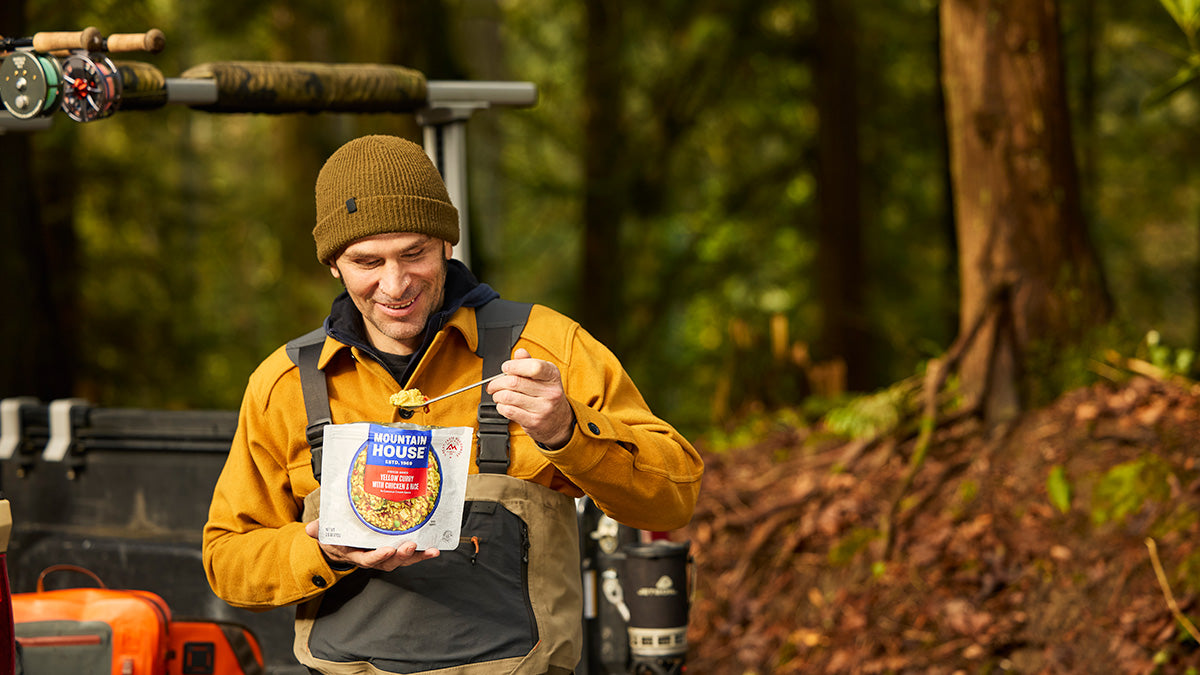
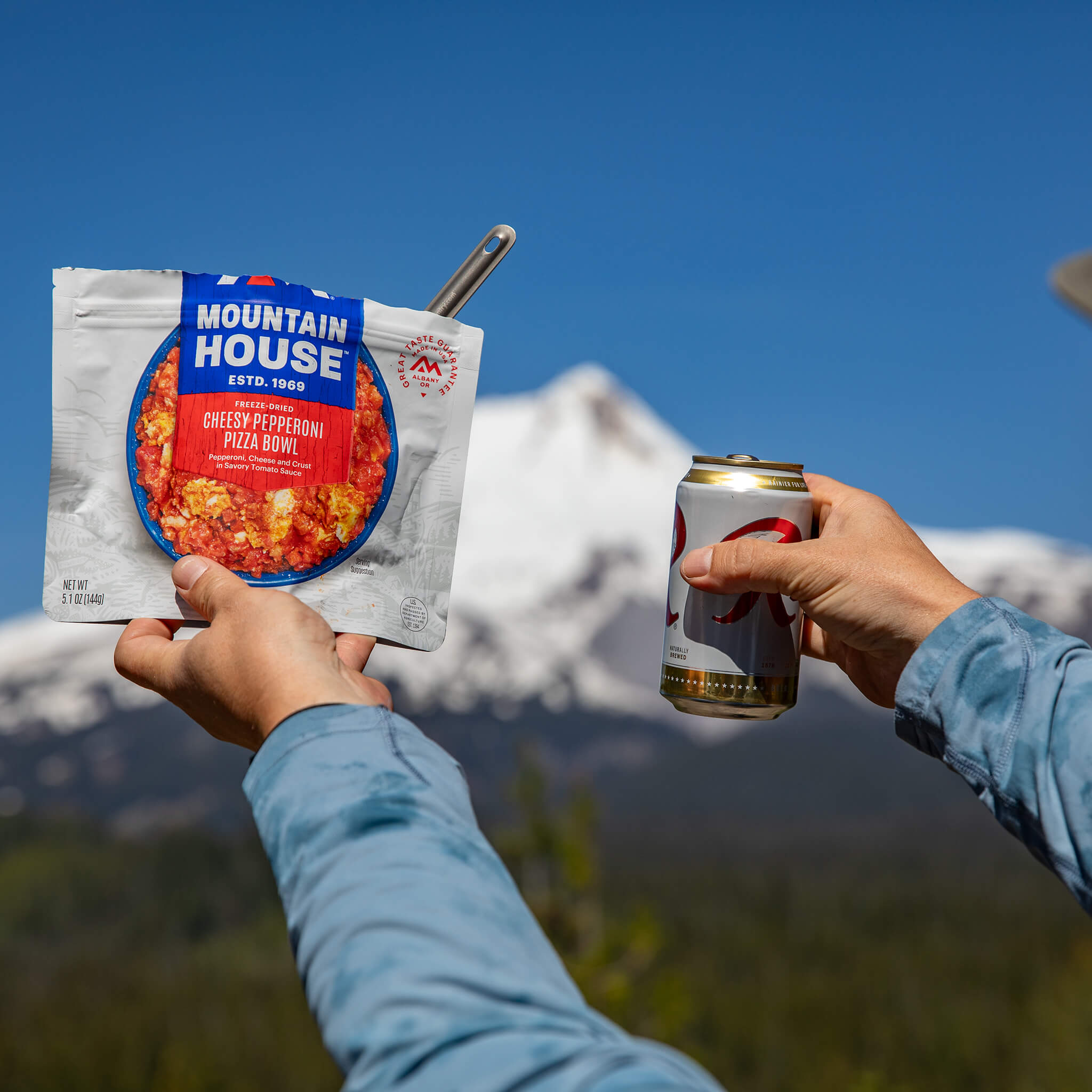
Mountain House has produced freeze-dried meals since 1969 and remains the benchmark against which other freeze-dried brands are measured. Their products are used by the U.S. military, backcountry hikers, and emergency preparedness buyers — a customer base that creates pressure for consistent quality and reliable shelf-life claims.
Why Mountain House leads:
- 30-year taste guarantee — the most aggressive shelf-life claim in the industry, backed by decades of testing
- Consistent texture and flavor quality across product line
- Wide product variety: 150+ meal options including breakfast, lunch, dinner, and sides
- Available in individual pouches and #10 cans (the most cost-efficient large-quantity format)
- Widespread retail availability (REI, Walmart, Amazon, Bass Pro) reduces supply-chain risk
Cost per serving: $8–$14 per two-serving pouch ($4–$7 per serving). #10 cans cost $30–$50 and contain 10–15 servings ($2.50–$5 per serving) — significantly more cost-efficient for long-term storage.
Best Mountain House products for emergency storage: Chicken & Rice, Lasagna with Meat Sauce, Beef Stew, and the Classic Bucket (12 meals per person, 2,140 calories/day, 24-serving options) for straightforward family supply planning.
2. Valley Food Storage — Best Tasting Freeze-Dried
Valley Food Storage prioritizes ingredient quality and flavor over price, using non-GMO ingredients and avoiding artificial preservatives and MSG. The result is freeze-dried meals that taste noticeably better than budget competitors — an important quality factor for households planning multi-week emergency supply rotations where meal fatigue is a real issue.
Why Valley Food Storage stands out:
- Non-GMO ingredients with clean label (no artificial colors, flavors, or MSG)
- Better caloric density per serving than many competitors (400–600 calories per serving vs. industry average 250–350)
- 25-year shelf life with validated third-party testing
- Monthly subscription option for gradual supply building
Cost per serving: $8–$15 per serving, higher than Mountain House but with larger serving sizes that partially offset the price difference on a per-calorie basis.
3. Legacy Food Storage — Best Value Freeze-Dried
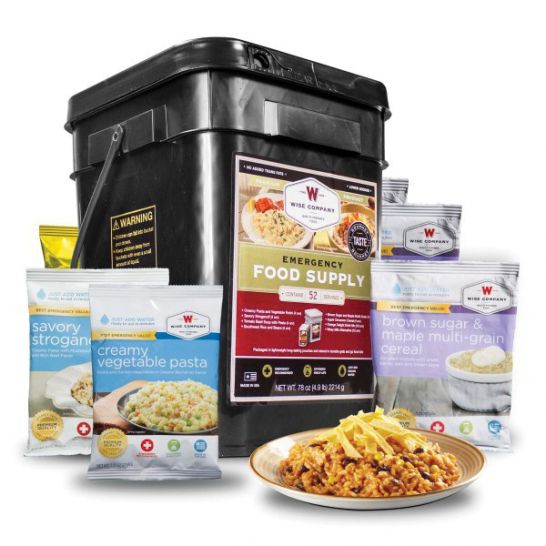
Legacy Food Storage competes directly with Mountain House on price while delivering comparable shelf life and acceptable (if not exceptional) flavor quality. Their 240-serving, 720-serving, and 2,160-serving emergency food packages are designed for households calculating total caloric supply rather than individual meal quality.
Why Legacy is the value pick:
- Lowest cost per serving among major freeze-dried brands
- Large supply packages with pre-calculated serving counts simplify supply planning
- 25-year shelf life comparable to competitors
- USDA-inspected facility and non-GMO options in most SKUs
Cost per serving: $3–$5 per serving in bulk packages — 30–50% less than Mountain House at equivalent scale.
Caloric Density and Nutritional Value
Emergency food storage planning starts with caloric requirements, not brand selection. The target is 2,000 calories per person per day as the minimum for normal activity. Physical exertion, stress, or cold weather increase needs to 2,500–3,500 calories per day.
Caloric Density by Food Type
| Food Category | Kcal per oz | Shelf Life | Prep Required |
|---|---|---|---|
| Peanut butter | 166 | 2 years | None |
| Nuts (mixed) | 170 | 1 year | None |
| Freeze-dried meals | 100–130 | 25–30 years | Hot water |
| White rice (dry) | 103 | 25 years (Mylar) | Water + heat |
| Dried beans | 96 | 10+ years | Water + heat |
| Pasta (dry) | 100 | 5–10 years | Water + heat |
| Canned tuna | 46 | 3–5 years | None |
| Crackers | 120–135 | 1–2 years | None |
| Energy bars | 110–130 | 1–3 years | None |
The practical implication: calorie-dense, no-prep foods (peanut butter, nuts) provide more usable energy per pound of stored weight than any other category. Build the foundation of any emergency food supply around no-cook, calorie-dense options, then supplement with freeze-dried meals for variety and long-term storage.
Nutritional Balance Beyond Calories
Survival nutrition extends beyond calories. A supply built entirely on white rice and pasta will produce caloric sufficiency but nutritional deficiency within weeks. Include:
- Protein: Canned beans, canned tuna/chicken/salmon, peanut butter, nuts. Target 50–60g protein per person per day.
- Healthy fats: Nuts, peanut butter, olive oil (6-month shelf life after opening; sealed indefinitely). Essential for brain function and caloric density.
- Vitamins and minerals: Multivitamins are the most efficient emergency supplement. One bottle provides 90+ days of vitamin coverage per person at negligible cost and weight.
- Fiber: Dried beans, oats, and canned vegetables maintain digestive function. A supply without fiber causes significant discomfort during extended emergencies.
Storage Containers and Conditions
Mylar Bags with Oxygen Absorbers
For dry staples (rice, beans, pasta, oats), Mylar bags with 300–2000cc oxygen absorbers are the standard long-term storage method. The Mylar barrier blocks moisture and light; the oxygen absorber eliminates the oxygen that supports pest eggs and accelerates spoilage.
Standard approach: fill a 1-gallon Mylar bag with dry grain, add one 300cc oxygen absorber, heat-seal the bag, and store in a food-grade 5-gallon bucket. The combination of Mylar + oxygen absorber + cool storage delivers the maximum shelf life for grains and legumes.
#10 Cans
#10 cans are the professional standard for freeze-dried storage. Unlike pouches, #10 cans protect against crushing, light, and pest damage while maintaining the oxygen-free environment created at the factory. Mountain House, Legacy, and other major brands offer their entire product lines in #10 can format, which delivers the lowest cost per serving for freeze-dried products.
Storage Conditions
Temperature is the most important storage condition variable. Every 10°F reduction in storage temperature roughly doubles shelf life. Practical targets:
- Ideal: 50–65°F — interior closets, root cellars, climate-controlled basements
- Acceptable: 65–75°F — interior rooms away from exterior walls
- Avoid: Garages, attics, or exterior storage where summer temperatures exceed 85°F — these environments cut stated shelf lives significantly
Rotation Strategies
FIFO: First In, First Out
The foundational rotation strategy: oldest food is consumed first, newest goes to the back. This only works for foods actually integrated into your regular diet — freeze-dried emergency meals are typically not eaten regularly, which is why the 25-30 year shelf life matters for that tier.
Three-Tier Rotation Schedule
- Every 1–2 years: Rotate crackers, peanut butter, nuts, energy bars, cooking oils. Consume or donate before replacement.
- Every 3–5 years: Inspect and rotate canned goods. Dented, swollen, or rusted cans discard; everything else remain in supply until approaching best-by dates.
- Every 10+ years or never: Freeze-dried #10 cans and Mylar-sealed grains require no regular rotation within their stated shelf life. Label with purchase date for tracking.
Cost Per Serving Analysis
Understanding the actual cost of emergency food storage requires calculating cost per calorie rather than cost per serving — “serving” sizes vary widely across products and categories.
| Food Source | Cost per 2,000 kcal | Shelf Life | Prep Required |
|---|---|---|---|
| Dry white rice (bulk) | $0.75–$1.50 | 25 years (Mylar) | Water + heat |
| Dried beans (bulk) | $1.00–$2.00 | 10 years | Water + heat |
| Canned tuna/chicken | $6.00–$10.00 | 3–5 years | None |
| Peanut butter | $3.00–$5.00 | 2 years | None |
| Freeze-dried (Legacy bulk) | $8.00–$12.00 | 25 years | Hot water |
| Freeze-dried (Mountain House) | $14.00–$22.00 | 30 years | Hot water |
A practical emergency food supply uses rice and beans as the caloric backbone at under $2 per 2,000 kcal, canned protein to meet protein requirements, peanut butter and nuts for no-cook fat and calories, and freeze-dried meals as the variety layer and ultra-long-term storage. This combination delivers superior nutrition, variety, and preparedness at roughly $5–$8 per person per day.
How to Build Your Emergency Food Storage System
A practical build sequence for a household starting from scratch:
- Start with 72 hours: Build the immediate-need kit first. See the 72-hour emergency kit guide for exact quantities. This is your go-bag food supply — no-cook, high caloric density, accessible in under 60 seconds.
- Extend to 2 weeks: Add canned goods, peanut butter, crackers, and nuts to extend coverage to 14 days. This level is achievable with a single Costco or Sam’s Club run for most households. Store in a dedicated pantry area, separate from everyday food.
- Add freeze-dried for 30 days: One Legacy Food Storage 240-serving kit or Mountain House equivalent provides 30 days of meals for one person (60 days for a couple eating 1,200-calorie emergency rations). Store in climate-controlled space in #10 cans.
- Build toward 90 days: The FEMA-recommended household emergency supply target. Add bulk rice and beans in Mylar bags, expand the canned protein supply, and increase the multivitamin and comfort food stocks.
For guidance on preserving fresh food to supplement your stored supply, see our article on how to preserve meat without refrigeration.
Frequently Asked Questions About Emergency Food Storage
How long do freeze-dried emergency foods last?
Most freeze-dried meals last 25–30 years in vacuum-sealed Mylar or #10 cans when stored in cool, dry conditions (50–70°F). Mountain House carries a 30-year taste guarantee. Shelf life degrades faster in warm storage — a pantry at 85°F reduces stated shelf life by 40–60% compared to storage at 65°F. Check manufacturer dates annually and store in the coolest available interior location.
What’s the difference between freeze-dried and dehydrated food?
Freeze-drying removes 98–99% of moisture at low temperature through sublimation, preserving cell structure and retaining approximately 97% of original nutritional content. Dehydration removes 90–95% of moisture through heat, which degrades heat-sensitive vitamins and changes texture. Freeze-dried retains better flavor, texture, and nutrition but costs 2–3x more per serving. Dehydrated food is lighter than fresh but heavier than freeze-dried and generally less palatable for extended-emergency use.
Should emergency food storage include comfort foods?
Yes — include chocolate, hard candy, coffee, tea, hot cocoa mix, and familiar favorites in every emergency food supply. During high-stress emergencies, caloric adequacy is necessary but insufficient. Comfort foods maintain morale, reduce psychological stress, support sleep, and particularly matter for children. Allocate 5–10% of your emergency food calories to comfort foods — they cost very little relative to total supply but contribute significantly to functional resilience during extended emergencies.
Published by Chad Dyer, President, Brand Avalanche Media, Inc. Popular Outdoorsman is an independent editorial publication. Product recommendations reflect editorial judgment based on field experience and specifications review.


Reader Favorites
Field-to-table reference desk
From tag to table — official season dates for all 50 states, plus safe doneness temps for your harvest.
| Species | Archery | Firearm |
|---|---|---|
| Deer | Sep–Oct | Nov |
| Elk | Sep | Oct–Nov |
| Turkey | — | Apr–May |
All 50 state wildlife agencies, plus how seasons, tags and licenses work.
Find your state → Network| Doneness | Target |
|---|---|
| Rare | 125–130°F |
| Medium-rare | 130–135°F |
| Well-done | 160°F+ |
Safe pull temps for venison and steak, from Popular BBQ.
View full chart →