Foraging for Beginners: How to Find and Identify Wild Edible Plants Safely
Last updated: October 6, 2026 · Originally published September 28, 2026
Foraging is one of the oldest human skills, and the beginner’s problem is not finding wild plants but identifying them safely before eating.
Foraging — finding and eating wild plants, fungi, and other food sources in the natural environment — is one of the oldest human skills and one of the most practically useful things an outdoorsperson can learn. A hunter who can identify a stand of wild raspberries while waiting for deer, a hiker who recognizes watercress in a stream, a camper who knows which mushrooms are safe and which will hospitalize you: these are different categories of competence than someone who carries three days of food and hopes for the best.
This guide covers foraging for beginners: the core identification skills, the rules that keep you safe, the most reliably identifiable edible plants for new foragers in North America, and the species to absolutely avoid until your identification skills are developed. It pairs with the emergency food storage guide and the how to navigate without GPS guide as part of a complete outdoor preparedness foundation. For hunters and outdoor enthusiasts, foraging knowledge adds a layer of field capability that no amount of packed food can replace.
The Core Rules of Safe Foraging
Rule 1: Never Eat Anything You Cannot Positively Identify
This is the not optional rule in foraging. “Probably” is not a safe identification standard. “Looks like” is not a safe identification standard. Every species you consume should be identified to 100% certainty using multiple characteristics — leaf shape, stem structure, smell, habitat, season, and cross-referenced against multiple field guides or a verified expert. The consequence of misidentification ranges from gastrointestinal distress to organ failure to death. The plants and fungi that kill people are the ones that resemble edible species closely enough to fool overconfident beginners.
Positive identification means you have matched every observable characteristic of the plant — not just the ones that are convenient to check. If any characteristic doesn’t match your reference, stop. Don’t eat it.
Rule 2: Learn One Species at a Time to Mastery
The most common beginner error in foraging is trying to learn too many species at once. The result is shallow familiarity with many plants and dangerous overconfidence when a specimen resembles something you’ve seen a picture of. The correct approach is to choose one reliably identifiable species, learn every characteristic that distinguishes it from look-alikes, find and positively identify it multiple times across multiple locations and seasonal stages, and only then add another species to your edible list.
A forager who can confidently and safely harvest ten species is more capable than one who “knows” forty species at the level of picture recognition. Build depth before breadth.
Rule 3: Use Multiple Field Guides, Not Just Apps
Plant identification apps have improved significantly, but they are not reliable enough to use as your sole identification method for foraging. Apps make errors on species with multiple look-alikes, in poor lighting or unusual growth stages, and with damaged or partial specimens. Use apps as a starting point for investigation, not a final authority.
The best field guides for North American foraging beginners: Edible Wild Plants by Lee Allen Peterson (Peterson Field Guides series), A Field Guide to Edible Wild Plants by Samuel Thayer, and Mushrooms of the Northeast by Teresa Marrone and Kathy Yerich for fungi. Regional guides specific to your area are more useful than general continental guides — species distribution matters for positive identification.
Rule 4: Know the Deadly Look-Alikes Before You Learn the Edibles
Before you learn what’s safe to eat, learn what kills. In North America, the species responsible for the most serious foraging fatalities are: Death Camas (Anticlea elegans, resembles wild onion), Poison Hemlock (Conium maculatum, resembles wild carrot/Queen Anne’s Lace), Water Hemlock (Cicuta species, the most violently toxic plant in North America), Destroying Angel mushroom (Amanita bisporigera, resembles edible button mushrooms), and Death Cap mushroom (Amanita phalloides, responsible for the majority of fatal mushroom poisonings worldwide).
These species are documented in detail below. Knowing what they look like — not just their names — is the prerequisite to safely harvesting anything that resembles them.


Best Beginner Foraging Plants: High Confidence, Low Risk
The following species are recommended for beginning foragers because they have distinctive, easily learned characteristics and limited dangerous look-alikes. They are among the most widely distributed edible wild plants in North America and appear across multiple regions and habitats.
1. Dandelion (Taraxacum officinale)
Dandelion is the ideal first foraging plant because it is ubiquitous, distinctive, and every part of the plant is edible. The toothed leaves (the name derives from the French dent de lion — lion’s tooth), hollow stems that exude white milky sap when broken, single flower head per stem on a leafless stalk, and familiar yellow composite flower make dandelion essentially impossible to misidentify for an adult who pays attention.
Edible parts: young leaves (best before the plant flowers — less bitter), flowers (raw in salads, battered and fried, or made into dandelion wine), roots (roasted as a coffee substitute, or cooked as a root vegetable). Older leaves become progressively more bitter — blanching in boiling water reduces bitterness. Dandelion grows in disturbed soil, lawns, roadsides, and forest edges across all of North America. Season: leaves available spring through fall; flowers in spring and early summer.
2. Cattail (Typha latifolia and related species)
Cattail is called the “supermarket of the swamp” for good reason — it provides multiple edible products across the full growing season. The distinctive brown cylindrical seed heads (the “hot dog on a stick” appearance) make identification reliable once you’ve seen the plant once. Cattail grows in standing or slow-moving water: pond margins, marsh edges, roadside ditches, and stream banks.
Edible parts by season: early spring — peel the young shoots (the white inner core tastes like cucumber), collect green pollen-covered male flowers (the upper spike before pollen release) and use as flour substitute, collect female flower heads (the lower cylinder while still green and immature) and cook like corn on the cob. Mature brown seed heads can be used as tinder. The starchy rhizomes (roots) can be pounded into flour year-round when other food sources aren’t available. There are no dangerous look-alikes that match all of cattail’s characteristics in wetland habitat.
3. Wild Garlic Mustard (Alliaria petiolata)
Garlic mustard is an invasive species in North America, meaning harvesting it aggressively is environmentally beneficial. The combination of garlic smell when leaves are crushed and white four-petaled flowers in a cross pattern (a family characteristic of the Brassicaceae/mustard family) distinguishes it clearly. Young leaves are edible raw in salads or cooked as a pot herb with a mild garlic-mustard flavor. Seeds can be ground as a mustard substitute.
Identification: triangular to heart-shaped leaves with scalloped edges, strong garlic odor when crushed (critical — if it doesn’t smell like garlic when crushed, it’s not garlic mustard), white four-petaled flowers in spring, grows in shaded woodland edges and disturbed areas. Season: leaves available spring through early summer before flowering.
4. Wood Sorrel (Oxalis acetosella and related species)
Wood sorrel is identifiable by its distinctive three-part clover-like leaves with heart-shaped leaflets that fold downward at night or in bright sun, and a sharp, lemony flavor from oxalic acid. It grows in shaded woodland and forest floor habitats across North America and is available from spring through late fall. Eat small amounts — the oxalic acid that gives it its flavor is mildly toxic in large quantities (the same compound found in spinach and rhubarb, which are safe in normal food amounts).
Edible uses: leaves and flowers eaten raw as a trail snack, added to salads for lemon flavor, or used to make a simple lemonade-like drink. Not to be confused with true clovers (Trifolium species), which have rounded leaflets and no sour taste — wood sorrel’s heart-shaped leaflets and sour flavor are diagnostic.
5. Blackberries and Raspberries (Rubus species)
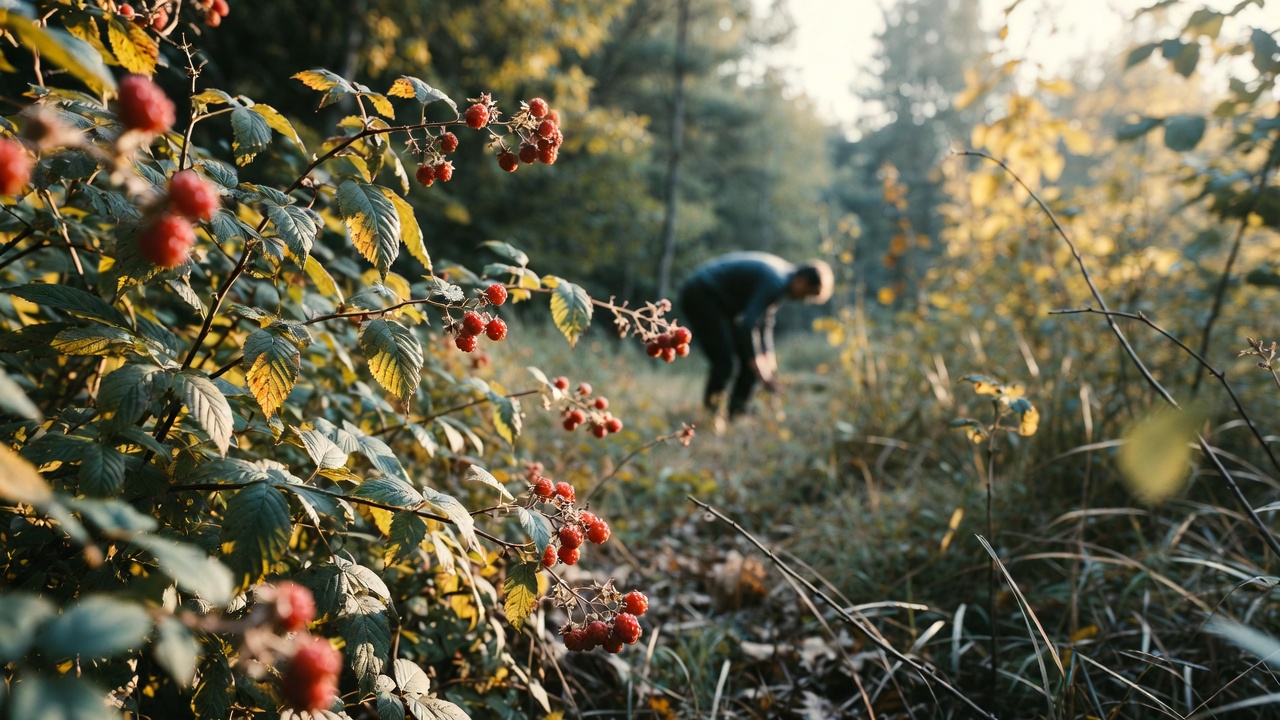
Aggregate berries in the Rubus genus — blackberries, raspberries, dewberries, and wineberries — are reliably identifiable by their aggregate berry structure (many small drupelets forming the whole berry), thorny canes, and compound leaves. There are no actually dangerous look-alikes among North American Rubus species, making this genus one of the safest entry points into foraging. The key distinction between blackberries and raspberries: when a raspberry is picked, it pulls free from its white core (the “plug”), leaving a hollow berry; blackberries and dewberries retain their core when picked.
Found at forest edges, disturbed areas, hedgerows, and old fields throughout North America. Season: late summer (July–September depending on location). The canes are biennial — first-year canes (primocanes) are vegetative; second-year canes (floricanes) produce flowers and fruit.
Beginner Mushroom Foraging: Start With Foolproof Four
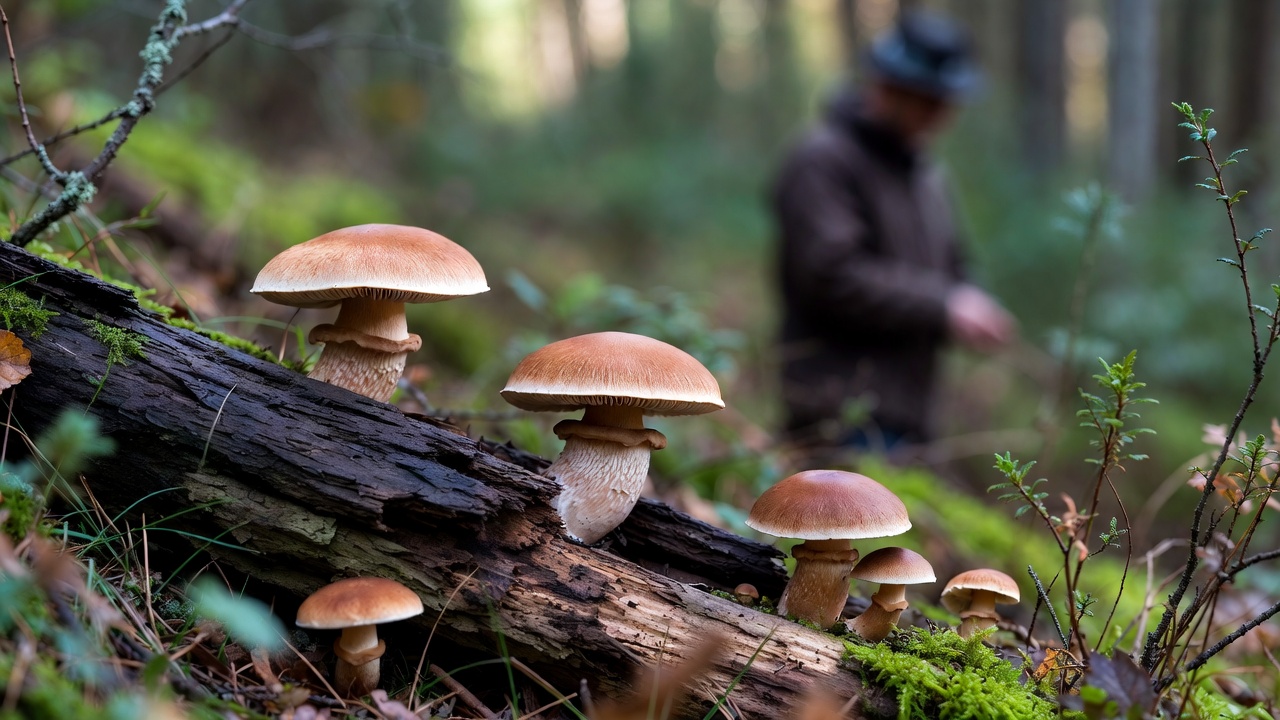
Mushroom foraging carries higher risk than plant foraging because the consequences of misidentification are more severe and the look-alikes more subtle. Beginners should restrict themselves to the “Foolproof Four” — species widely recommended by experienced foragers as having no deadly look-alikes in North America when properly identified.
The Foolproof Four Mushrooms
Giant Puffball (Calvatia gigantea) — When cut in half, the interior must be pure white and uniform with no gills, cap, or stem structure visible. Any internal structure means it’s not a giant puffball (it could be a developing Amanita — extremely dangerous). If it’s pure white inside with no structure, it’s a giant puffball. Slice every specimen to verify. Grows in meadows and open woodland in late summer and fall. Sauté in butter — excellent flavor.
Chicken of the Woods (Laetiporus sulphureus) — Bright orange-yellow shelf fungus growing on wood (dead or living trees, particularly oak). The distinctive bracket form with yellow underside (pores, not gills) and vivid orange-yellow coloration has no dangerous look-alikes. Avoid specimens growing on black locust, eucalyptus, or coniferous trees — can cause reactions in some people. Cook thoroughly before eating.
Hen of the Woods / Maitake (Grifola frondosa) — Gray-brown overlapping fronds growing at the base of oak trees in fall. The frond structure, gray-brown color, and oak base association distinguish it from dangerous species. Excellent culinary mushroom — complex flavor, excellent texture.
Chanterelle (Cantharellus cibarius) — Golden-yellow funnel-shaped mushroom with forking ridges (not true gills) that run down the stem. The forking ridges (look like blunt veins rather than knife-thin gills) and golden color distinguish it from the dangerous Jack-o’-lantern mushroom (Omphalotus olearius), which grows in clusters on wood or wood-buried roots and has true gills. Always verify the ridge structure before consuming chanterelles — this is the critical diagnostic.
Species to Avoid Until You Are Expert-Level
The Carrot Family (Apiaceae) — High Risk Until Advanced
The carrot family (also called the parsley or umbelliferae family) contains some of the most dangerous plants in North America alongside edible species like wild carrot, angelica, and cow parsnip. The family is characterized by compound umbrella-shaped flower clusters (umbels) and often hollow stems. The problem: Poison Hemlock (Conium maculatum) and Water Hemlock (Cicuta species) are both in this family and both can be fatal in small amounts.
Water Hemlock has been called the most violently toxic plant in North America. It resembles edible water parsley and wild parsnip. Poison Hemlock is the plant that killed Socrates. Both grow in moist areas near water — exactly where foragers look for edible carrot-family plants. Do not harvest anything in the carrot family until you have formal instruction from an experienced forager and can identify all of the dangerous species in your region without reference material.
White-Gilled Mushrooms — Treat as Suspect
Any mushroom with white gills should be approached with extreme caution. The deadly Amanita species — Death Cap and Destroying Angel — both have white gills, white spore prints, a ring (annulus) on the stem, and a cup (volva) at the base. The volva is often buried in soil and can be missed if the mushroom is pulled carelessly rather than dug up carefully. Death Cap is responsible for the majority of fatal mushroom poisonings worldwide and was introduced to North America where it now grows near European tree species (cork oak, chestnut). Until you can reliably identify all Amanita species in your region, do not harvest any white-gilled mushroom.
Wild Onion vs. Death Camas
Wild onion (Allium species) is edible and distinctively identifiable by smell — it smells like onion when any part of the plant is crushed. Death Camas (Anticlea elegans, formerly Zigadenus) resembles wild onion in leaf shape and growth habit but has no onion smell. The rule is absolute: if it doesn’t smell like onion, it is not wild onion. Do not harvest any bulb plant from a disturbed or moist meadow without the onion smell test as your first verification step.
Foraging Equipment and Preparation
What to Carry
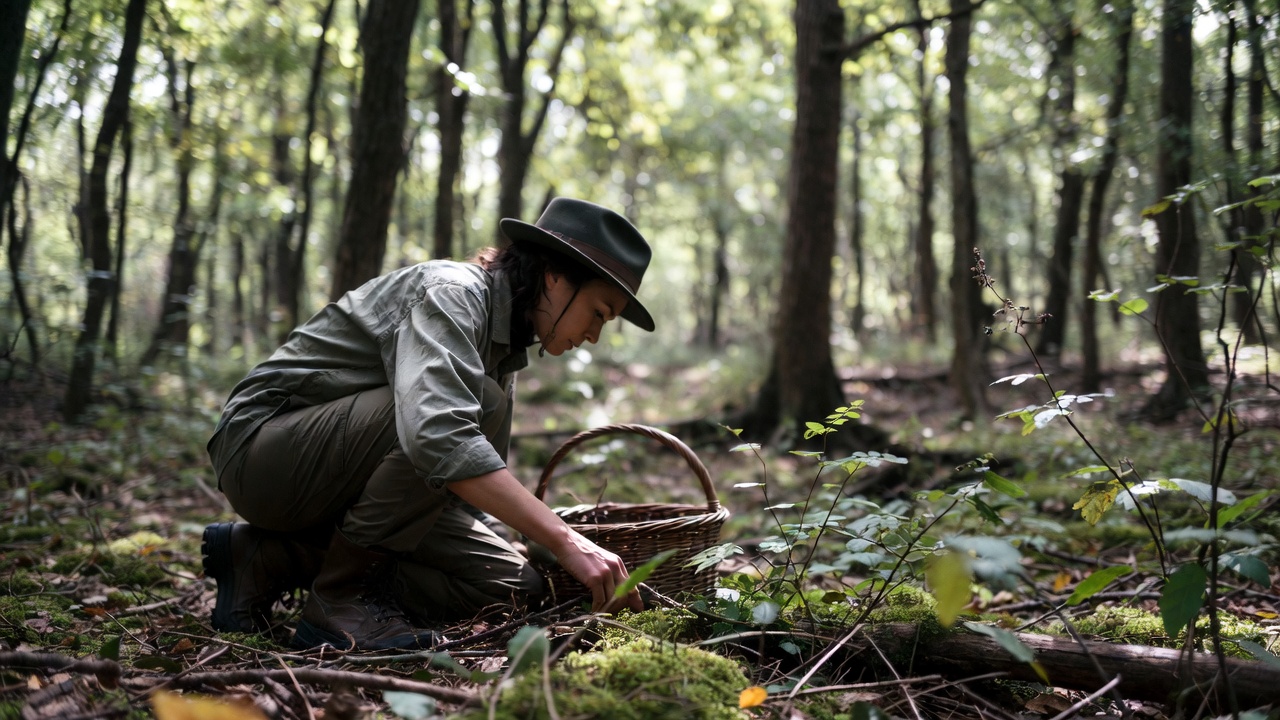
A beginning forager needs: two or more regional field guides (paper — reliable without battery), a small trowel or digging tool for root identification and careful mushroom extraction, a mesh bag or basket for fungi (allows spore dispersal as you walk — a practice that supports future harvests), paper bags for plants (plastic creates condensation and accelerates spoilage), a hand lens (10×) for examining small features like gill attachment, spore color, and leaf surface, and nitrile gloves for handling unfamiliar species before identification is confirmed.
Harvesting Ethics and Legal Considerations
Sustainable foraging means never harvesting more than 1/3 of any stand of plants and never completely stripping a fruiting area. For fungi, harvest mature specimens and leave immature ones to spread spores. Many public lands — national parks, some state parks, and protected areas — prohibit foraging entirely or restrict harvest quantities. Always verify regulations before foraging on public land. Private land requires permission.
Leave invasive species like garlic mustard and Japanese knotweed as exceptions — aggressive harvesting of invasives is ecologically beneficial. Native plant populations require restraint.
Building a Foraging Practice
Start With Guided Walks
The fastest path to reliable foraging knowledge is walking with someone who already has it. Local mycological societies run guided mushroom forays in fall across most regions of North America — these provide expert identification confirmation for specimens you find and immediate feedback on your identification process. Many botanical gardens and naturalist organizations run plant foraging walks in spring and summer. Search for local chapters of the North American Mycological Association (NAMA) for mushroom-specific guidance.
The Seasonal Learning Approach
Foraging knowledge is best built seasonally: spring is the time to learn early greens (dandelion, garlic mustard, wood sorrel, ramps, fiddlehead ferns), cattail shoots, and morel mushrooms. Summer focuses on berries (Rubus species, elderberries, serviceberries), and wild herbs. Fall is mushroom season — puffballs, hen of the woods, chanterelles, and chicken of the woods — and the time for nuts (acorns, hickory nuts, black walnuts). Winter offers bark teas, inner bark of certain trees, and dried/preserved harvests from other seasons.
Spending one full year actively observing and identifying (but not necessarily eating) species in your local area builds the seasonal knowledge base that makes foraging actually reliable. Knowing what a plant looks like in spring, summer, and fall — and knowing what it looks like when it first emerges versus when it’s mature versus when it’s going to seed — is a different quality of knowledge than recognizing a picture in a book.
Frequently Asked Questions About Foraging for Beginners
How do I know if a wild plant is safe to eat?
The only safe answer is positive identification to 100% certainty using multiple characteristics matched against a reliable field guide — not apps alone, not partial identification, and not resemblance to something familiar. Every species has specific distinguishing characteristics: leaf shape, stem structure, smell, habitat, season, flower color and structure, root form. A plant is safe to eat only when every one of these characteristics matches your reference for the edible species. If you can’t account for a characteristic, you don’t have a positive identification. Start with high-confidence, low-risk species that have few or no dangerous look-alikes — dandelion, cattail, blackberries — before attempting species in families with dangerous relatives.
What are the most dangerous foraging mistakes beginners make?
The most dangerous beginner mistakes are: eating something that “looks like” an edible species without positive ID on all characteristics; harvesting from the carrot family (Apiaceae) before expert-level identification skills are developed; harvesting white-gilled mushrooms without ruling out Amanita species; failing to check for the volva at the base of a mushroom (often buried, requires careful excavation); and relying solely on phone apps for final identification. The plants and fungi that kill people do so precisely because they resemble edible species closely — the resemblance is not a coincidence, it’s the danger. Every fatality involves someone who was confident they had something safe.
Can you forage in parks and public land?
It depends on the land. National Parks generally prohibit or heavily restrict foraging — the National Park Service policy is to prohibit removal of natural resources including plants. National Forests typically allow personal-use harvesting of small quantities of berries, mushrooms, and plants without a permit. State parks vary significantly by state — some allow it, some prohibit it, some require permits. Always check the specific regulations for the land you’re visiting before harvesting. Many state forest and BLM (Bureau of Land Management) lands allow foraging within personal-use quantity limits. Private land requires permission from the landowner. Foraging on unauthorized land risks fines and damages your relationship with the land managers who control access to good foraging areas.
Published by Chad Dyer, President, Brand Avalanche Media, Inc. Popular Outdoorsman is an independent editorial publication. This guide provides educational information about wild plant identification. Always verify identification with multiple authoritative sources and seek instruction from experienced foragers before consuming any wild plant or fungus.


Reader Favorites
Field-to-table reference desk
From tag to table — official season dates for all 50 states, plus safe doneness temps for your harvest.
| Species | Archery | Firearm |
|---|---|---|
| Deer | Sep–Oct | Nov |
| Elk | Sep | Oct–Nov |
| Turkey | — | Apr–May |
All 50 state wildlife agencies, plus how seasons, tags and licenses work.
Find your state → Network| Doneness | Target |
|---|---|
| Rare | 125–130°F |
| Medium-rare | 130–135°F |
| Well-done | 160°F+ |
Safe pull temps for venison and steak, from Popular BBQ.
View full chart →