
Gear
Desert Eagle Hunting: Can You Hunt With a Desert Eagle?
Could You Actually Hunt With a Desert Eagle?
Desert Eagle hunting is one of those ideas that sounds simple until you picture it in real terrain, in real weather, with real adrenaline. So, could you actually hunt with a Desert Eagle? Sometimes—however, whether it’s practical depends on your carry setup, your practice, and your local rules. This article is a handgun hunting checklist first and a promo second, but if you’re here because of the TKOTIX Hand Cannon Giveaway, it’s live March 1–31, 2026 and the official entry page is here: TKOTIX Hand Cannon Giveaway. Always follow the official rules/terms and all applicable laws.
Quick context: The promotion overview is on Guns & Gadgets Daily (TKOTIX Hand Cannon Giveaway). The giveaway spotlights a Magnum Research Desert Eagle in .50 AE. Eligibility, verification, and prize transfer details are governed by the official rules/terms on the entry page at tkotix.com/handcannongiveaway.
Desert Eagle hunting starts with reality: carry, control, and ethical limits matter more than internet hype.
Desert Eagle hunting: what it really means in the field
When most hunters think “handgun hunting,” they picture big-bore revolvers or purpose-built single-shot pistols. Those platforms are common because they can be straightforward in the woods. A Desert Eagle is different, and that difference matters for Desert Eagle hunting because you’re managing size, weight, and recoil in a hunting context—not on a bench.
Specs don’t harvest animals—shot placement does. Therefore, this article leans on a handgun hunting checklist you can apply to any hunting handgun, including a Desert Eagle.
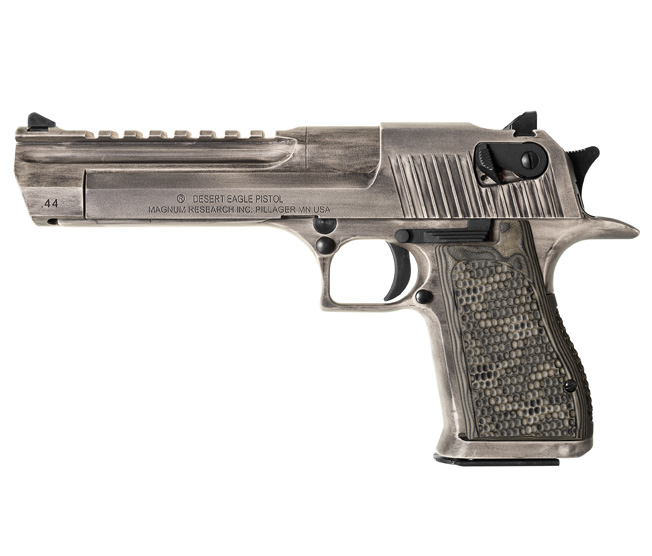
Photo courtesy of Magnum Research, Inc. (manufacturer press image).
Handgun hunting checklist: legality and ethics come first
Handgun hunting rules vary by state, season, and species. Because of that, your first step in Desert Eagle hunting is verification. Check your local regulations for handgun use before you treat any setup as “good to go.” In addition, keep the ethical standard simple: only take shots you can place cleanly, on demand, under field conditions.
- Legal seasons for handgun hunting (and which species)
- Minimum caliber / cartridge rules (if applicable)
- Magazine / capacity limits (where applicable)
- Optics rules (if you plan to mount one)
- Transport and carry rules for vehicles and the field
If any part is unclear, pause and confirm. That’s not just smart—it’s part of responsible Desert Eagle hunting.
Could you hunt with a Desert Eagle? Where it can make sense
Desert Eagle hunting can make sense when…
- Shots stay inside your proven distance (not “as far as you can see”).
- Handgun hunting fundamentals are already solid—especially from real field positions.
- Practice is consistent with your exact carry setup, clothing layers, and gear.
- The Desert Eagle is treated as a specialty tool, not a novelty.
Desert Eagle hunting usually doesn’t make sense when…
- Distance is being stretched because the cartridge sounds powerful.
- The hunt is long-mile and ultralight, where bulk and weight matter all day.
- Practice time is limited or the big-bore recoil cycle isn’t familiar.
- Recoil anticipation creeps in, causing flinch and inconsistent hits.
That last point is the real deal-breaker. Once flinch shows up, accuracy collapses. As a result, “power” becomes irrelevant because shot placement stops being dependable.
Handgun hunting checklist: the outdoorsman practicality test
If you want Desert Eagle hunting to be more than a thought experiment, use this handgun hunting checklist and be honest with the answers. This is where field reality shows up.
Handgun hunting checklist item #1: carry comfort for hours
A Desert Eagle is substantial in size and weight. That can help stability, but it can also punish you on long sits and long walks. So, build a carry plan you’ll actually use:
- Chest rig vs. belt holster: chest carry often plays nicer with packs.
- Pack interference: straps can fight belt holsters in the real world.
- Retention: brush, climbs, and awkward angles demand secure retention.
Handgun hunting checklist item #2: accuracy from real positions
Bench groups are not field groups. Instead, test your real hunting positions:
- standing braced against a tree
- kneeling with support
- sitting with a pack rest
- awkward angles (because animals rarely pose perfectly)
Handgun hunting checklist item #3: recoil plan, not optimism
Recoil management is where many “cool on the internet” ideas get exposed in the field. A muzzle brake can help manage recoil and muzzle rise by redirecting gases; however, brakes also increase blast and noise. For Desert Eagle hunting, that means you should plan for the tradeoffs:
- Brakes increase blast. You’ll feel it, and you’ll definitely hear it.
- Hearing protection matters. Don’t “wing it” with a big-bore handgun.
- Dust/snow signature: low positions can kick up debris from muzzle blast.
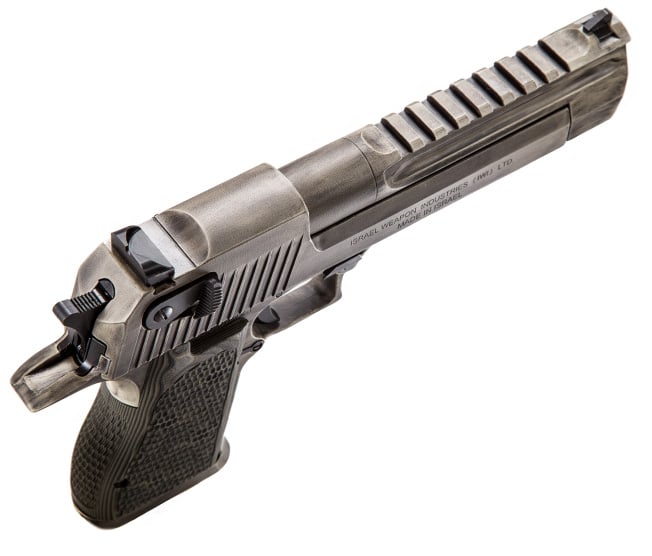
Because of the blast factor, many hunters prefer to keep handgun shots conservative and deliberate. That’s a smart bias.
Handgun hunting checklist item #4: set a hard distance limit
If you want to hunt with a Desert Eagle, set a distance limit you can hit every time in practice—then cut it down further for the field if needed. That’s the cleanest way to keep Desert Eagle hunting ethical.
Does a semi-auto help in Desert Eagle hunting?
Some hunters assume semi-auto equals quick follow-up shots. Sometimes it can—but only if you can control recoil, reacquire sights, and stay disciplined. Otherwise, the “advantage” is mostly psychological. Therefore, the real standard remains: make the first shot count.
How to evaluate Desert Eagle hunting safely (step-by-step checklist)
Use this short handgun hunting checklist to keep decisions safe, legal, and practical:
- Verify legality for your state/species/season.
- Build a carry plan (holster/chest rig + pack + layers).
- Practice with purpose from field positions at realistic distances.
- Set a conservative distance limit and stick to it.
- Pack hearing protection you’ll actually use.
If you want more perspective inside the PO archive, see:
- Desert Eagle .429: Semi-Automatic Handgun Hunting
- Dangerous, Not Endangered: Meet the Cherry Desert Eagle
TKOTIX Hand Cannon Giveaway (March 1–31, 2026): quick entry reminder
If you’re here because of the TKOTIX Hand Cannon Giveaway, the official entry page is here:
Enter the TKOTIX Hand Cannon Giveaway

Important: Eligibility requirements, verification steps, and prize transfer details are governed by the official rules/terms on the entry page. Follow all instructions exactly, and always comply with all applicable federal, state, and local laws.
Handgun hunting checklist: 7 questions to answer before you hunt with a Desert Eagle
This is the fast “gut-check” that keeps Desert Eagle hunting grounded in outdoors standards—not internet hype. Also, it doubles as a practical handgun hunting checklist for any big-bore handgun.
- Can I carry it comfortably all day? If the carry is miserable, you won’t carry it consistently.
- Can I draw and make a clean first shot? Practice with real layers and real gear.
- Can I shoot accurately from field positions? Not just from a bench.
- Do I have a proven distance limit? If it’s not proven, it’s not a limit.
- Do I have a hearing plan? Big-bore handguns are loud; plan accordingly.
- Will I pass marginal shots? Discipline is part of ethical hunting.
- Is local legality crystal clear? If not, confirm before you hunt.
Desert Eagle hunting myths (and the outdoorsman correction)
Myth: “It’s a .50, so it’s automatically great for hunting.”
Reality: Cartridge size doesn’t replace shot placement. In fact, Desert Eagle hunting only works when accuracy is repeatable and discipline is high.
Myth: “Semi-auto means I’ll get fast follow-up shots.”
Reality: Follow-ups only help if you can control recoil, reacquire sights, and decide ethically under adrenaline. Otherwise, it’s noise.
Myth: “A muzzle brake makes it easy.”
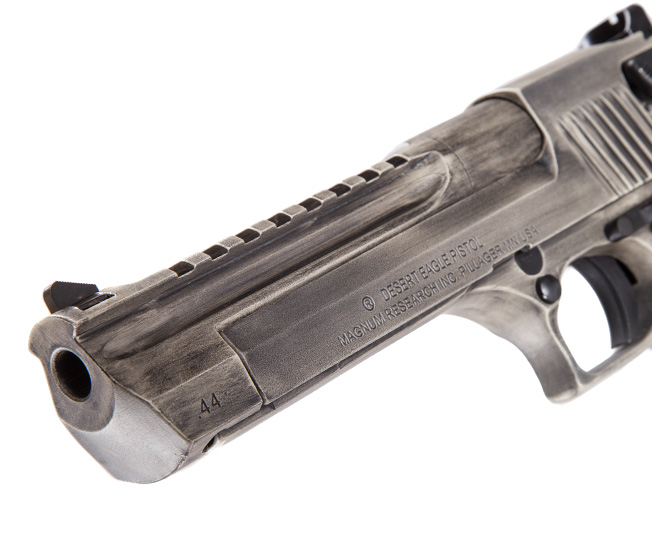
Reality: A brake can help manage recoil and muzzle rise, but it increases blast and noise. Therefore, practice and hearing protection still matter.
So… could you actually hunt with a Desert Eagle?
Yes—some hunters can, in some situations, with strict limits, and with serious practice. However, the outdoorsman truth is that the Desert Eagle is often best treated as a specialty tool rather than a universal “best” hunting handgun. Consequently, the decision should be driven by your results in practice, not by the platform’s reputation.
If you want Desert Eagle hunting to be responsible, keep it simple: repeatable accuracy, conservative distance, and ethical shot selection. That’s the whole game.
FAQ
Is Desert Eagle hunting practical for backcountry hunts?
It can be, but it depends on carry comfort, practice, and whether the handgun’s size and weight fit your terrain and mileage. For long miles, many hunters prefer simpler, lighter setups.
Does a muzzle brake make Desert Eagle hunting easy?
A muzzle brake can help manage recoil and muzzle rise, but it also increases blast and noise. Therefore, consistent practice and a hearing-protection plan are still essential.
What’s the safest handgun hunting checklist for deciding if I should do it?
Start with legality, then practice from field positions, set a conservative distance limit you can meet every time, and commit to passing any shot that isn’t high confidence.
Where do I enter the TKOTIX Hand Cannon Giveaway?
You can enter via the official page here: https://tkotix.com/handcannongiveaway/. Read the official rules/terms on the entry page for eligibility, verification, and prize transfer details.


-

 Adventure2 months ago
SHOT Show 2026: The Most Important New Outdoor Gear Announced in Las Vegas
-

 Camping & Survival2 months ago
Winter Road Status Checks Before You Access Public Land
-

 Fishing2 months ago
Winter Fishing Safety: Ice, Cold Water & Abort Criteria
-
 Gear1 month ago
Spring Turkey Hunting Preparation: Safety, Scouting Checklist, and Shotgun Patterning
-

 Adventure2 weeks ago
Why Gary Metivier’s “That’s Wild” Series Is a Must-Watch for Wildlife and Animal Rescue Fans
