
Primitive Survival
John Allen Chau: North Sentinel Island Tragedy – 7th Anniversary
John Allen Chau and the North Sentinel Island Tragedy: 7th Anniversary Full Report
Published November 17, 2025
Exactly seven years ago today, on November 17, 2018, 26-year-old American missionary John Allen Chau was killed by the Sentinelese tribe on North Sentinel Island. The death of John Allen Chau on one of the world’s last forbidden shores instantly became a global story that forced adventurers, missionaries, and anthropologists to confront hard truths about exploration, faith, and the right of uncontacted peoples to remain undisturbed. This article details the ancient origins of the Sentinelese, their complete documented history of outsider encounters, Chau’s background and meticulous preparation, the day-by-day account of the fatal journey, the worldwide controversy, similar cases around the globe, the island’s current status in 2025, and the lessons every outdoorsman must take away.

John Allen Chau shortly before his final journey to North Sentinel Island.
What Makes North Sentinel Island the World’s Most Isolated Place?
North Sentinel Island is a 59.67 km² forested island in India’s Andaman and Nicobar chain. Surrounded by treacherous coral reefs and protected by a 5-nautical-mile exclusion zone, it is illegal to approach within sight of the shore. The island is home to the Sentinelese – estimated population 50–150 (2024–2025 Indian census aerial survey) – who have violently repelled all contact for thousands of years.
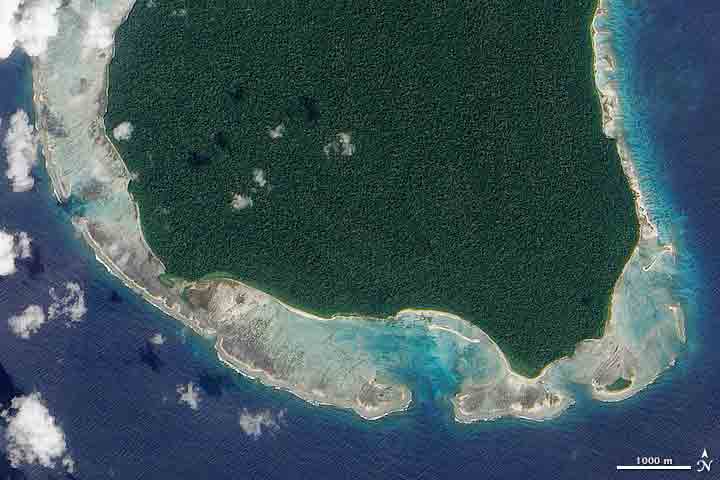
NASA satellite image showing the complete isolation of North Sentinel Island.
Ancient Origins of the Sentinelese People
Genetic studies of neighboring Andaman tribes (Onge, Jarawa) confirm that the broader Andamanese population split from all other humans 40,000–70,000 years ago. The Sentinelese are the purest surviving descendants of the very first successful migration out of Africa. Rising sea levels after the last Ice Age isolated them completely, preserving a pre-Neolithic way of life with no agriculture, no metalworking, and no knowledge of fire-making.
Daily Life of the Sentinelese – Everything We Know from Safe-Distance Observation
From the 1991–1997 Indian contact expeditions and rare drone/satellite imagery:
- Large communal lean-to huts built on stilts with palm-leaf roofs
- Mastery of 6–8 foot bows with iron-tipped arrows (iron salvaged from shipwrecks)
- Graceful outrigger canoes used only in the protected lagoon
- Diet of wild boar, fish, turtles, honey, and forest tubers
- Unique fire preservation culture – they keep embers alive rather than striking new fire
- Body painting and simple adornments observed during beach encounters
Complete Historical Record of North Sentinel Island Encounters
Every documented incident:
- 1867 – Indian merchant ship wrecks; survivors fight off arrow attacks
- 1880 – British officer Maurice Vidal Portman kidnaps an elderly couple and four children “for study.” The adults die of disease within days; surviving children are returned carrying pathogens (Survival International)
- 1974 – National Geographic film crew approaches; director shot in the thigh
- 1981 – Cargo ship MV Primrose grounds on the reef; crew spend a week under arrow fire until helicopter rescue
- 1991–1997 – Only period of semi-peaceful contact; Indian teams leave coconuts, the Sentinelese eventually accept gifts but gesture for the visitors to leave
- 2004 – After the Indian Ocean tsunami, a Sentinelese warrior stands on the beach firing arrows at a relief helicopter – confirming they survived
- 2006 – Two Indian fishermen drift ashore while poaching; both killed, bodies buried on the beach, recovery attempts driven off
- 2018 – John Allen Chau killed (detailed below)
- 2022–2025 – Multiple YouTube/TikTok influencers intercepted by Indian Coast Guard

One of the clearest photographs ever taken of the Sentinelese, from a safe distance in the 1990s.
Who Was John Allen Chau? The Man, Not the Myth
John Allen Chau (1991–2018) was far more prepared than media headlines suggested:
- Eagle Scout and experienced outdoorsman who climbed Mount Rainier and guided wilderness trips
- Oral Roberts University graduate (health and exercise science)
- Trained for nine years with All Nations missionary organization in Kansas City
- Made two previous scouting trips to the Andamans
- Studied linguistics, anthropology, and wilderness medicine
- Received full vaccinations and quarantined himself for 11 days before the final trip to minimize disease risk
The Fatal Three Days: November 14–17, 2018
Day 1 (Nov 14–15) – Chau pays local fishermen $325 to take him near the island at night. He kayaks toward shore shouting phrases in Xhosa. Arrows fly; one pierces his waterproof Bible. He retreats.
Day 2 (Nov 15) – Returns alone. A young Sentinelese boy shoots a metal-tipped arrow into his thigh. Chau paddles back wounded.
Day 3 (Nov 16) – Against the fishermen’s pleas, he makes a final solo kayak trip carrying fish and gifts. From 500 meters away, the fishermen watch warriors surround him, bind his neck with rope, and drag his body down the beach.
Immediate Aftermath and Global Reaction
Indian police confirmed the killing via binoculars but abandoned body recovery to avoid further conflict and disease risk. Seven fishermen were arrested for facilitating the illegal trip. Reactions ranged from evangelical groups calling Chau a martyr to indigenous-rights organizations condemning the mission as reckless colonialism. His father publicly blamed “extreme Christianity.”
Other Uncontacted Tribes Still Under Threat in 2025
More than 100 uncontacted tribes remain worldwide. Recent examples:
- Mashco-Piro (Peru) – 2024–2025 sightings fleeing illegal loggers
- Awá (Brazil) – losing 5,000+ hectares annually to cattle ranching
- Ayoreo-Totobiegosode (Paraguay) – ongoing deforestation pressure
North Sentinel Island Status – November 2025
The exclusion zone remains absolute. Indian Coast Guard patrols and satellite monitoring continue. Population appears stable. No successful illegal landings since 2018.
7 Hard Lessons from John Allen Chau’s Death Every Outdoorsman Must Know
- Some places are off-limits for biological and ethical reasons
- Personal or religious conviction does not override another people’s sovereignty
- One common cold can commit genocide against an uncontacted tribe
- Preparation and good intentions are not enough when laws and ethics say “no”
- True modern adventure is about protection, not penetration
- Support organizations that defend uncontacted peoples
- Respect “no-go” zones – they exist to save lives on both sides
FAQs About John Allen Chau and North Sentinel Island
- What really happened to John Allen Chau?
- Killed by Sentinelese arrows November 16–17, 2018 during an illegal missionary attempt.
- Was his body ever recovered?
- No – recovery was deemed too dangerous.
- Are the Sentinelese cannibals?
- No evidence at all – a persistent myth from colonial times.
- Can anyone visit North Sentinel Island in 2025?
- Absolutely not. It is illegal with penalties up to 7 years imprisonment.
Seven years after John Allen Chau lost his life on North Sentinel Island, the message remains crystal clear: the age of forcing contact with isolated peoples is over. Today’s adventure is about respecting boundaries and protecting the last truly wild places and peoples on Earth.
Learn more about Uncontacted tribes around the world – is it best to leave them alone?
Curious about America’s Most Dangerous Game: Moose?

-

 Adventure1 month ago
SHOT Show 2026: The Most Important New Outdoor Gear Announced in Las Vegas
-

 Gear2 months ago
Suppressors in the Outdoors: Safety, Legality, and Ethical Use in 2026
-

 Camping & Survival1 month ago
Winter Road Status Checks Before You Access Public Land
-

 Fishing3 weeks ago
Winter Fishing Safety: Ice, Cold Water & Abort Criteria
-
 Gear2 weeks ago
Spring Turkey Hunting Preparation: Safety, Scouting Checklist, and Shotgun Patterning
