How to Treat a Snakebite: The Complete First Aid Response Guide
Snakebite treatment has changed in the last two decades, and much of what people still believe about tourniquets and cutting is wrong.
Snakebite treatment has changed significantly in the last two decades — and much of what people believe about the correct response is wrong. The tourniquet, the cut-and-suck technique, and the electric shock therapy popularized by survival shows are not just ineffective. They actively harm the patient and complicate medical treatment. Understanding what to do — and what not to do — in the first minutes after a snakebite is the skill that makes the difference between a manageable medical emergency and a preventable fatality.
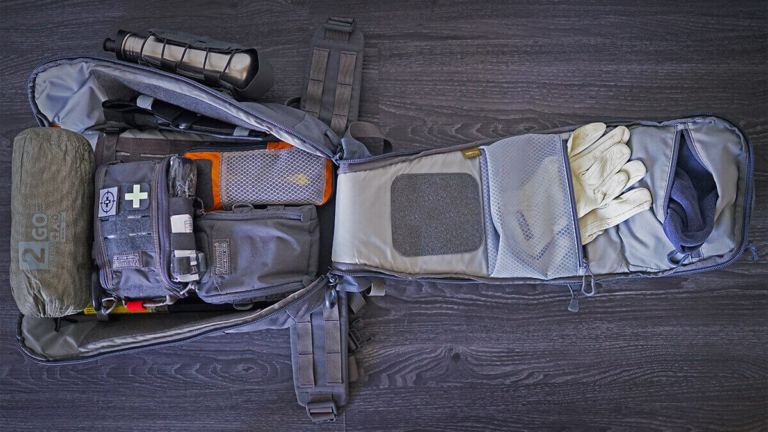
This guide covers how to treat a snakebite correctly: identifying envenomation vs. dry bites, the pressure immobilization technique that actually works, symptoms to monitor, and the timeline for accessing antivenom. For a complete wilderness medical foundation, pair this with the wilderness first aid guide and the best first aid kit guide.
Understanding Venomous vs. Non-Venomous Snakebites
North American Venomous Snakes
In North America, venomous snakes fall into two categories: pit vipers (rattlesnakes, copperheads, cottonmouths/water moccasins) and coral snakes. These require fundamentally different responses because their venom mechanisms differ.
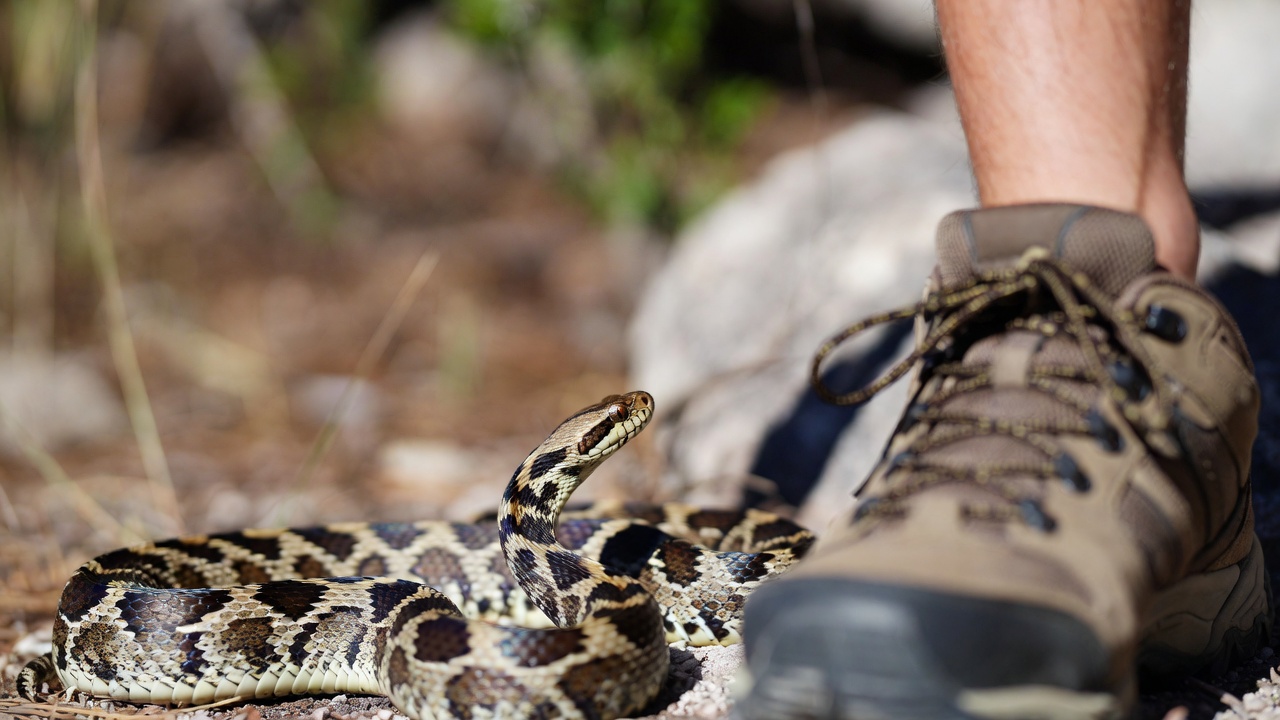
Pit vipers deliver hemotoxic venom that destroys tissue, disrupts blood clotting, and causes significant local damage. The bite wound is typically painful immediately, with rapid swelling and bruising developing within minutes to an hour. Identifying a pit viper bite: two fang puncture marks, immediate pain, progressive swelling. Rattlesnakes carry the highest venom volume and present the most serious risk among North American pit vipers.
Coral snakes deliver neurotoxic venom that attacks the nervous system, causing progressive paralysis. The critical difference: coral snake bites often produce minimal local pain and swelling initially, which misleads victims into underestimating severity. Neurological symptoms — weakness, difficulty swallowing, blurred vision, and respiratory compromise — may not appear for hours after the bite. Coral snake envenomation requires immediate evacuation even when the patient feels fine.
Identifying Venomous Bites in the Field
The difference between a venomous bite and a dry bite (a bite by a venomous snake that delivers no venom — estimated to occur in 20–25% of rattlesnake strikes) cannot be reliably determined in the field. Treat every suspected venomous snakebite as a confirmed envenomation until proven otherwise in a medical facility. The correct approach is not to attempt field diagnosis but to evacuate immediately and monitor symptoms en route.
Signs of envenomation developing: significant pain and swelling progressing from the bite site, bruising or discoloration extending beyond the immediate puncture area, nausea or vomiting, dizziness, metallic taste in the mouth, weakness. The absence of these symptoms in the first hour doesn’t confirm a dry bite — monitor continuously.
Immediate Response: The First Five Minutes
Move Away from the Snake
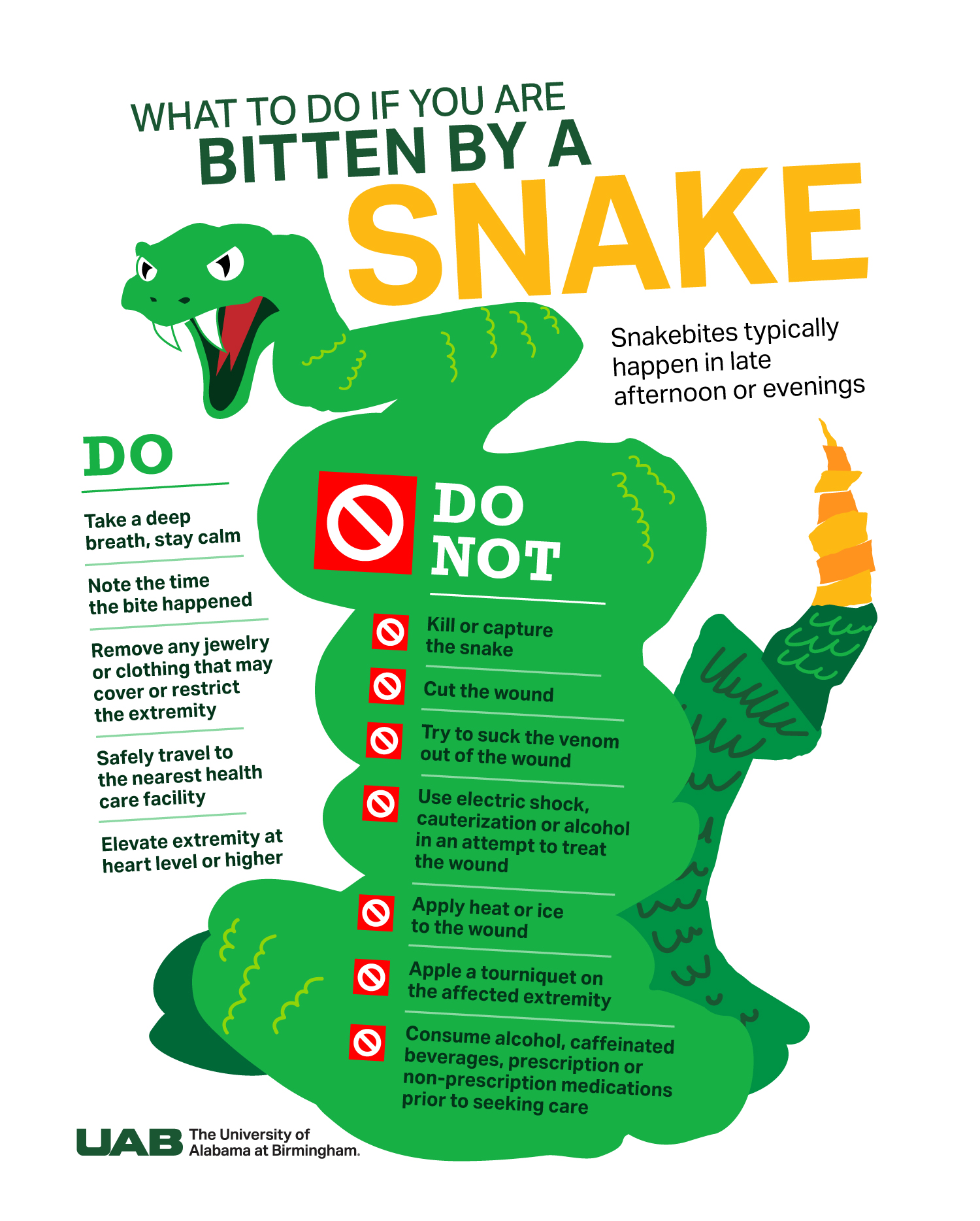
The first action is not to examine the wound or identify the snake — it’s to increase distance from the snake to prevent a second strike. Snakes frequently strike defensively when cornered or when a victim reaches toward them. Move the patient at least 20 feet from the strike location before beginning assessment. Don’t attempt to capture or kill the snake — this causes additional bites, and emergency departments can identify treatment protocols from a photo or description of the snake’s appearance.
Keep the Patient Calm and Still
Physical activity accelerates venom distribution through the lymphatic system. The single most important action after distancing from the snake is immobilizing the patient and keeping them calm. This means: sit or lie down, restrict movement of the affected limb, and prevent exertion. Elevated heart rate from fear or activity is one of the most significant controllable factors in venom spread rate.
Position the Affected Limb
Keep the bitten limb at or slightly below heart level. Elevating the limb above the heart accelerates systemic venom distribution. Lowering it significantly below heart level increases local tissue swelling. Neutral to slightly dependent positioning is the correct choice. Remove all jewelry, watches, and tight clothing from the affected limb immediately — swelling progresses rapidly and rings, bracelets, or tight sleeves become constrictive within minutes.
Why Tourniquets and Suction Don’t Work
The Tourniquet Problem
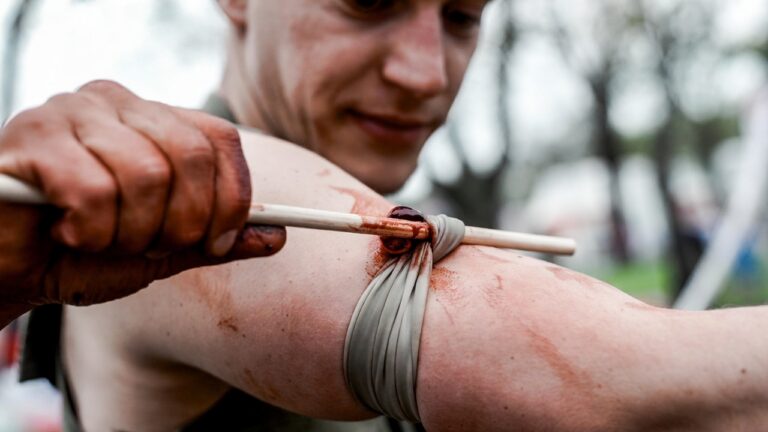
Tourniquets were taught as standard snakebite response for decades. Current evidence is unambiguous: tourniquets applied to snakebite victims cause more harm than no intervention. The mechanism explains why. Pit viper venom attacks local tissue — confining the venom to one area with a tourniquet concentrates tissue destruction, leading to accelerated necrosis, compartment syndrome, and limb loss. Multiple case reports document patients losing limbs not to venom damage but to tourniquet-induced ischemia.
Also, when the tourniquet is eventually removed in a medical setting, rapid systemic release of concentrated venom — the “reperfusion” effect — creates a sudden systemic envenomation event that can trigger cardiovascular collapse.
The Cut-and-Suck Problem
Cutting open the bite wound and attempting to suction venom out fails for three reasons. First, venom absorbs into lymphatic and circulatory tissue within seconds of injection — it is not sitting in a pool accessible to suction. Second, oral suction introduces bacteria from the responder’s mouth into an already compromised wound, dramatically increasing infection risk. Third, cutting creates additional tissue damage that worsens the envenomation injury and complicates surgical wound management.
Commercially sold suction devices (the rubber suction cups sold in snakebite kits) have been tested in controlled studies and found to remove negligible amounts of venom — less than 2% of injected volume in the best-case scenarios. They don’t work, and the false confidence they provide delays evacuation.
What Else Doesn’t Work
Electric shock therapy (applying electrical current to the bite) was briefly popularized in the 1990s based on anecdotal reports. Controlled studies found no benefit and documented burns. Ice and cold packs on snakebites restrict circulation and increase tissue damage. Alcohol consumption (the idea that alcohol somehow neutralizes venom) has no basis in physiology and worsens cardiovascular effects of venom. None of these interventions belong in any snakebite response protocol.
The Pressure Immobilization Technique
When to Use Pressure Immobilization
Pressure immobilization is the recommended intervention for neurotoxic snakebites (coral snakes in North America; mambas, cobras, and taipans internationally). It is controversial and generally not recommended for pit viper bites in North America because the hemotoxic venom causes local tissue damage that pressure wrapping may concentrate and worsen.
The distinction matters: if you are bitten by a rattlesnake, copperhead, or cottonmouth in North America, pressure immobilization is typically not recommended. If you are bitten by a coral snake, or you are outside North America and cannot identify the snake, pressure immobilization is the correct first aid intervention.
How to Apply Pressure Immobilization
- Apply an elastic bandage starting several inches above the bite site and wrap firmly (similar to wrapping a sprained ankle — snug but not circulation-restricting) down the entire length of the limb.
- Apply a second layer from the toes or fingers back up to the body, continuing past the bite site.
- Immobilize the limb with an improvised splint — trekking pole, straight branches, or any rigid material — secured with additional bandaging or cordage.
- The goal is to compress the lymphatic vessels (which carry venom) without cutting off arterial blood flow. You should be able to slip two fingers under the bandage. Capillary refill at the fingertips should remain normal.
- Do not remove the bandaging in the field — maintain until definitive medical care.
Monitoring Symptoms During Evacuation
Pit Viper Envenomation Progression
Local symptoms in pit viper bites typically progress predictably. Mark the leading edge of swelling and bruising with a pen every 15–30 minutes and note the time. Rapid progression — swelling advancing more than 2–3 inches per hour — indicates significant envenomation requiring urgent antivenom. Slower or no progression may indicate a dry bite but does not change the evacuation priority.
Systemic symptoms requiring immediate emergency attention: difficulty breathing, blurred vision, uncontrolled bleeding from the wound or elsewhere, severe vomiting, altered mental status, or loss of consciousness. These indicate serious systemic envenomation and priority evacuation.
Coral Snake Envenomation Monitoring
Coral snake bites require monitoring for neurological symptoms specifically: progressive muscle weakness, ptosis (drooping eyelids), difficulty swallowing, slurred speech, or any change in respiratory effort. These symptoms may not appear for 6–12 hours after the bite — the deceptive delay is why coral snake bites require immediate evacuation regardless of how the patient feels immediately after the bite.
When to Seek Emergency Care
All Suspected Venomous Snakebites Require Emergency Care
There is no field treatment for snakebite envenomation that replaces hospital-administered antivenom. Antivenom is the definitive treatment — every other field intervention is purely supportive, aimed at slowing venom spread and keeping the patient stable until antivenom can be administered. Every suspected venomous snakebite requires emergency medical evacuation regardless of current symptom severity.
Activate rescue and begin evacuation immediately. If a PLB (Personal Locator Beacon) or satellite communicator is available, activate it now. Call 911 if cellular service is available — poison control centers (1-800-222-1222 in the US) can provide real-time guidance to emergency responders en route.
Antivenom: What You Need to Know
CroFab antivenom covers all North American pit vipers (rattlesnakes, copperheads, cottonmouths). It’s available at most regional trauma centers and many community emergency departments in areas with significant pit viper populations. Coral snake antivenom availability is more limited — verify regional availability with local poison control if you live or recreate in coral snake habitat (southeastern United States, particularly Florida).
Antivenom is most effective when administered early — within 6 hours of envenomation for pit vipers. Late administration (12+ hours) is still beneficial but requires higher doses and is less effective at reversing established tissue damage. Time from bite to antivenom is one of the most critical outcome determinants for serious envenomations.
Special Situations
Children and Snakebite
Children are at higher risk from snakebite because their smaller body mass means a given venom volume represents a higher dose per kilogram. Children envenomated by the same snake species that would cause moderate symptoms in an adult may present with severe systemic envenomation. Pediatric snakebite requires aggressive emergency response and antivenom consideration regardless of initial symptom severity.
Anaphylaxis Risk
Snakebite can trigger anaphylaxis in sensitized individuals — particularly in people bitten previously by the same species. Signs of anaphylaxis: hives, throat tightening, difficulty breathing, hypotension. If epinephrine (EpiPen) is available and anaphylaxis is suspected, administer it per dosing instructions. Anaphylaxis superimposed on envenomation is a simultaneous life-threatening emergency.
Frequently Asked Questions About Snakebite Treatment
Should I use a tourniquet or suction for a venomous snakebite?
No — both are outdated and harmful. Tourniquets concentrate venom-induced tissue damage and can cause limb loss. Suction removes negligible amounts of venom (less than 2% in testing) while introducing infection risk. The correct immediate response is immobilizing the patient and affected limb, keeping the victim calm to reduce heart rate and slow venom spread, removing constricting jewelry, and initiating emergency evacuation. Pressure immobilization wrapping is appropriate for coral snake bites specifically.
How quickly do snakebite symptoms appear?
Pit viper bite symptoms typically appear within 15 minutes to an hour — pain, swelling, and bruising progressing from the bite site. Some bites are dry (no envenomation) — estimated 20–25% of rattlesnake bites — but this cannot be confirmed in the field. Coral snake bites are the exception: neurological symptoms may not appear for 6–12 hours, making the immediate post-bite period misleadingly benign. Seek emergency care immediately for all suspected venomous bites regardless of current symptoms — antivenom timing is critical.
Can I cut open a snakebite and suck out the venom?
No. Venom absorbs into tissue within seconds of injection and cannot be effectively removed by suction. Cutting the wound causes additional tissue damage, worsens the injury, and introduces infection risk. Commercial suction devices remove under 2% of venom in controlled testing. This intervention delays evacuation, damages tissue that surgeons may later need to repair, and provides false confidence that treatment has occurred. Immobilize, keep still, and evacuate — these are the three actions that actually improve outcomes.
Published by Chad Dyer, President, Brand Avalanche Media, Inc. Popular Outdoorsman is an independent editorial publication. This guide provides educational information only and does not replace professional medical advice. In a snakebite emergency, call 911 or poison control (1-800-222-1222) immediately.
Reader Favorites
Field-to-table reference desk
From tag to table — official season dates for all 50 states, plus safe doneness temps for your harvest.
| Species | Archery | Firearm |
|---|---|---|
| Deer | Sep–Oct | Nov |
| Elk | Sep | Oct–Nov |
| Turkey | — | Apr–May |
All 50 state wildlife agencies, plus how seasons, tags and licenses work.
Find your state → Network| Doneness | Target |
|---|---|
| Rare | 125–130°F |
| Medium-rare | 130–135°F |
| Well-done | 160°F+ |
Safe pull temps for venison and steak, from Popular BBQ.
View full chart →