Ham Radio for Beginners: License, Equipment, and Getting on the Air
Last updated: October 9, 2026 · Originally published September 25, 2026
Ham radio is the one communication system that still works when cell towers, the internet and commercial broadcasting fail at the same time.
Ham radio — amateur radio — is the only communication system that functions reliably when cell towers, internet infrastructure, and commercial broadcasting fail simultaneously. It’s independently powered, independently licensed, and independently operated. For emergency preppers, remote property owners, hunters in dead zones, and anyone who wants to communicate when nothing else works, amateur radio is the answer that cell service will never be.
This ham radio for beginners guide covers everything a new operator needs: how licensing works, what equipment to start with, how to make your first contact, and how amateur radio integrates with emergency communication networks. This pairs with our broader communication gear recommendations in the bug-out bag checklist.
Radios
What is Amateur Radio?
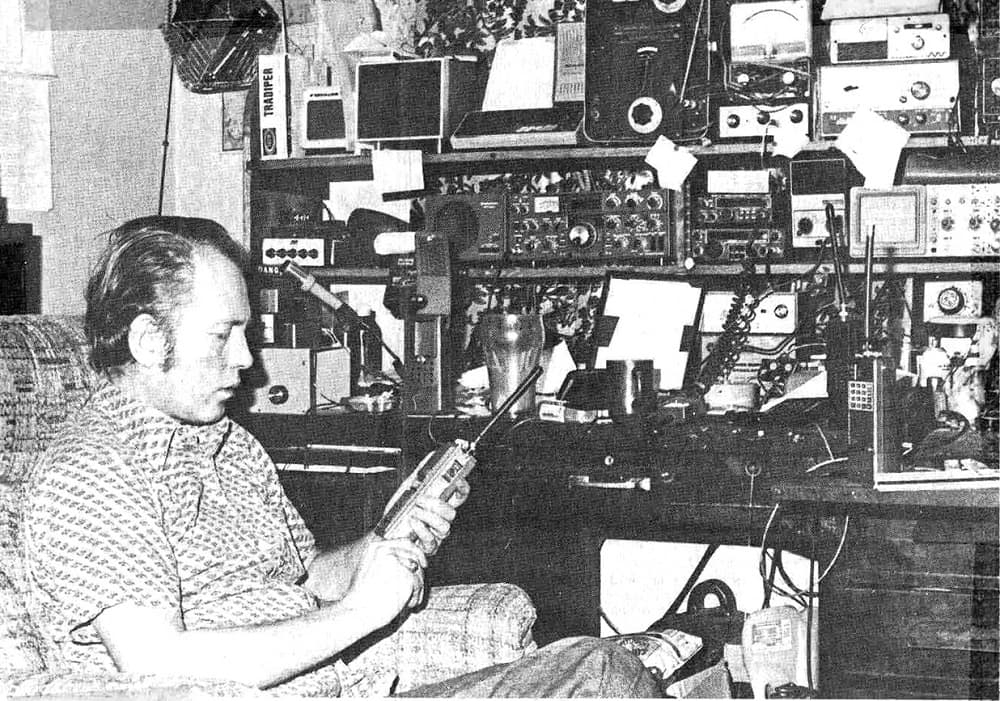
Amateur radio is a licensed radio communication service allowing individuals to transmit and receive on designated frequency bands using self-operated equipment. Unlike CB radio (no license required, limited power) or GMRS (simple license, repeater access), amateur radio grants access to a wide range of frequencies from 1.8 MHz (160 meters) to 1.3 GHz (23 centimeters) and above, with legal power levels up to 1,500 watts on most bands.
The practical advantage for emergency communications: amateur radio can reach local (repeater networks), regional (HF skip propagation), and global contacts using equipment that runs on battery power, solar charging, or vehicle power. No subscription, no infrastructure dependency, no cell carrier intermediary.


FCC License Requirements
In the United States, the FCC requires an Amateur Radio License to transmit on amateur frequencies. There are three license classes:
Technician Class — Where Beginners Start
The Technician license is the entry-level amateur radio license and the appropriate starting point for emergency communications. It grants full operating privileges on all amateur frequencies above 30 MHz, including the 2-meter (144–148 MHz) and 70-centimeter (420–450 MHz) bands where most local repeater networks operate.
Exam requirements: 35-question multiple-choice exam. Passing score is 26 correct (74%). Questions drawn from a published question pool available at ARRL.org and HamStudy.org. Most beginners study for 1–3 weeks using free online resources.
Cost: $15 volunteer examination fee at in-person sessions; free online through HamStudy Logbook of the World (LoTW) for remote exams. License valid for 10 years, renewable.
What you can do with a Technician license: Operate on local repeaters, make local VHF/UHF contacts, participate in ARES/RACES emergency networks, communicate in SKYWARN (NWS storm spotting), and transmit on a small portion of HF bands (10-meter voice, some CW privileges).
General Class
The General class adds privileges on HF bands (3–30 MHz), enabling regional and intercontinental contacts through ionospheric propagation. General-class operators can reach across the country and internationally with 100-watt equipment on clear bands — capabilities valuable for emergency operators who need to reach outside a disaster-affected local area.
Exam: 35-question exam, same structure as Technician. General exam covers HF operating, propagation, and more advanced electrical concepts. Most Technician operators can pass General with 2–4 additional weeks of study.
Amateur Extra
The Extra class provides access to all amateur frequencies with no additional restrictions. Most emergency-focused operators don’t need Extra-class privileges — the General license covers the HF bands that matter for emergency use.
Choosing Your First Radio
The choice of first radio depends on your primary use case. Two categories dominate beginner amateur radio: handheld transceivers (HTs) and base stations.
Handheld Transceivers (HTs)
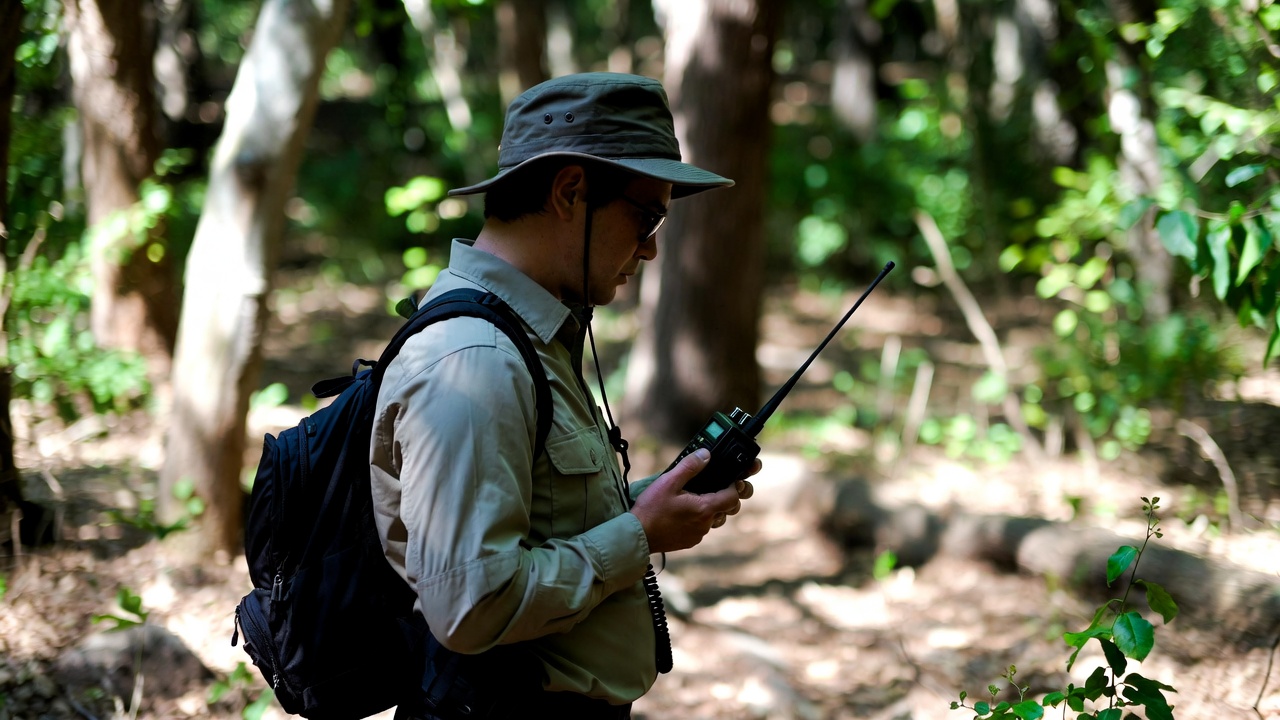
An HT is a battery-powered portable radio that covers 2-meter and 70-centimeter bands. For emergency preparedness and new operators, an HT is almost always the right first purchase — it works when the power is out, goes in a bag, and covers the local repeater network that is the backbone of emergency amateur radio communication.
Baofeng UV-5R ($25–$35): The most popular beginner HT. Inexpensive enough that beginners won’t hesitate to experiment. Works well with a better antenna. Battery life is adequate for field use. Audio quality and build quality are below professional-grade but acceptable for the price. Not recommended as a primary emergency radio but excellent as a backup or second unit.
Yaesu FT-60R ($130–$150): The standard recommendation for a beginner’s primary HT. Better receiver sensitivity than the Baofeng, more durable construction, better audio, and a more intuitive interface. Covers 2m and 70cm with 5-watt output. The FT-60R is the workhorse of amateur radio emergency communication nets because it’s reliable, affordable, and widespread.
Yaesu FT-70DR ($180–$200): Adds C4FM digital mode capability to the standard analog package, enabling clearer audio on digital repeaters. A reasonable upgrade from the FT-60R for buyers who want digital compatibility from the start.
Kenwood TH-D74A ($500–$600): The top-tier HT recommendation for serious emergency operators. Covers 2m, 70cm, and 1.25m; includes built-in APRS (Automatic Packet Reporting System, a digital position and message reporting system); excellent receiver; ruggedized construction. This is a career radio, not a starter radio.
Mobile and Base Station Radios
Mobile radios mount in vehicles or operate from home on external power. They typically output 50–75 watts (vs. 5 watts for HTs), dramatically improving range and reliability on simplex (direct radio-to-radio, no repeater) contacts.
Yaesu FTM-300DR ($280–$330): The recommended mobile/base starter. 50-watt output, dual-band (2m/70cm), C4FM digital, with a detachable face panel for clean vehicle installation. Runs on 12V DC — powers from a car battery, solar system, or DC power supply at home.
Icom IC-2300H ($180–$200): Single-band (2m only) at 65 watts. Less versatile than the FTM-300DR but excellent value for operators focused on 2-meter VHF, which is where most emergency nets operate.
Antennas and Reception Optimization
Antenna matters more than radio output power. Doubling transmit power (say, from 5W to 10W) adds approximately 3 dB — barely noticeable in practice. Improving antenna gain by 3 dB has the equivalent practical effect with no additional power cost.
HT Antenna Upgrades
The “rubber duck” antennas that ship with most HTs are adequate for close-range repeater access but significantly limit range. A $20–$40 aftermarket antenna (Diamond SRH77CA, Nagoya NA-771) dramatically improves HT performance — one of the highest-value upgrades available for emergency communicators.
Base and Mobile Antennas
A roof-mounted or attic-mounted vertical antenna with a ground plane extends 2-meter/70cm range to the maximum achievable with legal power. The Diamond X50A ($60–$80) is the standard beginner dual-band base antenna — a reliable fiberglass vertical that covers 2m and 70cm from a single feed point with adequate gain across both bands.
Frequencies, Repeaters, and Emergency Networks
Most local amateur radio emergency communication occurs on repeaters — automated radio stations on hilltops or tall buildings that receive a low-power signal and retransmit it at higher power, dramatically extending range. A 5-watt HT that can direct (simplex) contact another station 3–5 miles away can reach any point in a metro area through a well-placed repeater.
Finding Local Repeaters
The RepeaterBook.com directory lists virtually every amateur radio repeater in the US and many internationally, searchable by location and band. Most areas have multiple 2-meter repeaters, at least one 70-cm repeater, and increasingly, digital (C4FM, D-STAR, or DMR) repeater networks.
ARES and RACES
Amateur Radio Emergency Service (ARES) and Radio Amateur Civil Emergency Service (RACES) are the organized emergency communication arms of amateur radio. ARES operates under ARRL; RACES operates under local government emergency management.
Joining your local ARES chapter provides: regular net training, emergency communication protocols, coordination with local emergency management, and mutual aid networks for disasters that exceed local capacity. For new operators specifically interested in emergency use, joining ARES should be a priority alongside licensing.
Frequently Asked Questions About Ham Radio
Do I need a license to use a ham radio?
Yes — the FCC requires an Amateur Radio License (Technician, General, or Extra class) to transmit on amateur frequencies. Receiving does not require a license. The Technician exam is 35 multiple-choice questions from a published pool; most beginners pass after 1–3 weeks of study using free resources at HamStudy.org or ARRL.org. The exam fee is $15 at in-person sessions, and the license is valid for 10 years. Unlicensed transmission on amateur frequencies is a federal violation with significant penalties.
What’s the difference between an HT and a base station radio?
An HT (handheld transceiver) is battery-powered, portable, and outputs 5 watts. It’s the right choice for portable emergency use and field operations. A base station or mobile radio mounts in a fixed location, runs on 12V or 120V power, and outputs 50–100+ watts. The higher power and better external antenna options make base stations better for reliable communications over distance. Most emergency operators own both: an HT for portable use and a mobile radio at home for higher-power base operation.
Can ham radios communicate during a power outage?
Yes — this is one of amateur radio’s core advantages. HTs run on rechargeable battery packs (typically 6–12 hours per charge), which can be recharged from solar panels, vehicle batteries, or hand-crank generators. Mobile radios run directly from 12V automotive or deep-cycle batteries. Well-equipped amateur radio emergency operators run 72+ hours on battery and solar without commercial power. This independence from grid power makes amateur radio the most reliable communication option when infrastructure fails.
Published by Chad Dyer, President, Brand Avalanche Media, Inc. Popular Outdoorsman is an independent editorial publication. Product recommendations reflect editorial judgment based on field experience and specifications review.


Reader Favorites
Field-to-table reference desk
From tag to table — official season dates for all 50 states, plus safe doneness temps for your harvest.
| Species | Archery | Firearm |
|---|---|---|
| Deer | Sep–Oct | Nov |
| Elk | Sep | Oct–Nov |
| Turkey | — | Apr–May |
All 50 state wildlife agencies, plus how seasons, tags and licenses work.
Find your state → Network| Doneness | Target |
|---|---|
| Rare | 125–130°F |
| Medium-rare | 130–135°F |
| Well-done | 160°F+ |
Safe pull temps for venison and steak, from Popular BBQ.
View full chart →