Where to Shoot a Deer: Shot Placement for Every Angle
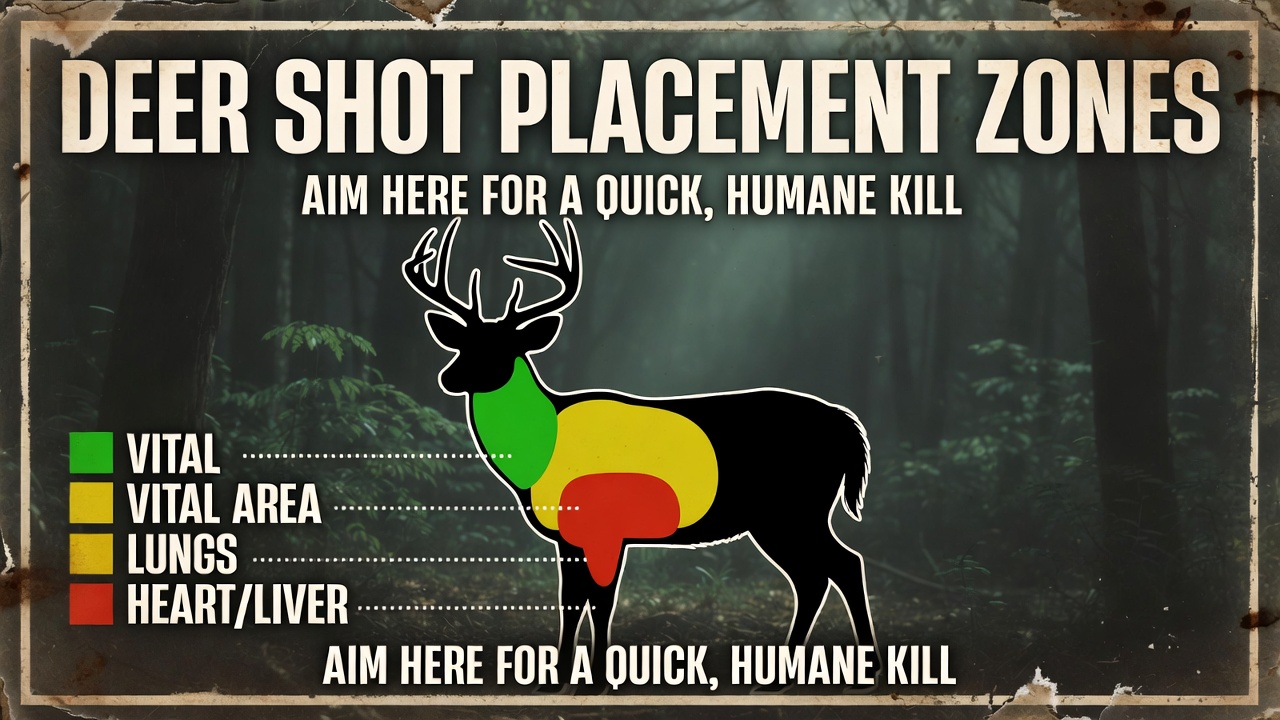
Where to shoot a deer: tight behind the front shoulder, one-third of the way up the chest, so the bullet or arrow passes through both lungs.
Last updated: October 6, 2026 · Originally published October 4, 2026
Where to shoot a deer is the one question every new hunter asks and every old hunter still argues about at camp. In over 20 years as a professional in the firearms industry, I’ve spent more than my fair share of time around rifles, zeros and the folks who bring them in after a bad season. The rifle is rarely the problem. Knowing exactly where the heart and lungs sit, from every angle, is what fills the freezer.
Here is the aim point on paper, angle by angle, for both rifle and bow.
Safety and legal note. This article is general information, not a substitute for a hunter education course. Positively identify your target and what is behind it before every shot. Legal hunting hours, legal weapons, minimum calibers and draw weights, and tagging rules are set by your state. Check your state wildlife agency’s current regulations before you hunt.
Deer Shot Placement at a Glance
- The spot: right behind the front shoulder, about one-third of the way up from the bottom of the chest.
- The target: a double-lung zone about the size of a volleyball, far bigger than the heart.
- Best angles: broadside and quartering away, for rifle and bow alike.
- Bowhunters pass on: quartering toward, straight away, and head shots.
- After the shot: wait at least 30 minutes on a good lung hit, and hours on a liver or gut hit.
Where Are a Deer’s Vital Organs?
The heart and lungs sit low and forward in the chest, tucked right behind the front leg. Hunter-ed.com puts them “just behind the front shoulder” and “roughly one-third up from the bottom of the deer’s chest.” The NRA’s American Hunter uses a picture I like: imagine a cardboard box with an orange hanging in the front third of it. The box is the deer. The orange is the heart.
Here is the part a lot of people get wrong. The heart is a small target. The lungs wrap around it and fill most of that front third of the chest, and hunter-ed.com sizes the double-lung zone at about a volleyball. American Hunter makes the point plainly: a deer can’t survive with both lungs punctured. That is why the standard advice is to aim for the lungs and let the heart be a bonus.
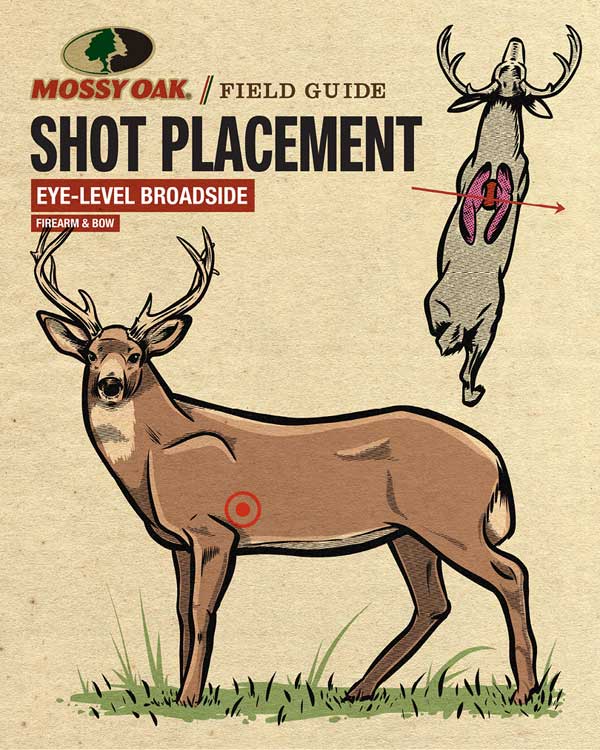
Proper shot placement on a deer is important to achieve a quick, ethical kill that minimizes the animal’s suffering and makes recovery more reliable. Image courtesy of Mossy Oak


Where to Shoot a Deer at Every Angle
A deer rarely stands perfectly broadside and waits. The aim point moves with the angle, because what matters is where the bullet or arrow comes out, not where it goes in. Picture the path through the body and pick the entry spot that sends it through both lungs.
| Angle | Where to aim | Rifle | Bow |
|---|---|---|---|
| Broadside | Behind the shoulder, one-third up | Best | Best |
| Quartering away | Behind the near shoulder, angled to exit at the far shoulder | Good | Good |
| Quartering toward | At the sternum, never behind the shoulder | Experts only | Pass |
| Head-on | Where the neck meets the chest, head up | Wait for a turn | Pass |
| Straight away | None worth taking | Avoid | Pass |
Aim points from the NRA’s American Hunter and hunter-ed.com; bow column from the national Bowhunter Education standards.
Broadside and Quartering Away
Broadside gives you the biggest margin for error. Put the crosshair or pin tight behind the front leg, one-third of the way up, and the shot goes through both lungs. American Hunter says a deer hit this way usually runs 35 to 125 yards before it goes down, so do not panic when it takes off.
Quartering away is a good shot too, and the Bowhunter Education standards rate it right alongside broadside. The trick is to aim for the far shoulder. On a slight angle, that means tight behind the near shoulder. On a hard angle, American Hunter says to aim at the offside shoulder, and notes the bullet has to pass through the stomach area on its way to the heart and lungs.
Quartering Toward, Head-On and Straight Away
These are the angles where shot placement gets tricky. On a deer quartering toward you, the near shoulder covers the vitals. With a rifle and enough gun, American Hunter’s advice is to aim between the shoulders at the sternum, and never behind the shoulder. With a bow, the Bowhunter Education standards list quartering toward, straight away and direct shoulder hits as poor shots, so let that deer turn.
A head-on deer with its head up shows you the spot where the neck meets the chest. If the head is down, wait. And a deer walking straight away offers nothing a careful hunter should shoot at with a bow. American Hunter only discusses the straight-away rifle shot for powerful cartridges like the .270 Winchester and up, and calls it far from ideal.
Is a Head or Neck Shot a Good Idea?
For most of us, no. The national Bowhunter Education standards say head shots are “not ethical and are rarely lethal for big game animals.” With a rifle, American Hunter says a head shot takes pinpoint precision and carries a real risk of missing or only wounding the deer. American Hunter calls the neck shot usually effective but says the exact spot is hard to judge. Take the lungs.

Shooting From a Tree Stand
Height changes the angle. The Bowhunter Education standards point out that a steep downward shot can pass through only one lung, and a one-lung deer can travel a long way. So think about the exit, not the entry. Pick the spot that sends the arrow or bullet out low on the far side, through both lungs. On a steep uphill or downhill shot, aim for the horizontal distance to the deer, not the line-of-sight distance.
If you hunt with a bow, our Bowhunter’s Rosetta Stone covers shot placement aids in more detail.
What to Do After the Shot
Watch the deer until it is out of sight and mark the last place you saw it. Hunter-ed.com lists the signs of a good lung hit: bright red, bubbly or frothy blood, a hunched or kicking deer, and a run of less than 100 yards before it slows down. Then give it time:
- Heart or double lung: wait at least 30 minutes.
- Liver: wait 4 to 6 hours.
- Gut: wait 6 to 8 hours, or until morning if it is late.
- Not sure: wait several hours.
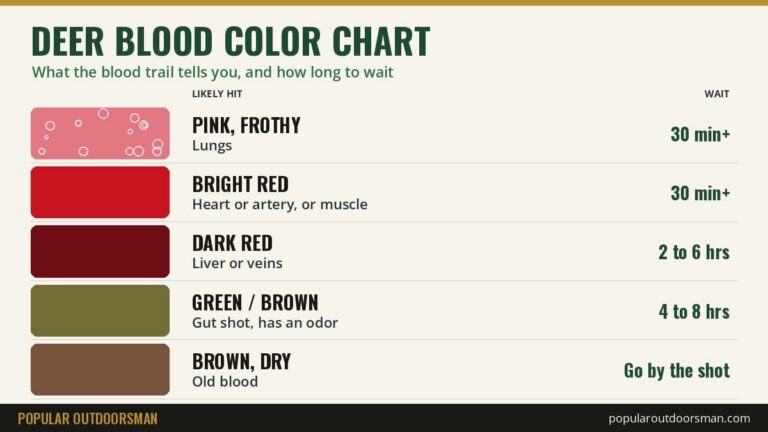
Pushing a wounded deer is how people lose them. Our deer blood color chart shows what each kind of blood means and how long each one says to wait. Once the deer is down, our guide to counting points on a buck and scoring the rack covers what comes next.
Know Where Your Rifle Hits First
Now for my part of the job. Shot placement assumes the bullet goes where the crosshairs are. Check your zero with the exact load you will hunt with, and know how far that bullet drops at the longest shot you would take. Guns and Gadgets Daily has a free ballistic calculator that shows drop and energy at every range, which takes the guesswork out of that 250-yard shot across the bean field. And if you are still picking your stand times, our deer movement forecast gives you the best hours for your ZIP code.
Frequently Asked Questions
What is the best place to shoot a deer?
The double-lung zone, right behind the front shoulder and one-third up the chest on a broadside or quartering-away deer. It is the largest vital target and the most forgiving.
Should I aim for the heart?
Aim for the lungs. Hunter-ed.com points out that the volleyball-sized double-lung zone gives you a much larger margin for error than a heart-only shot.
Is a shoulder shot good on a deer?
With a rifle, American Hunter describes aiming just below the point of the shoulder, one-third up, with modern cartridges larger than .25 caliber, which can drop a deer on the spot. With a bow, the Bowhunter Education standards call a direct shoulder hit a poor shot.
How long should you wait before tracking a deer?
At least 30 minutes on a heart or lung hit, 4 to 6 hours on a liver hit, and 6 to 8 hours on a gut hit, per hunter-ed.com.
Broadside or quartering away, tight behind the shoulder, one-third up, both lungs. Pass on everything else and you will spend a lot less time crawling through briars with a flashlight.
Sources: hunter-ed.com, “Deer Anatomy for Hunters” (September 2026); Jeff Johnston, “Shot Placement 101: Where to Shoot a Deer,” NRA American Hunter; Bowhunter Education 2017 Standards, instructor guide for Today’s Bowhunter (posted at mass.gov).

Reader Favorites
Field-to-table reference desk
From tag to table — official season dates for all 50 states, plus safe doneness temps for your harvest.
| Species | Archery | Firearm |
|---|---|---|
| Deer | Sep–Oct | Nov |
| Elk | Sep | Oct–Nov |
| Turkey | — | Apr–May |
All 50 state wildlife agencies, plus how seasons, tags and licenses work.
Find your state → Network| Doneness | Target |
|---|---|
| Rare | 125–130°F |
| Medium-rare | 130–135°F |
| Well-done | 160°F+ |
Safe pull temps for venison and steak, from Popular BBQ.
View full chart →