Deer Blood Color Chart: What the Blood Trail Tells You
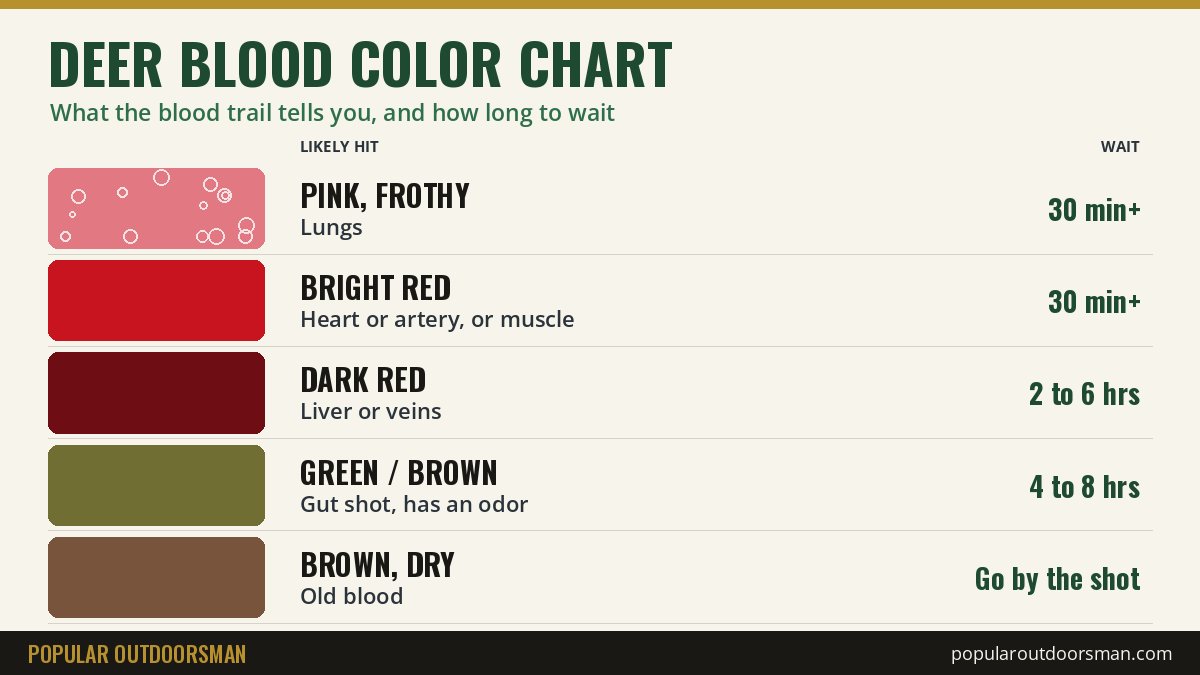
Deer blood color chart: frothy pink means lungs, bright red a heart or artery, dark red the liver, and green or brown flecks a gut shot.
Last updated: October 11, 2026 · Originally published October 4, 2026
A deer blood color chart is the closest thing you have to an X-ray after the shot. Even after the shot I spend my time making sure the rifle puts the bullet where you aim. What happens after it lands is written on the leaves, and reading it right decides how long you wait and how the deer gets recovered.
Here is what each kind of blood means, according to the National Deer Association and the hunter education courses, and how long each one tells you to wait.
Safety and legal note. This article is general information, not a substitute for a hunter education course. Blood sign is a guide, not a guarantee. Handle any firearm you carry on a trail by the same safety rules you use on stand, and follow your state’s rules on tracking after legal hours, carrying a firearm while tracking, and using tracking dogs.
Blood Color at a Glance
- Pink, frothy or bubbly: lungs. Usually a good trail.
- Bright red: arterial blood, from a heart shot or a leg or muscle wound.
- Dark red: veins, and often the liver.
- Green, brown or clear with an odor: gut shot. Back out and wait hours.
- Dried blood turns brown and is easy to miss on brown leaves.
Deer Blood Color Chart

| What you see | Likely hit | Wait before trailing |
|---|---|---|
| Pink or crimson, frothy, bubbly | Lungs | At least 30 minutes; NDA says about 1 hour after a bow shot |
| Bright red | Artery: heart, or a leg or muscle wound | At least 30 minutes; watch the trail closely |
| Dark red | Veins, often the liver | 2 to 4 hours (NDA); 4 to 6 hours (hunter-ed.com) |
| Green, brown or clear material, odor | Stomach or intestines | 4 to 6 hours (NDA); 6 to 8 hours or overnight (hunter-ed.com) |
| Brown and dry | Old blood, color alone tells you little | Go by the shot and the deer’s reaction |
Colors from the National Deer Association and the bowhunter education study guide; wait times from the NDA and hunter-ed.com. Where the two disagree, both are shown. When in doubt, wait longer.
What Does Frothy, Bubbly Blood Mean?
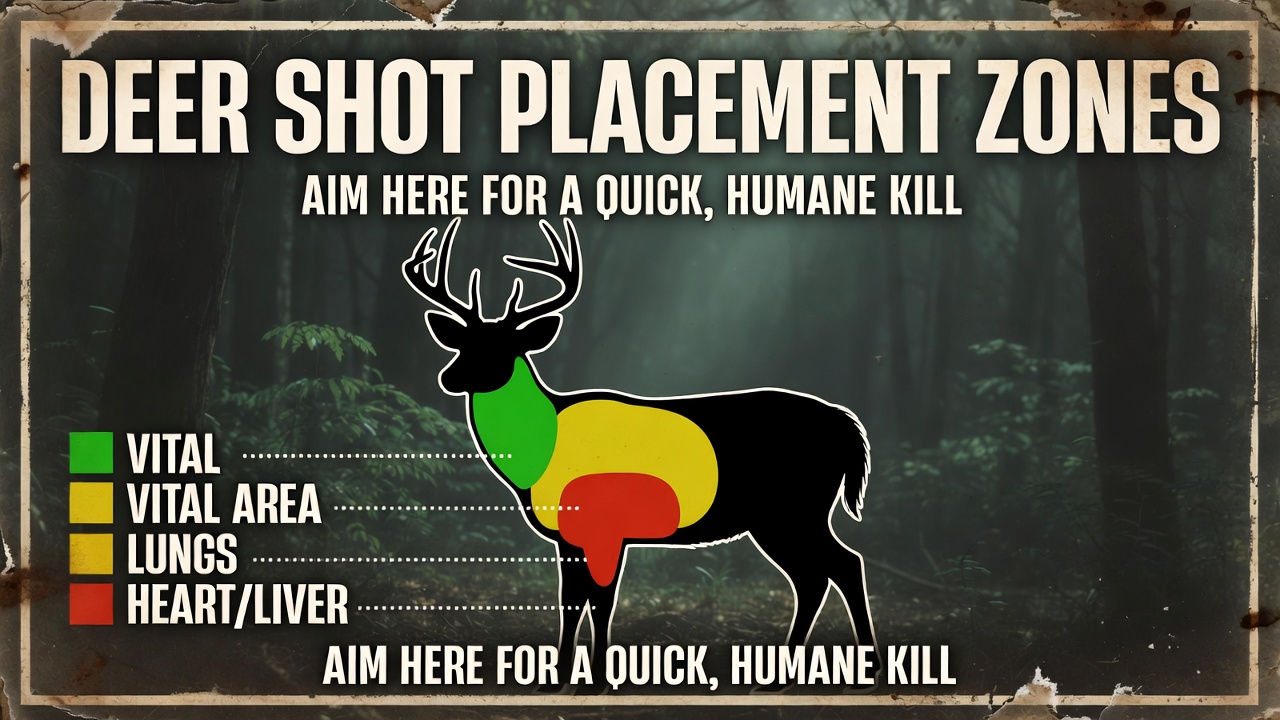
Lungs. The bowhunter education study guide says blood “that has bubbles or looks frothy could indicate a lung hit,” and the National Deer Association describes it as “crimson, frothy blood” that usually leaves “a decent blood trail.” This is the blood you want to see, and it matches the shot we cover in where to shoot a deer.
Bright Red vs. Dark Red Blood
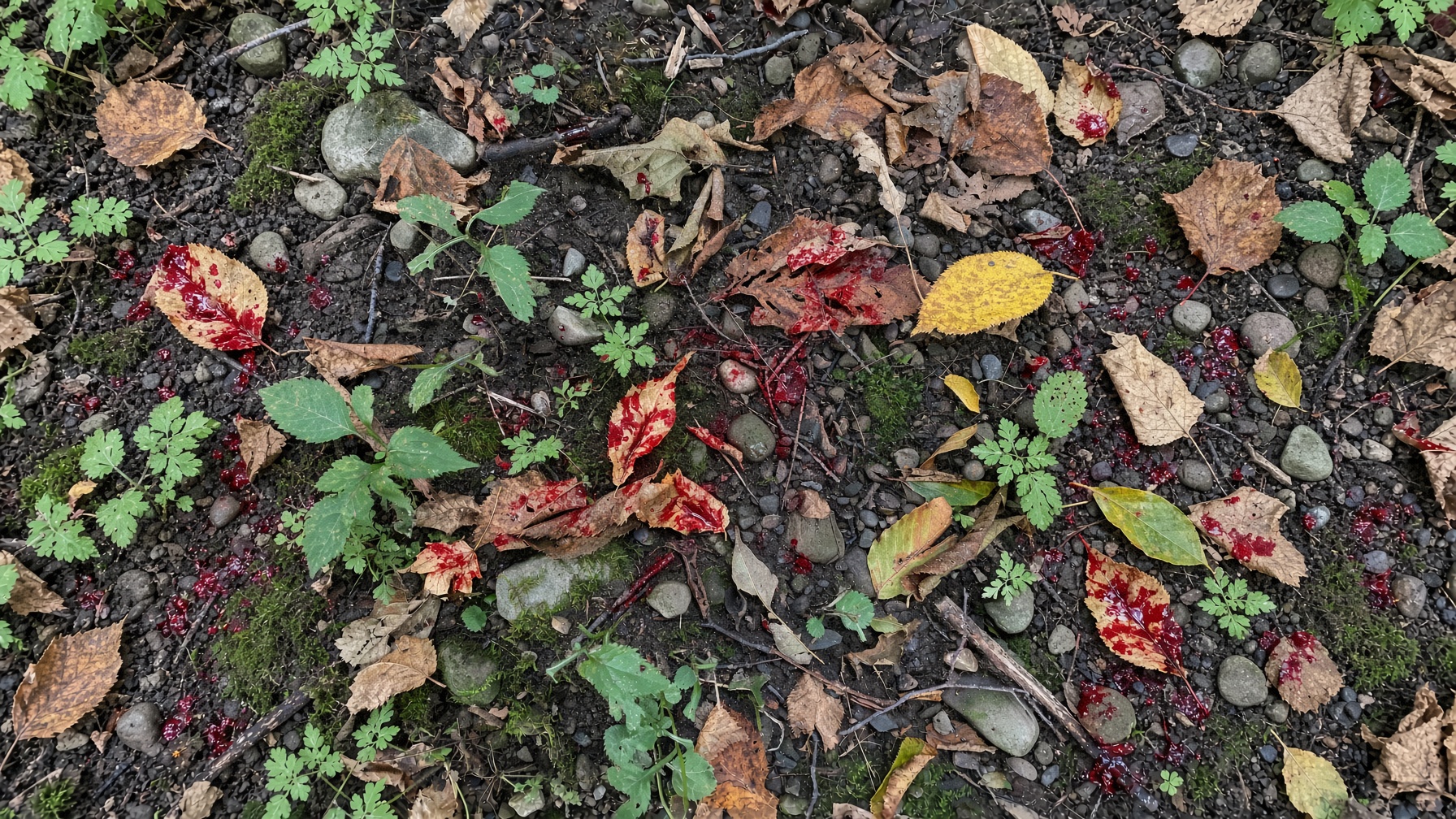
The study guide puts it simply: bright red blood comes from arteries, and darker blood comes from veins. The NDA adds that bright red “can indicate a heart shot or possible leg wound,” and dark red “usually means a hit to the liver.”
That is why bright red on its own is not a promise. A heart hit and a muscle hit can look the same on the first few drops. Watch how the trail behaves as you follow it, and remember what the deer did at the shot.
What Does Gut-Shot Blood Look Like?
Look for green or brown material mixed in, an odor, or fluid that is clear or greenish with bits of fat. The study guide describes it as fluid that “is greenish, has tallow, or is clear,” and the NDA says blood mixed with green or brown material that “has an odor usually means a gut-shot.”
This is the one where patience matters most. Back out quietly and give it hours, not minutes, using the wait times in the chart.
How to Follow a Blood Trail
- Watch and listen at the shot. Note where the deer was standing, how it reacted and the last place you saw it.
- Wait. Use the table above, and when in doubt, wait longer.
- Start at the hit site. Look for blood, hair and your arrow. The color and texture tell you which row of the chart you are on.
- Walk beside the trail, not on it. The study guide says to “walk on the side of the escape route” so you do not wipe out sign.
- Mark every spot of blood. Toilet paper, reflector ties or orange or chartreuse flagging tape all work. Pick up anything permanent when you finish.
- Check low and high. Some drops are tiny. Get on your hands and knees, and look at leaves, weeds, rocks and logs.
- Bring a second set of eyes. The study guide calls a tracking partner “invaluable.”
- If you jump the deer, stop. If you find the deer bedded with its head up, the study guide says to back off and wait another hour or two.
What to Bring for Tracking
The NDA’s list is short: a flashlight in the 50 to 70 lumen range, toilet paper for marking, a compass or GPS, a map, a drag rope, a cell phone and a knife. One trick from the same list: hydrogen peroxide in a spray bottle. Blood fizzes when you spray it, which helps you find or confirm the next drop.
A light makes a big difference on a trail after dark, and the right one matters. Our sister site Popular EDC explains how flashlight lumens work if you are shopping for one.
When to Call a Tracking Dog
If the trail dries up, a trained tracking dog can finish the job. The Congressional Sportsmen’s Foundation says blood tracking with dogs is allowed in 44 states, and the rules on leashes, licenses and who can handle the dog vary by state. Check your own state first. If you are asking yourself if it counts as fair chase, we covered that in do tracking dogs count as fair chase.
Most of you process your own deer, start to finish.
Frequently Asked Questions
What color is lung blood on a deer?
Pink to crimson, with bubbles or froth from the air in the lungs.
What does dark red blood mean on a deer?
Darker blood comes from veins, and the NDA says it usually means a liver hit. Wait at least 2 to 4 hours, and longer if you can.
How long should I wait to track a gut-shot deer?
The NDA says 4 to 6 hours, or overnight when it is cool. Hunter-ed.com says 6 to 8 hours, or until morning if it is late.
Does hydrogen peroxide help find a blood trail?
Yes. The NDA notes that blood fizzes when sprayed with hydrogen peroxide, which helps confirm the next drop.
Read the blood, respect the wait, mark every drop, and when the sign runs out, call a dog where it is legal.
Sources: Bob Westerfield, “How to Blood-Trail a Deer,” National Deer Association; Bowhunter Education study guide, “Trailing Game and Blood Sign” (bowhunter-ed.com, Missouri course); hunter-ed.com, “Deer Anatomy for Hunters” (September 2026); Congressional Sportsmen’s Foundation, “Use of Tracking Dogs to Recover Game.”
Reader Favorites
Field-to-table reference desk
From tag to table — official season dates for all 50 states, plus safe doneness temps for your harvest.
| Species | Archery | Firearm |
|---|---|---|
| Deer | Sep–Oct | Nov |
| Elk | Sep | Oct–Nov |
| Turkey | — | Apr–May |
All 50 state wildlife agencies, plus how seasons, tags and licenses work.
Find your state → Network| Doneness | Target |
|---|---|
| Rare | 125–130°F |
| Medium-rare | 130–135°F |
| Well-done | 160°F+ |
Safe pull temps for venison and steak, from Popular BBQ.
View full chart →