Hunter Orange Requirements by State: All 50 Rules
Hunter orange requirements by state: 38 states require orange in firearm seasons, 6 only for some land or hunters, and 6 not at all.
Originally published: October 24, 2026
Safety and legal note. This article is general information, not a substitute for a hunter education course or legal advice. Many states add county, youth or public-land rules a 50-row table cannot hold. Check your state wildlife agency’s current regulations before you hunt.
Hunter orange requirements by state are the laws that set how much daylight fluorescent orange (and, in 15 states, fluorescent pink) a hunter has to wear, where on the body it goes, and in which seasons. Most states name square inches or garments, a few apply only to certain land or hunters, and six have no rule at all. The right amount is the one your own state’s rule names for the season you are hunting, and the table below gives that rule with a link to the regulation itself.
Why does a scrap of orange get written into law? Vermont Fish and Wildlife, which does not even require it, points to a New York study that found 94% of hunters involved in mistaken-for-game shootings were not wearing hunter orange, at a time when 81% of New York hunters wore it. Orange is no substitute for identifying your target and what is beyond it, but it keeps you from being the shape somebody mistakes for a deer.
Hunter Orange at a Glance
- Required in firearm seasons: 38 states.
- Required only on some land or for some hunters: 6 states (Florida, Idaho, New Mexico, Oregon, South Carolina, Texas).
- No statewide requirement: 6 states (Alaska, Arizona, California, Nevada, New Hampshire, Vermont).
- Blaze pink allowed: 15 states; Arkansas accepts safety green instead.
- Most common number: 400 square inches, set by 11 of the 38 states that require orange in firearm seasons.

Hunter Orange Requirements by State
Every row was read from the state’s statute, regulation or official 2026-27 hunting guide, and links to it. Find your state, then read the linked rule for the details a phone-width table leaves out.

| State | How much | Who and when | Pink allowed? | Rule |
|---|---|---|---|---|
| Alabama | 144 sq in or a full-size hat | All hunters in gun deer seasons and on WMAs | Yes | Reg. |
| 220-2-.85 | ||||
| Alaska | No statewide rule | Searched 2026-27 regulations for “orange”: 0 hits | No rule | ADF&G regulations |
| Arizona | No statewide rule | Searched 2026-27 regulations: “orange” only for posted-land paint | No rule | AZGFD regulations |
| Arkansas | 400 sq in plus a hat | Zones open to firearm deer, bear or elk | No; safety green allowed | Rule 05.20 (Cornell copy) |
| California | No statewide rule | Searched 2026-27 booklets: “orange” only as Orange County | No rule | CDFW mammal regulations |
| Colorado | 500 sq in plus a head covering | Firearm deer, elk, pronghorn, moose, bear; camo fails | Yes | CPW field rules |
| Connecticut | 400 sq in above the waist | All hunters Sept. | ||
| 1 to Feb. 28/29, with archery exemptions | No | RCSA 26-66-1(r) (Cornell copy) | ||
| Delaware | 400 sq in on head, chest, back | Anyone but migratory bird hunters when deer gun hunting is open | No | 2026-27 Delaware guide |
| Florida | 500 sq in above the waist | Deer hunters on public land; archery-only seasons exempt | No | Fla. Stat. |
| 379.3003 | ||||
| Georgia | 500 sq in above the waist | Deer, bear, hog hunters in firearm and primitive seasons | Yes (2025 law) | HB 167 (O.C.G.A. |
| 27-3-40) | ||||
| Hawaii | Solid orange shirt, vest or jacket | Anyone where firearms are allowed; camo banned | No | HAR 13-123-22 (Cornell copy) |
| Idaho | 36 sq in above the waist | Pheasant hunters in upland permit areas only | No | IDFG hunter orange |
| Illinois | Cap and garment, 400 sq in | Anyone but waterfowl hunters in gun deer season | Yes (since 2019) | 520 ILCS 5/2.33(ff) |
| Indiana | One solid orange garment or hat | Deer firearm, muzzleloader and youth seasons; camo fails | No | Indiana DNR rules |
| Iowa | One solid orange shirt, vest or coat; no hat-only | Deer hunting with firearms; upland birds need 50% orange | No | Iowa Code 481A.122 |
| Kansas | Hat plus 200 sq in | Deer hunters in firearm and muzzleloader seasons | No | KDWP deer rules |
| Kentucky | Solid orange on head, back, chest | Gun deer and elk firearm seasons; waterfowl, doves exempt | No | 301 KAR 2:172 |
| Louisiana | 400 sq in; private land: a cap | Firearm deer season; private-land elevated stands exempt | Yes | LDWF deer rules |
| Maine | Solid hat plus 50% orange torso garment | Firearm and crossbow hunters in firearm deer season | No | 12 M.R.S. § 11203 |
| Maryland | Solid cap, or 250 sq in vest | Nearly all hunters, with listed exemptions | Yes | Maryland DNR rules |
| Massachusetts | 500 sq in on chest, back, head | Shotgun deer season; primitive deer season | No | MassWildlife rules |
| Michigan | Orange cap, hat, vest or jacket | Taking game in daylight Aug. | ||
| 15 to April 30; archery deer exempt | Orange only in DNR rules | MCL 324.40116 | ||
| Minnesota | Cap and outer clothing above the waist | Hunting or trapping in firearm deer season | Yes | Minn. |
| Stat. | ||||
| 97B.071 | ||||
| Mississippi | 500 sq in, solid | Every deer hunter in firearm season; 12-ft stands exempt | Yes | MDWFP deer rules |
| Missouri | Orange hat plus shirt, vest or coat | Anyone hunting game in firearms deer season; camo fails | No | MDC hunter orange |
| Montana | 400 sq in above the waist | All big game hunters; special archery season exempt | No | MCA 87-6-414 |
| Nebraska | 400 sq in on head, chest, back | Deer, antelope, turkey, elk, sheep firearm seasons | No | Neb. |
| Rev. Stat. | ||||
| 37-527 | ||||
| Nevada | No statewide rule | Searched all 35 guide pages: 0 hits | No rule | Nevada hunting guide |
| New Hampshire | No rule; recommended | Fish and Game recommends it, visible at 200 feet | No rule | NH Fish and Game guide |
| New Jersey | Solid cap or 200 sq in | Firearm hunters; waterfowl and turkey exempt | No | NJ Fish and Wildlife rules |
| New Mexico | No statewide rule | Military land 144 sq in; Valles Caldera 244 sq in | No rule | 2026-27 NM rules, p. |
| 33 | ||||
| New York | 250 sq in, or a 50% orange hat | Firearm deer and bear hunters | Yes | NYSDEC big game rules |
| North Carolina | Orange cap or outer garment | Firearm hunters of most game; landholders exempt on own land | No | G.S. |
| 113-291.8 | ||||
| North Dakota | Hat and garment, 400 sq in | Big game hunters; special bow seasons exempt | No | NDCC 20.1-05-06 |
| Ohio | Orange vest, jacket or coveralls | Anyone but waterfowl hunters in deer gun seasons | No | OAC 1501:31-15-11 |
| Oklahoma | Hat plus garment, 400 sq in | Firearm antelope, bear, deer, elk hunters | No | ODWC big game rules |
| Oregon | Orange hat or outer garment | Hunters under 18 using firearms only | No | ODFW general rules |
| Pennsylvania | 250 sq in on head, chest, back | Most hunting all year; archery and turkey exempt | No | 58 Pa. |
| Code § 141.20 | ||||
| Rhode Island | 500 sq in (200 sq in other dates) | Shotgun deer season; state land in set windows | No | RIDEM rules |
| South Carolina | Solid orange hat, coat or vest | Wildlife Management Areas in deer gun seasons only | No | S.C. |
| Code 50-11-365 | ||||
| South Dakota | One orange or pink garment | Firearm big game, except turkey and mountain lion | Yes (2024 law) | SDCL 41-8-41 |
| Tennessee | 500 sq in, front and back | Big game, except archery-only and turkey hunts | Yes | TWRA big game rules |
| Texas | 400 sq in plus headgear | Public land only; turkey, migratory birds exempt | No | TPWD blaze orange law |
| Utah | One orange garment or hat | Big game hunters, with listed exceptions | No | Utah Code 23A-11-205 |
| Vermont | No rule; recommended | “Not required by law in Vermont” | No rule | Vermont F&W guide |
| Virginia | Hat or upper clothing, or 100 sq in | Firearm deer season where the Board designates | Yes | Va. |
| Code § 29.1-530.1 | ||||
| Washington | 400 sq in; hat alone fails | Modern firearm big game and deer/elk seasons | Yes | WDFW rules |
| West Virginia | 400 sq in outer garment | Firearm deer seasons, public or others’ land | No | W. |
| Va. Code § 20-2-60 | ||||
| Wisconsin | 50% of each garment above the waist | Anyone but waterfowl hunters in firearm deer season | Yes | Wis. Stat. 29.301 |
| Wyoming | One orange or pink garment | Big game, except special archery season | Yes (since 2018) | WGFD answer |
“How much” is the smallest amount the rule allows; “sq in” is square inches. “Cornell copy” marks a rule read on the Cornell Law School Legal Information Institute copy of the state code. Most rules also cover anyone accompanying a hunter. For opening days, see our deer season dates by state, and our state hunting season regulation hub links every wildlife agency. Washington, D.C. has no row: we found no D.C. hunting season or hunting license (searched the D.C. Code and the Department of Energy and Environment, which licenses fishing only), and firing a gun there takes a special written permit from the Chief of Police under D.C. Code § 22-4503.01.


How Much Orange Is Enough?
Square inches sound fussy until you put a tape measure on a vest. Of the 38 states that require orange in their firearm seasons, 24 set a number: 500 square inches in six, 400 in eleven, 250 in three, 200 in two, and 144 and 100 in one each. The other 14 name garments instead, so Missouri wants a hat plus a shirt, vest or coat, Wisconsin wants half of every garment above the waist, and Iowa says an orange hat alone does not count.

As a professional in the firearms industry for over 20 years, my rule is simple: if the rifle comes out of the case, a solid orange cap AND a full vest go on. Rhode Island’s own guide counts a cap as 200 square inches and the pair as 500, which is the highest number any state on this list sets. Wisconsin and Minnesota count your whole outer layer rather than a patch, though, so a vest over a camo coat is a question worth checking in your row.
Where It Has to Show
Delaware, Kentucky, Massachusetts and Pennsylvania want orange on the head, chest and back; Colorado and Missouri require a hat on top of the garment; Texas wants 144 square inches on the chest and again on the back. Most of the rest say “visible from all sides,” which a vest stuffed in a pack is not.
Is Blaze Pink Legal for Hunting?
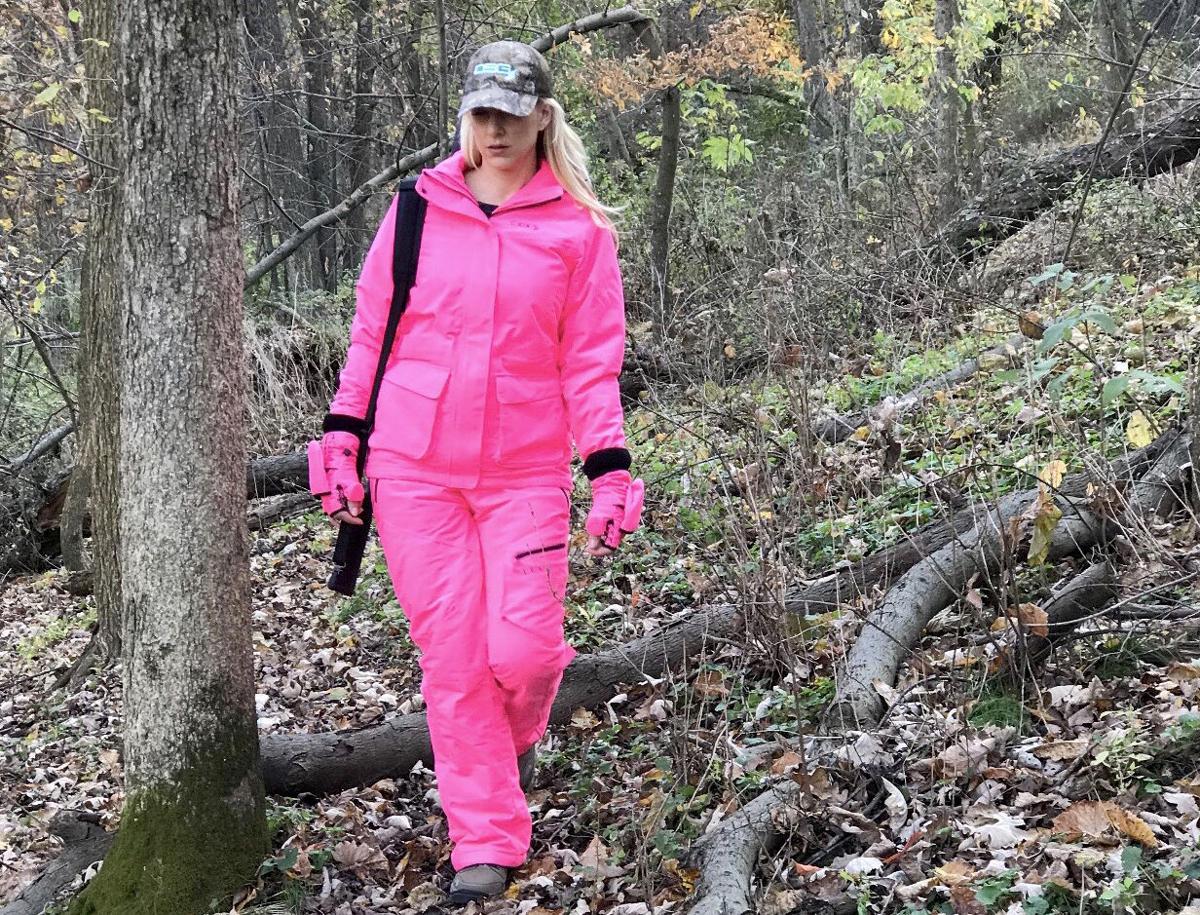
Yes, in 15 states: Alabama, Colorado, Georgia, Illinois, Louisiana, Maryland, Minnesota, Mississippi, New York, South Dakota, Tennessee, Virginia, Washington, Wisconsin and Wyoming. (Elle Woods would approve of the color, and in those 15 states so would the warden.)
Georgia is a recent addition. House Bill 167, signed in May 2025, rewrote the deer, bear and feral hog clothing laws to read “orange or fluorescent pink.” South Dakota added pink in 2024, Illinois on January 1, 2019, and Wyoming in 2018. Arkansas went a different way and accepts fluorescent chartreuse, which it calls hunter safety green.
Michigan is the odd one. Its statute lets the Natural Resources Commission approve pink, but the DNR’s deer rules name hunter orange only, so wear orange there. Idaho says pink is easy to see but does not list it as meeting its 36-square-inch pheasant rule.
Do Bowhunters Have to Wear Orange?
Usually not during an archery-only season, and often yes once a gun season opens on top of it. Michigan exempts bowhunters during archery deer season but holds them to the orange rule if they hunt with a bow during a firearm season. Kentucky, Delaware, Tennessee and Mississippi say the same thing in their own words, and Mississippi puts it plainest: every deer hunter in a firearm season, “whether hunting with a firearm, bow and arrow, or any weapon,” wears 500 square inches.
Colorado goes the other way for license type. An archer carrying an archery license does not have to wear orange or pink, though the agency urges it. Pennsylvania exempts its archery deer, bear and elk seasons outright, along with flintlock, turkey, waterfowl and dove seasons.
Ground Blinds and Tree Stands
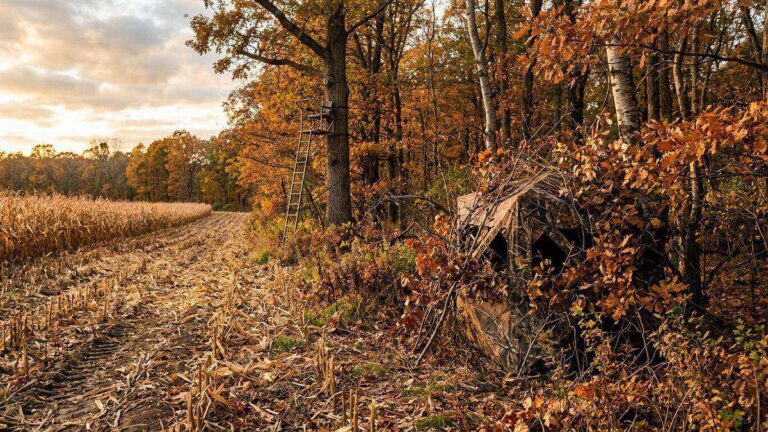
A hunter inside a pop-up blind is invisible no matter what he wears, so several states make the blind wear orange. Indiana wants 144 square inches on each side of a man-made ground blind; Arkansas wants the same on public-land pop-ups, at least 3 feet up. Pennsylvania wants 100 square inches within 15 feet of the blind, Maryland 250 within 25 feet, and Delaware 400 within 10 feet and 3 feet off the ground.
Height buys an exemption in a few places. Alabama and Mississippi excuse stands 12 feet or higher, and Louisiana excuses elevated stands on private land, but Louisiana still wants the orange on while you walk to and from the stand. So wear it in, then shed it in the stand only if your row says you may. Our deer movement forecast helps you pick which hours to sit.

What Happens If You Skip It?
A warden who finds you without it will write you up, and the penalty depends on the state. Maine treats it as a civil violation with a fine of $100 to $500; West Virginia makes it a misdemeanor with a fine of $5 to $50. North Dakota calls it a class 2 noncriminal offense, South Dakota a Class 2 misdemeanor, Nebraska a Class V misdemeanor, and North Carolina an infraction.
Timing trips people up. Pennsylvania’s rule covers walking to and from your spot from an hour before legal hunting hours to an hour after, and Ohio’s applies from 30 minutes before sunrise to 30 minutes after sunset. Remember, the orange protects you, but the shot is still yours to judge, so know where to shoot a deer and what sits behind it before the safety comes off.
Frequently Asked Questions
What states require hunters to wear orange?
Thirty-eight states require it in firearm seasons. Six more require it narrowly: Florida and Texas on public land, South Carolina on WMAs, Idaho for permit-area pheasant hunters, New Mexico on military land and at Valles Caldera, and Oregon for hunters under 18.
How much orange do you need to wear deer hunting?
Anywhere from one garment to 500 square inches. Colorado, Georgia, Massachusetts, Mississippi, Rhode Island and Tennessee ask for 500 in their deer gun seasons, while South Dakota, Utah and Wyoming ask for a single orange garment.
Does camo orange count?
In some states. Michigan, Minnesota, New York and Maryland count a pattern that is at least half orange, Oklahoma and Pennsylvania accept camo that carries the minimum amount, and Wyoming allows it outright. Colorado, Indiana, Missouri, Mississippi, North Dakota and Hawaii do not count it.
What does Ohio require?
A solid or camouflage orange vest, jacket or coveralls for anyone hunting anything but waterfowl during the youth deer gun, deer gun and deer muzzleloader seasons, from 30 minutes before sunrise to 30 minutes after sunset. The rule lists no hat option.
How much hunter orange do you need in Washington?
At least 400 square inches of orange, pink or both above the waist, visible from all sides, for modern firearm big game hunters (bear and cougar excepted) and most hunters in modern firearm deer and elk seasons. A hat alone does not count.
Orange is the one piece of hunting gear that works hardest while you sit perfectly still. Find your row, hang the vest by the door, and wear it from the truck to the stand and back.
Sources: State rules: see each table row. Vermont Fish and Wildlife, “General Hunting Information”; Rhode Island DEM, “General Information” (orange examples); Georgia General Assembly, “House Bill 167”; South Dakota Legislature, “SDCL 41-8-41”; Illinois DNR, “Illinois Hunting Law Changes 2018–2019”; Wyoming Game and Fish, “Rules about wearing fluorescent pink”; Michigan Legislature, “MCL 324.40116”; Michigan DNR, “Deer regulations”; Maine Legislature, “12 M.R.S. § 11203”; West Virginia Legislature, “§ 20-2-60”; North Dakota Legislature, “NDCC 20.1-05-06”; Nebraska Legislature, “37-527”; North Carolina General Assembly, “G.S. 113-291.8”; Pennsylvania Code, “58 Pa. Code § 141.20”; Ohio Administrative Code, “1501:31-15-11”.

Reader Favorites
Field-to-table reference desk
From tag to table — official season dates for all 50 states, plus safe doneness temps for your harvest.
| Species | Archery | Firearm |
|---|---|---|
| Deer | Sep–Oct | Nov |
| Elk | Sep | Oct–Nov |
| Turkey | — | Apr–May |
All 50 state wildlife agencies, plus how seasons, tags and licenses work.
Find your state → Network| Doneness | Target |
|---|---|
| Rare | 125–130°F |
| Medium-rare | 130–135°F |
| Well-done | 160°F+ |
Safe pull temps for venison and steak, from Popular BBQ.
View full chart →