Ground Blind vs. Tree Stand: Which to Hunt and How
Ground blind vs tree stand: hunt a blind where there is no good tree, bad weather or a kid along, and a stand for seeing far over a trail.
Last updated: October 12, 2026 · Originally published October 9, 2026
I would bet money that somewhere in America, a brand new full-body harness is riding around in a truck, still in the box, while its owner sits twenty feet up a white oak without it. Minnesota DNR says tree stand accidents are the leading cause of injury to hunters. That is the part of the ground blind vs tree stand argument nobody likes to bring up at camp.
Sometimes I feel like a bartender when I’m behind the counter at the gun store and I listen to hunters that argue about setups as often as calibers. Both kill deer. The real question is which one fits your spot, your weapon and your knees, and how to run either one without getting hurt. Here is how I would make that call, backed by state agencies, the Treestand Manufacturers Association and the National Deer Association.
Safety and legal note. This article is general information, not a substitute for a hunter education or treestand safety course. Always follow your stand and harness manufacturer’s instructions. Rules on stands, blinds, blaze orange and baiting are set by your state and by the landowner, so check your state wildlife agency’s current regulations before you hunt.
Blind vs. Stand at a Glance
- Tree stand: a long view from above the deer’s eye level, but it carries the fall risk.
- Ground blind: no climbing, stays dry, hides movement, works where no tree grows. Set it out early.
- Box blind: an enclosed shooting house, good for rifle hunters, kids and cold days.
- Stand safety: full-body harness from the moment you leave the ground, tethered so a fall is under 12 inches.

Ground Blind vs Tree Stand: Which Is Better?
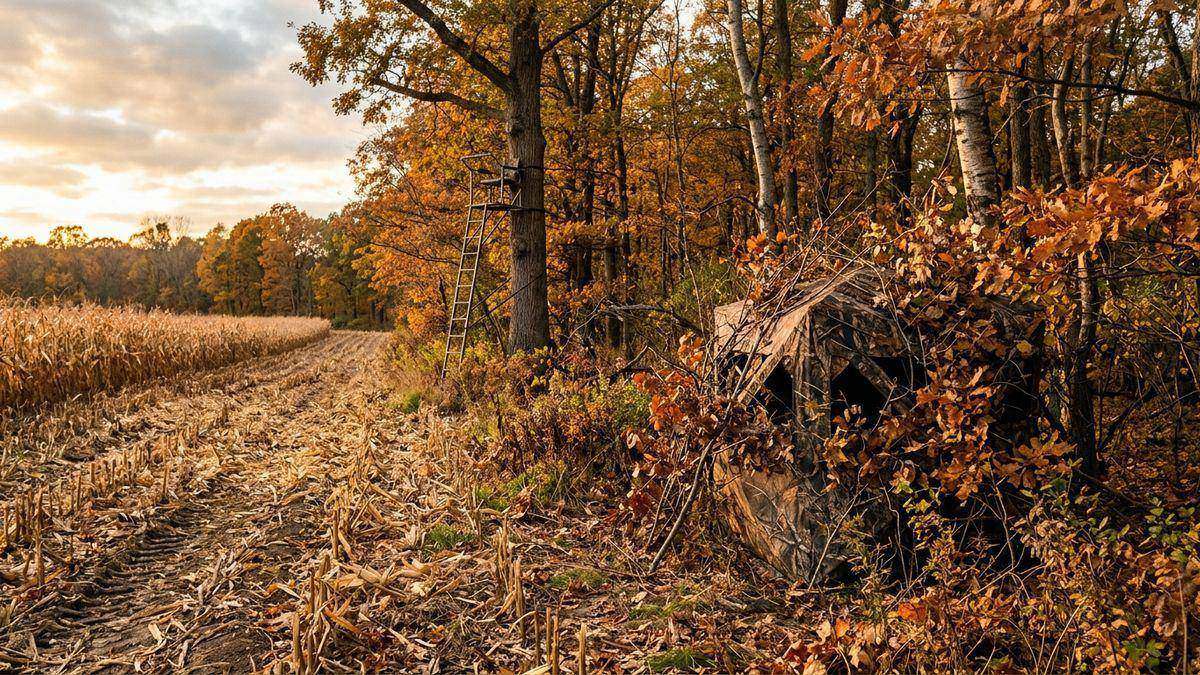
Neither one wins everywhere, so pick by the spot. A stand puts you above the deer’s eye level with a long view over a trail. So where a good, straight tree stands in the right place, it is my pick. A blind wins where that tree does not exist, where the weather is miserable, or where the hunter should not be climbing at all.
NDA’s Jake Grages, a bowhunter who hunts prairie whitetails in South Dakota, puts it plainly: there is never a perfect tree right where you need one. A blind lets you set up exactly on the trail instead of settling for the tree 50 yards off. That one fact settles a lot of ground blind vs tree stand debates before they start.


What Deer Notice From Each Setup
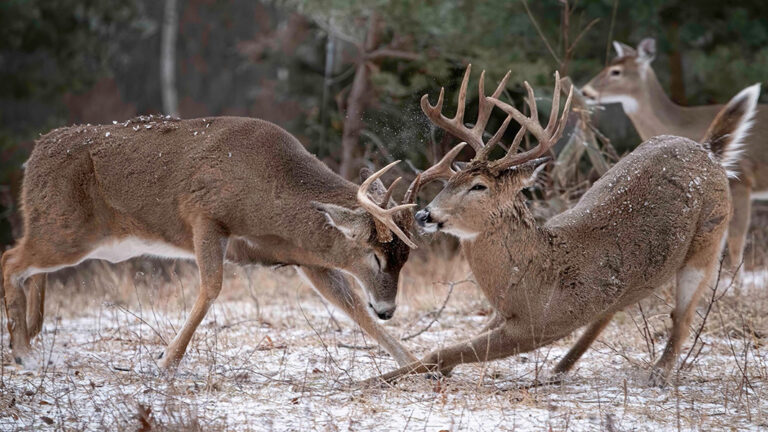
Movement is the big one. University of Georgia researchers found that the color-sensing cones in a deer’s eye sit in a horizontal band. That lets deer watch for movement across a broad horizon, but not see fine detail, so a hunter who fidgets at eye level gets busted. A hunter who sits still, or who moves inside a dark blind, often does not.
Color matters less than people think. The same UGA work found deer do see color, but only in the blue and green range, and they probably cannot detect the longer wavelengths of red and orange. Now, scent is the other half. Our piece on what spooks deer most covers why your own smell outranks almost every predator.
When the Tree Stand Wins
A stand earns its keep on a known trail with a straight, live tree within shooting range. You see deer coming from farther away, you have more time to get ready, and your outline is off the horizon deer are scanning. NDA’s Grages lists the flip side of a blind as a limited view. Hunters used to scanning hundreds of yards from a stand often find the ground boring.
Also, a stand is the easier setup to hang on a pattern you have scouted. Our deer movement forecast helps pick the hours to sit it. The catch is the climb, which is where most of the danger lives.
When the Ground Blind Wins
Grages lists four advantages of hunting from the ground, and they line up with what I would tell anyone weighing a ground blind vs tree stand:
- Entry and exit. You slip in without being seen shimmying up a tree. He has snuck into blinds with deer 20 to 30 yards away.
- Weather. You stay dry in a cold fall rain and can sit longer.
- Heights. No climb, no platform, no harness to forget.
- Movement. You can get away with a little extra motion inside the blind. (He does not recommend jumping jacks.)
Then there is the safety math. The Treestand Manufacturers Association (TMA) is blunt about it: if you cannot recover or escape after a fall, hunt from the ground. That is not a suggestion I would argue with.

Ground Blind vs Tree Stand Decision Table
| Situation | Ground blind | Tree stand | Box blind |
|---|---|---|---|
| No good tree | Yes, set it on the trail | No | Yes |
| Bow, close shots | Yes, keep windows tight | Yes | Fair |
| Rain and cold | Yes | No | Yes |
| Fear of heights | Yes | No | Fair |
| Kids along | Yes | Hard | Yes |
| Moving mid-season | Fast, but needs time to settle | Fair | No |
| Seeing far | Poor | Yes | Yes |
Our judgment, built on NDA’s ground-hunting pros and cons and the TMA and Minnesota DNR safety guidelines.
Box Blinds and Shooting Houses
A box blind is basically a small enclosed room, usually up on legs or a tower, with shooting windows on the sides. It splits the difference: you get height and a long view like a stand, and walls and a roof like a ground blind. That makes it a favorite for rifle hunters over food plots and big fields, and for anyone hunting with a kid who needs room to wiggle.
The trade is that you are not moving it once it is set. So put a box blind where deer already travel year after year, not where you saw one buck last Tuesday. And treat the ladder or stairs on an elevated box with the same three-points-of-contact rule you would use on a ladder stand.
How to Set Up a Ground Blind
Here is the part most hunters skip, and it is the part that decides whether deer walk past or blow out. Grages lays out the prep for NDA:
- Set it early. Deer need time to adjust to a new structure. Ideally, put the blind out a month or more before you hunt it.
- Brush it in. Pile natural cover around it, especially if you will hunt it sooner than a few weeks out.
- Clear the floor. Get down to bare dirt so dry leaves do not crunch when you get ready to shoot.
- Stake it down hard. He uses heavy-duty landscaping spikes so the blind is still there next time. (An unstaked pop-up in a stiff wind is a very expensive kite.)
- Close the windows. Open only a couple, in the direction you expect a shot. He calls this maybe the most important tip of all.
- Wear black inside. Dark clothing, a black mask or face paint and black gloves disappear against the dark interior.
How to Hang a Tree Stand Safely
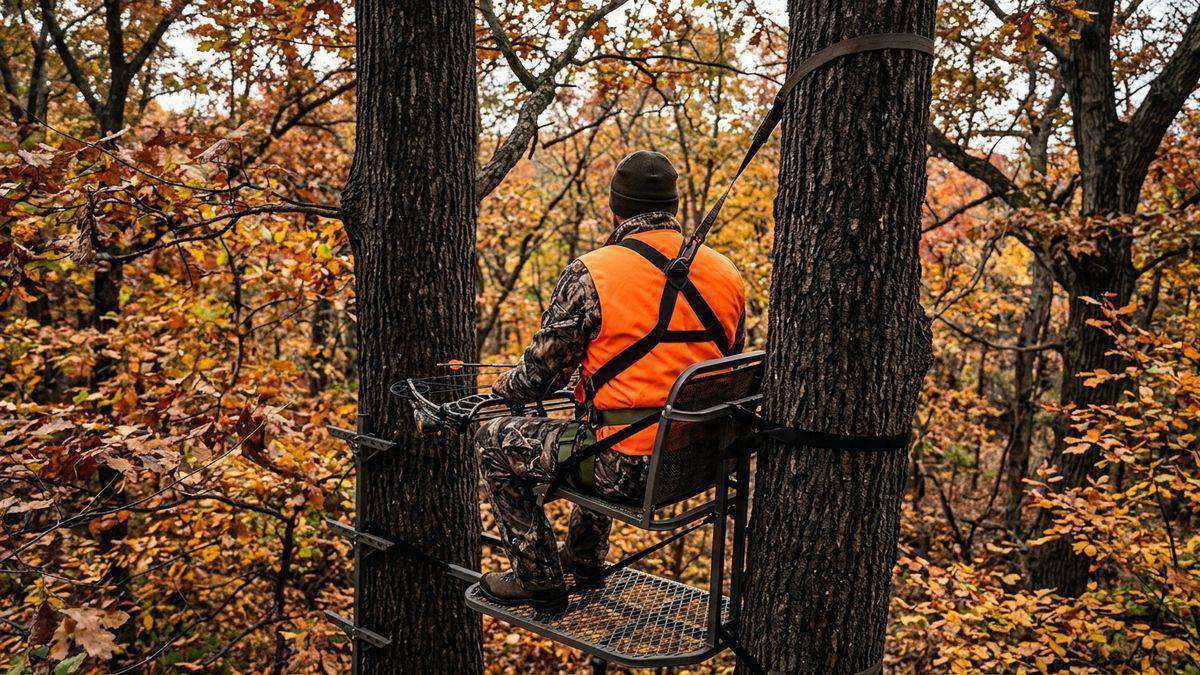
No jokes in this section, because this is where the ground blind vs tree stand choice gets serious. Minnesota DNR says one in three people who hunt from an elevated stand will have a fall resulting in serious injury. Georgia DNR reported that 11 of the state’s 25 hunting incidents in 2020 were tied to tree stand use. So here is the checklist, pulled from the Minnesota and Georgia DNRs and the TMA’s own guidelines.

Pre-Climb Safety Checklist
- ☐ Full-body harness on before your feet leave the ground. Georgia DNR says single-strap belts and chest harnesses are no longer recommended, and TMA says they shall not be used.
- ☐ Harness and stand inspected for wear or damage. Replace any harness that has caught a fall.
- ☐ Tether attached the way the maker says, with no slack when sitting. Minnesota DNR wants the strap set so you cannot fall more than 12 inches.
- ☐ A live, straight tree within your stand’s size limits. Never a leaning tree.
- ☐ Three points of contact on every step: two hands and one foot, or one hand and two feet.
- ☐ Climbing in moves of no more than 10 to 12 inches at a time.
- ☐ Nothing in your hands or on your back. Haul up your unloaded gun or bow on a haul line, and lower it on the opposite side before you climb down.
- ☐ Phone, whistle or radio on your body, reachable while hanging in the harness.
- ☐ Someone knows exactly where you are and when you will be back.
- ☐ No alcohol, and no medicine that makes you drowsy.
Two more TMA rules surprise people. Never use a homemade or permanently elevated stand. And never leave a stand up for more than two weeks, since weather can damage it in ways you cannot see. Minnesota adds a related warning: never trust a permanent stand someone else built. Our full write-up on tree stand safety goes deeper.
How High Should a Tree Stand Be?
Lower than most people hang them. Minnesota DNR’s recommended height for an elevated stand is less than ten feet above the ground. It adds a rule I like, too: if you start thinking about how high you are, do not go any higher. TMA uses nearly the same words for that last rule.
Remember, too, that a harness only helps if you can get out of it. TMA warns that hanging suspended for a long time may be fatal. If you fall, Minnesota says to grab the trunk or steps and take your weight off the harness, then use the three-point rule to climb back up or down. TMA also says to practice hanging in your harness at ground level, with a responsible adult around, before you ever hunt in it.
Rifle, Bow and Kids
For rifle hunters watching a field edge, the long view from a stand or box blind is the big advantage. For bowhunters, the question is concealment at 20 yards, and that is where a well-brushed blind shines. Our bowhunting tactics cover getting deer close either way.
With kids, I lean hard toward a blind. A young hunter can fidget, whisper and even nap on the ground without blowing the hunt. Plus, nobody has to manage a harness on a squirming ten-year-old. For the bigger picture on stand placement and scouting, our how to deer hunt guide covers the basics.
Frequently Asked Questions
Is a ground blind vs tree stand better for beginners?
For most new hunters, the blind. There is no climb and no harness to learn, and NDA’s Grages notes you can get away with a little more movement on the ground.
Do deer spook from ground blinds?
A new one, yes, often. NDA’s Grages says deer need time to adjust to the new structure, so set it out a month or more ahead and brush it in.
What is the safest type of treestand?
Any commercial stand certified to the industry standards TMA recognizes, used with a full-body harness. TMA says never to use homemade or permanently elevated stands, or to modify a stand without the maker’s written permission.
Are deer color blind?
Not completely. University of Georgia research found deer see color in a range limited to blue and green, and probably cannot detect red and orange.
What is the disadvantage of a ground blind?
A limited view. NDA’s Grages says you need to know where deer are coming from and leave just enough shooting lanes to get ready in time.
If you are still building the kit for your first season, Guns and Gadgets Daily has a solid list of beginner deer hunting gear. Just make sure the harness is on that list, and out of the box.
Sources: Minnesota DNR, “Tree Stand Safety”; Georgia DNR Wildlife Resources Division, “How Safe Are You When Using a Tree Stand?”; Treestand Manufacturers Association, “Treestand Safety Guidelines”; Jake Grages, “Tips for Bowhunting at Ground Level,” National Deer Association; University of Georgia Research Magazine, “Keeping Bambi Off the Road”.

Reader Favorites
Field-to-table reference desk
From tag to table — official season dates for all 50 states, plus safe doneness temps for your harvest.
| Species | Archery | Firearm |
|---|---|---|
| Deer | Sep–Oct | Nov |
| Elk | Sep | Oct–Nov |
| Turkey | — | Apr–May |
All 50 state wildlife agencies, plus how seasons, tags and licenses work.
Find your state → Network| Doneness | Target |
|---|---|
| Rare | 125–130°F |
| Medium-rare | 130–135°F |
| Well-done | 160°F+ |
Safe pull temps for venison and steak, from Popular BBQ.
View full chart →