How Close Can You Shoot Steel Targets? Yards by Caliber
How close can you shoot steel targets? Shooting Targets USA lists 10 to 15 yards for pistols and 100 for centerfire rifles.
Originally published: October 31, 2026
Sponsor note. Shooting Targets USA is a sponsor of our Giving Thanks giveaway and donated the steel target prize covered in this article. Safety note. This article is general information, not a substitute for the rating and instructions that come with your target or the rules of your range. Distances below are Shooting Targets USA’s own published minimums, read in October 2026. Wear wrap-around eye protection and hearing protection, and check your county and city rules before you shoot on your own land.
How close can you shoot steel targets? About 10 yards with a .22, 10 to 15 yards with a pistol and 100 yards with a centerfire rifle, with lead or jacketed bullets only, according to the distance charts Shooting Targets USA prints on its gong pages. A rifle load faster than 3,000 fps moves back to 200 yards.
A steel target is a plate of hardened, abrasion-resistant steel that rings when you hit it, and the bullet does not go through. It shatters, and the pieces spray out along the face of the plate. That spray is the whole reason a minimum distance exists, so the rating on the plate you own beats any number on the internet, this page included.
Steel is the most fun way to practice and the easiest way to get hurt at the range, because the same plate that is safe at 10 yards with a 9mm is dangerous at 10 yards with a deer rifle. The variables are the ammunition, the speed of the bullet when it arrives, the thickness and hardness of the plate, the angle it hangs at and the ground under it. Get those five right and steel is a blast. The right distance is the one printed for your plate and your cartridge, with the angle and the ground set up to send the spray down.
Steel Target Distances at a Glance
- .22 rimfire: 10 yards on Shooting Targets USA’s charts.
- Pistols: 10 to 15 yards, lead or jacketed only.
- Centerfire rifles: 100 yards on 3/8-inch plate, with impact speed under 3,000 fps; 200 yards for loads over 3,000 fps at the muzzle.
- Never on steel: steel-core, armor-piercing, green tip or steel shot.
- Retire it: a plate with pits or craters, per Shooting Targets USA.

How Close Can You Shoot Steel Targets, by Caliber?
Shooting steel targets closer than the manufacturer’s recommended minimum distances (commonly 10 yards for handguns and 100 yards for centerfire rifles) greatly increases the risk of dangerous splash-back from bullet fragments and jacket material. At short range the projectile still carries high velocity and energy, so it can shatter into larger, faster pieces that fly back toward the shooter or bystanders, potentially causing cuts, eye injuries, or worse, especially if the plate is not properly angled downward or has already become pitted. In addition, close-range impacts accelerate target damage such as cratering and warping, which then makes future fragment patterns even more unpredictable and can turn an otherwise safe steel target into a ricochet hazard. Always follow the specific distance ratings for your steel grade, thickness, and caliber, and wear eye protection.
| What you are shooting | 1/4-inch AR500 gong | 3/8-inch AR500 gong | What it means for you |
|---|---|---|---|
| .22 LR rimfire | 10 yards (.17 HMR and pellet guns too) | 10 yards | The closest any row allows |
| Pistol: 9mm, .40 S&W, .45 ACP, .357 Mag | 10 to 15 yards; lead or jacketed only | 10 to 15 yards; lead or jacketed only | Start at 15 yards |
| Shotgun: .410 and 20-gauge slugs | 25 yards | Not on the 3/8-inch chart | Slugs only, never steel shot |
| Centerfire rifle: .223/5.56, .308 Win, .30-06 | .22-250 at 100 yards; never .308 or .30-06 | 100 yards; impact under 3,000 fps | Deer rifles need 3/8-inch plate |
| Rifle faster than 3,000 fps | 200 yards | 200 yards, so the bullet slows below 3,000 fps | Back up, and check the plate’s rating |
| Magnum rifle: .300 Win Mag, .338 Lapua, .50 BMG | Never | Not recommended; warping risk on 3/8-inch plate | Needs thicker steel built for it |
| Steel-core, armor-piercing, green tip, steel shot | Never | Never | Ruins the plate and ricochets |
The numbers come from the distance charts on Shooting Targets USA’s 1/4-inch gong page and its 3/8-inch Combo Set Gongs page, which rates those gongs to a maximum impact of 3,000 fps or 3,500 ft-lbs. Both were read in October 2026. These are minimums for undamaged plate; a plate rated differently follows its own rating.

How Close Can You Shoot Steel With a 9mm?
Ten yards is the minimum safe distance Shooting Targets USA publishes for a standard pistol round, and its gong charts print it as a range: 10 to 15 yards, on the 1/4-inch plate and the 3/8-inch plate alike. I would start at 15. When a chart gives you a range, take the far end of it (your eyeballs will thank you).
Ordinary 9mm full metal jacket is fine on pistol-rated steel. Shooting Targets USA’s chart says “lead or jacketed ammunition only” for pistols, and full metal jacket is jacketed ammunition. What is not fine is anything with steel in the bullet.
What Ammo Can You Shoot at Steel Targets?
Lead or jacketed. Shooting Targets USA’s SR500 steel page puts it in one line, “Use only lead core, copper jacketed ammunition,” and its distance charts list the same four never-ever loads: steel-core, armor-piercing, green tip and steel shot. A hardened core does not splash like lead. It gouges a crater into the face of the plate, and a cratered plate throws fragments in directions you cannot predict.
So read the box before you load the magazine. A green tip 5.56 round looks like any other rifle round once it is out of the box if the green tip coating has rubbed off, and Shooting Targets USA names green tip by name.
Magnums and Big-Bore Revolvers
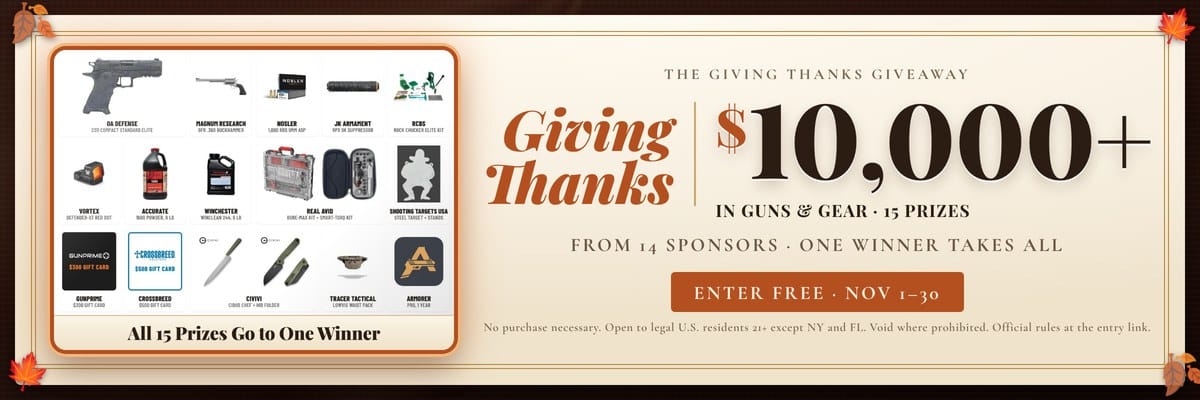
Shooting Targets USA’s 3/8-inch chart says .300 Win Mag, .338 Lapua and .50 BMG are not recommended, because of the warping risk on that plate, and its 1/4-inch chart says never. A big-bore revolver like the Magnum Research BFR in .360 Buckhammer is not named on either chart, so ask the target maker which plate and distance it wants before you ring steel with one.
Do Bullets Ricochet Off Steel Targets?
They can, and the setup decides how often. When a soft bullet hits flat, hard steel it breaks apart and the pieces fan out along the face of the plate. The angle decides where that spray goes, which is why Shooting Targets USA says to set its SR500 targets “with a slight forward tilt (approximately 20 degrees) to deflect bullets safely downward.”
Damage is the other ricochet maker. Shooting Targets USA says to inspect plates before each session and retire any plate showing pitting or cratering, and its SR500 page adds that targets with “significant pitting or deformation” get replaced. Its charts say why the wrong ammo is banned: it “damages plate and creates ricochet hazard.” Run your thumb across the face before you shoot. Smooth means go. Rough means done.
Hot Fragments and Dry Grass
Hot fragments are a fire problem out West. In Forest Service lab tests, rifle bullets fired at a hardened steel plate from 35 yards ignited dried peat moss, most often with solid copper and steel-core or steel-jacketed bullets, while lead-core, copper-jacketed bullets were less likely to ignite it. Some fragments topped 1,400°F. That is one more reason the National Shooting Sports Foundation tips in our piece on shooters and wildfire say to leave steel-core ammo at home in dry country.
How to Set Up a Steel Target at Home
Most of the ricochet risk is decided before the first shot, by how you hang the plate and what is under it. Here is the order I would set it up in.
- Pick the backstop first. A dirt berm or hillside behind the target, with nothing you care about beyond it.
- Hang it from hangers. Shooting Targets USA’s gongs come with 1/2-inch mounting holes, and its Target Hangers are built for exactly that hole.
- Set the angle. Tilt the face forward about 20 degrees, the setting Shooting Targets USA gives, so the spray goes down into the dirt.
- Check the face. Smooth steel only; a pitted or cratered plate is retired.
- Pace it off. Measure the yardage from the table above for the cartridge in your hand, not the one in your truck.
Shooting Targets USA’s Target Hangers are 1/4-inch steel, two to a set, and fit any steel target with 1/2-inch mounting holes. Its Quick Stands are 1/4-inch steel stand holders, two to a box, built around three 2×4 boards (one full length and two cut in half), and the page lists only the stand holders in the box, so bring your own lumber.
If you are setting up on public ground instead of your back forty, check the closures first. Target shooting has been shut down across big pieces of federal land before, as in our report on recreational shooting on public lands, and picking up your brass and debris is how shooters keep the access they have.
Steel vs Paper for Practice
Paper tells you exactly where every round went. Steel tells you instantly whether you hit, with a ring you hear from the firing line, and you never walk downrange to staple up a new sheet. That is why steel makes you shoot faster and paper makes you shoot better. Use both. Zero and group on paper, then go run drills on steel.
Think about it: a sight-in session on a deer rifle is a paper job, every time. A pistol drill where you want to move from target to target and hear the hits is a steel job. Our review of Shooting Targets USA’s Triple Threat Torso pistol target covers that kind of practice at 7 to 25 yards. (Just do not let anyone talk you into 7 yards with steel.)

The Steel Target Setup in the Giving Thanks Giveaway
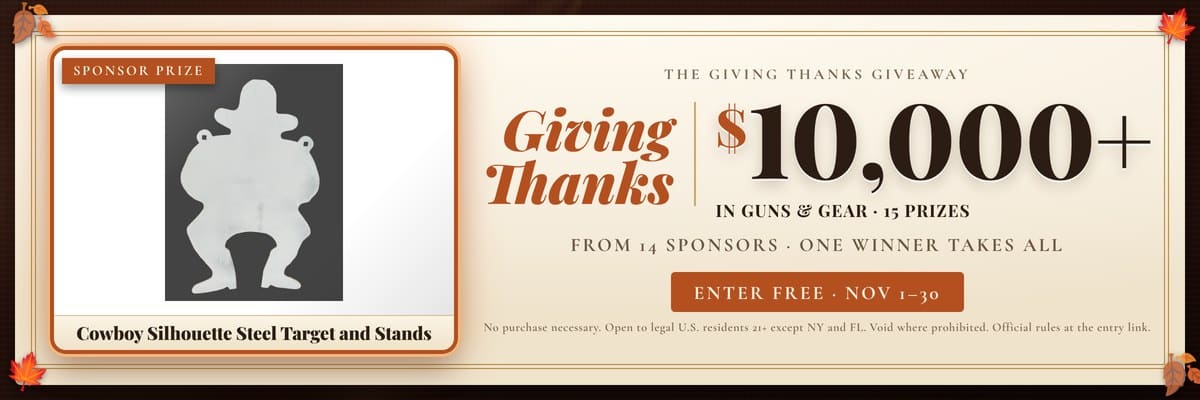
The steel prize is Shooting Targets USA’s Cowboy Silhouette with a set of Target Hangers and Quick Stands. Shooting Targets USA describes the Cowboy Silhouette as 18×29 inches in 3/8-inch SR500 steel, with a 1/2-inch square mounting hole, listed for 9mm, .45 ACP, .223, .30-06 and .308. Before you pace off a distance, get the velocity rating for that plate from the maker, because the plate you own follows its own rating, not the gong chart above.
How to Win This Steel Setup
The Cowboy Silhouette, hangers and stands are one of 15 prizes in Brand Avalanche Media’s Giving Thanks giveaway, and one winner takes all 15, worth $10,000+ in total. The giveaway runs November 1–30, 2026, ending at 11:59 p.m. Central on November 30. It is free to enter for legal U.S. residents 21 and older, except in New York and Florida. No purchase necessary. Firearm prizes ship to the winner’s local FFL. Full rules and the entry form are on the Giving Thanks giveaway page at Guns and Gadgets Daily.
Two out of three of you go the week before the peak.
Frequently Asked Questions
How close can you shoot steel targets with a rifle?
One hundred yards for standard centerfire rifles such as .223, .308 and .30-06 on Shooting Targets USA’s 3/8-inch plate, with impact speed under 3,000 fps. It moves rifles faster than 3,000 fps back to 200 yards, and its 1/4-inch chart says never for .308 or .30-06.
Can you shoot 9mm FMJ at steel targets?
Yes, on pistol-rated steel at 10 to 15 yards or more. Shooting Targets USA allows “lead or jacketed ammunition” for pistols. Skip anything with a steel core or steel jacket.
What happens when you shoot a steel target?
The bullet breaks apart on the hard face and the fragments spray outward along the plate, which is why angle and distance matter. Forest Service lab tests measured some rifle bullet fragments off a steel plate above 1,400°F.
Can you shoot a shotgun at steel targets?
With slugs, yes. Shooting Targets USA lists .410 and 20-gauge slugs for its 1/4-inch gongs and puts them at 25 yards on that chart. Steel shot never goes on its steel.
Can you shoot an air gun at steel targets?
A pellet gun, yes, on the right plate. Shooting Targets USA’s 1/4-inch gong chart puts pellet guns with the .22 rimfires at 10 yards, and the company sells an Air Rifle Reset Target. Steel shot never goes on its steel.
Steel rewards the shooter who reads the chart first and pulls the trigger second. Pace it off, tip it down, check the face for craters, and enjoy that ring. Have fun and stay safe.
Sources: Shooting Targets USA, “AR500 Gong Target 1/4″” (distance and ammunition chart); Shooting Targets USA, “Combo Set Gongs 3/8″” (distance and ammunition chart); Shooting Targets USA, “SR500 Target Steel”; Shooting Targets USA, “Target Hangers”; Shooting Targets USA, “Quick Stands”; USDA Forest Service, Maynard, Finney, McAllister and Grob, “Ignition Potential of Rifle Bullets” (2013).
Reader Favorites
- Safety Tips to Create Better a Hunting Experience for Everyone
- Hunting Gear List – Are You Making the Right Checklist?
- How to Become a Hunter
- Leupold LTO-Tracker – A Must Addition To Your Deer Hunting Gear Checklist
- The Top 5 Hunting Guns that You Need to Know About
- Bow Hunting Gear List for White Tail Deer
Field-to-table reference desk
From tag to table — official season dates for all 50 states, plus safe doneness temps for your harvest.
| Species | Archery | Firearm |
|---|---|---|
| Deer | Sep–Oct | Nov |
| Elk | Sep | Oct–Nov |
| Turkey | — | Apr–May |
All 50 state wildlife agencies, plus how seasons, tags and licenses work.
Find your state → Network| Doneness | Target |
|---|---|
| Rare | 125–130°F |
| Medium-rare | 130–135°F |
| Well-done | 160°F+ |
Safe pull temps for venison and steak, from Popular BBQ.
View full chart →