Straight-Wall Cartridge Rifles Are Spreading: What the 2026 Rules Mean for Deer Hunters
Straight-wall cartridge rifles just gained more ground for the 2026 deer season. In June, the Tennessee Fish and Wildlife Commission approved straight-walled rifle cartridges on private land. Weeks earlier, Michigan’s Natural Resources Commission erased the old rifle line across the Lower Peninsula. Both changes take effect this fall.
Last updated: July 10, 2026 · Originally published June 30, 2026
For hunters who spent years tied to slugs, muzzleloaders, or pistol-caliber carbines, the message is plain. The straight-wall cartridge rifle is no longer a workaround. In a growing list of states, it is the tool the regulations now expect you to carry.
What is a straight-wall cartridge rifle?
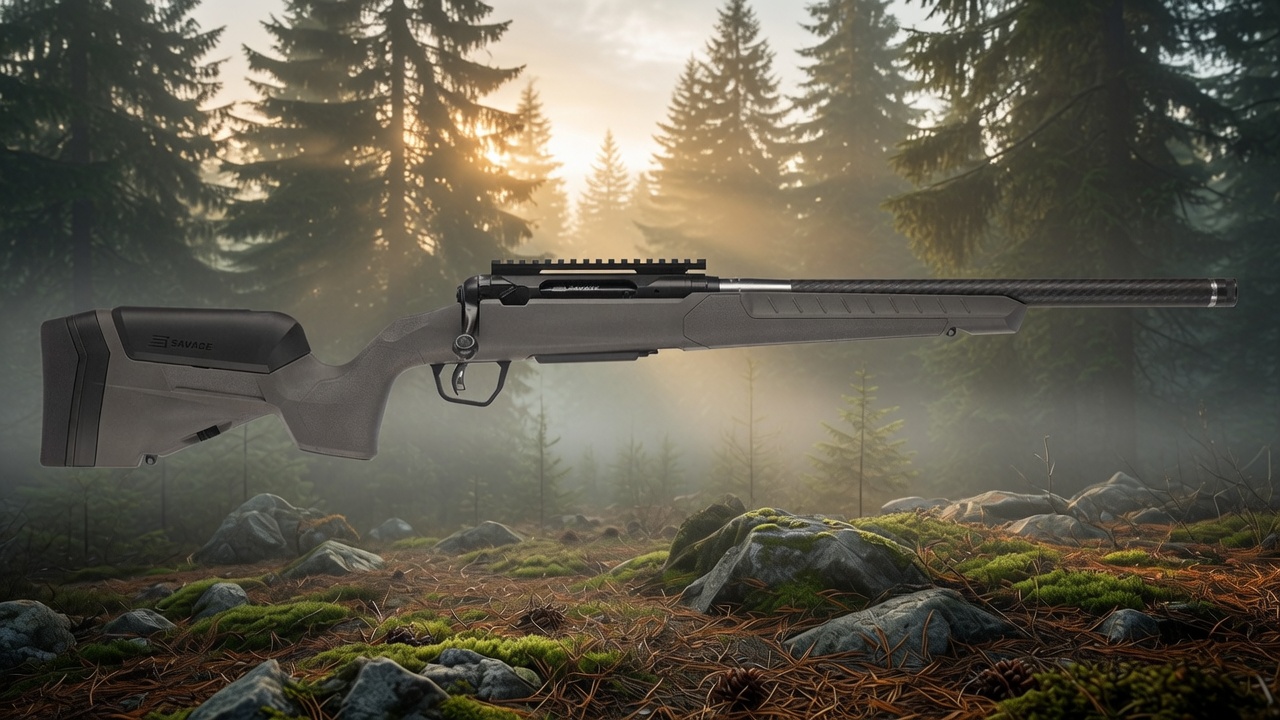
A straight-wall cartridge rifle is a centerfire rifle built for a case with no shoulder or taper. The case stays the same width from base to bullet. Think .350 Legend, .450 Bushmaster, .360 Buckhammer, or the old .45-70 Government. The flat profile keeps velocity and range lower than a bottlenecked round like the .308.
That shorter reach is the whole point. Wildlife agencies allow these rifles in farm country where a high-velocity bottlenecked bullet could carry too far. The straight-wall cartridge gives hunters rifle accuracy without the over-penetration risk that closed those zones to rifles in the first place.
What changed for straight-wall cartridge rifles in 2026
Two states moved this year, and both moves widen access.
Michigan drops the rifle line
Michigan opened straight-wall cartridges in its southern shotgun zones back in 2014. For 2026, the Natural Resources Commission went further. Amendment No. 6 of 2026 eliminates the Lower Peninsula rifle line, so qualifying straight-wall rifles are legal across far more of the state this fall. Hunters still must meet the cartridge restrictions that apply in the former Limited Firearm Deer Zone.
Tennessee opens private land
The Tennessee Fish and Wildlife Commission voted in June to allow straight-walled cartridge rifles on private land only. The rifle must be single shot and .35 caliber or larger. The window runs from the second weekend of muzzleloader season to the Friday before the gun opener, with 2026 dates set for Nov. 14-20.
Where straight-wall cartridge rifles are already legal
Tennessee and Michigan join a decade of steady expansion for straight-wall cartridge rifles. According to the Congressional Sportsmen’s Foundation, ten states added straight-walled rifle cartridges to firearm deer seasons over the past decade, most of them former shotgun-only zones.
- Ohio (2014): calibers from .357 to .50 during firearm deer season.
- Indiana (2016): .357 caliber or larger, case length 1.16 to 1.8 inches.
- Iowa (2017): straight-walled rounds in youth, disabled, and shotgun seasons.
- West Virginia (2018): .357 and up, case length 1.16 to 1.8 inches.
- Maryland (2020): .357 caliber or larger during the firearm season.
- Minnesota (2021): bullet diameter at least .350 inch, case at least 1.285 inches.
- Pennsylvania (2021): .357 and up in designated special regulation areas.
- Arkansas (2024): non-semiautomatic rifles in .30 caliber or larger during the alternative firearms season.
The specifics differ by state. Some set a minimum caliber, others a case-length range, and a few split the rules between public and private ground. Read your own regulations before you load a round.
The private-land catch
Read who the new rule covers, not just what it allows. Tennessee’s 2026 approval is private land only, and several earlier expansions started the same way. Public-ground hunters in those states may still face shotgun or muzzleloader rules even after a headline says the rifle is “legal.”
That split is deliberate. Agencies test a method on private land first. They watch the harvest and safety data, then decide whether to widen it. If you hunt public WMAs or national forest, check that tract first. Confirm the season and weapon rules before you assume a straight-wall rifle is welcome.
Why states keep approving straight-wall cartridge rifles
The case for straight-wall cartridge rifles is about access, not restriction. Arkansas built its alternative firearms season around hunters who own older lever guns and want to use them again.
“There are a lot of people who have an old .45/70 lever action or other straight-walled cartridge gun that was handed down to them by a father or grandfather, and this season gives them the opportunity to enjoy those rifles again,” Commissioner Bill Jones said during the agency’s May 16, 2024 rulemaking meeting. He added that the rounds are easier to learn than a muzzleloader, which may bring new hunters into the woods.
That recruitment angle matters. Straight-wall cartridges kick less than a 12-gauge slug. They also need far less care than a muzzleloader. For a new or younger hunter, the difference between a punishing slug gun and a mild .350 Legend can decide whether they come back next season.
Which straight-wall cartridge fits your hunt?
Once your state opens the door, the next choice is the cartridge. Three rounds dominate the modern market.
| Cartridge | Bullet diameter | Effective range | Best fit |
|---|---|---|---|
| .350 Legend | .357 in | ~200 yds | Low recoil, high-volume practice, new hunters |
| .360 Buckhammer | .358 in | ~200 yds | Lever-action fans wanting more punch than .30-30 |
| .450 Bushmaster | .452 in | ~250 yds | Heavy bullets, bigger-bodied deer and hogs |
Each round clears most state minimums, and each pairs with proven rifles and AR uppers. If you want the full breakdown, we compare the three most popular straight-wall cartridges in detail, including recoil, ammo cost, and rifle options.
Whatever you choose, treat it like any other deer rifle. Sight it in early, confirm your zero, and shoot it enough to trust it. A short-range round still rewards a hunter who knows the distance, so a good rangefinder earns its place in the pack.
How to stay legal with straight-wall cartridge rifles this season
- Read this year’s regulations. Rules change yearly. Confirm caliber, case length, and any public-versus-private split before you hunt.
- Check the action type. Several states bar semi-automatics. Arkansas, for one, requires a non-semiautomatic rifle for its straight-wall season.
- Match the zone. A cartridge legal in a southern Michigan county may not be legal everywhere. Know your unit.
- Pattern your rifle. Treat it like a dedicated bolt-action deer rifle and put rounds downrange before opening day.
When the rules read like a maze, our firearms team at Guns & Gadgets Daily tracks the hardware side of these changes, from new uppers to factory loads.
Straight-wall ammo is easier to find than it used to be
Early buyers of the .350 Legend and .450 Bushmaster fought thin shelves and high prices. That has eased. Federal, Winchester, Hornady, and Remington all load straight-wall lines now, and the .350 Legend in particular sits at deer-rifle prices rather than boutique ones.
That supply curve tracks the regulations. As each state opens a season, demand climbs, and manufacturers answer with more loads and more rifles. The .360 Buckhammer, introduced by Remington and Henry for the 2023 season, exists because the straight-wall market grew large enough to justify a new round.
For a hunter weighing the switch, that maturity lowers the risk. You are not buying into an orphan caliber. You are buying into a category that the industry and a dozen state agencies keep pushing forward.
Frequently asked questions
What states allow straight-wall cartridge rifles for deer?
Ohio, Indiana, Iowa, Michigan, Illinois, West Virginia, Maryland, Minnesota, Pennsylvania, and Arkansas all permit straight-walled rifle cartridges in some deer seasons, and Tennessee joins them on private land in 2026. Rules vary, so confirm caliber and case-length limits with your state agency each year.
Is a .350 Legend legal in straight-wall states?
In most straight-wall states, yes. The .350 Legend uses a .357-inch bullet, which clears the common .357 caliber minimum. A few states set case-length rules instead, so check the exact wording where you hunt.
Why are straight-wall cartridges required instead of regular rifles?
Agencies allow straight-wall cartridges in densely populated farm zones because they shed velocity and range faster than bottlenecked rounds. That lowers the over-penetration risk while still giving hunters rifle-grade accuracy.
Can I use an AR-15 with a straight-wall cartridge?
Often, but read the fine print. Several states require a non-semiautomatic action during straight-wall seasons. Where semi-autos are barred, only a full bolt or single-shot upper conversion qualifies, not a kit that merely disables the auto function.
Are straight-wall cartridge rifles good for new hunters near me?
They are among the friendliest deer rifles for a first-timer. Light recoil, simple operation, and short practical range make them easy to learn at a local range, and many clubs and shops now stock straight-wall ammunition and rifles.
The straight-wall cartridge rifle started as a compromise for shotgun country. Two more states just decided it is something better: the rifle a kid can grow into, and the one a grandfather’s lever gun can come back to. Updated June 30, 2026.
Reader Favorites
Field-to-table reference desk
From tag to table — official season dates for all 50 states, plus safe doneness temps for your harvest.
| Species | Archery | Firearm |
|---|---|---|
| Deer | Sep–Oct | Nov |
| Elk | Sep | Oct–Nov |
| Turkey | — | Apr–May |
All 50 state wildlife agencies, plus how seasons, tags and licenses work.
Find your state → Network| Doneness | Target |
|---|---|
| Rare | 125–130°F |
| Medium-rare | 130–135°F |
| Well-done | 160°F+ |
Safe pull temps for venison and steak, from Popular BBQ.
View full chart →