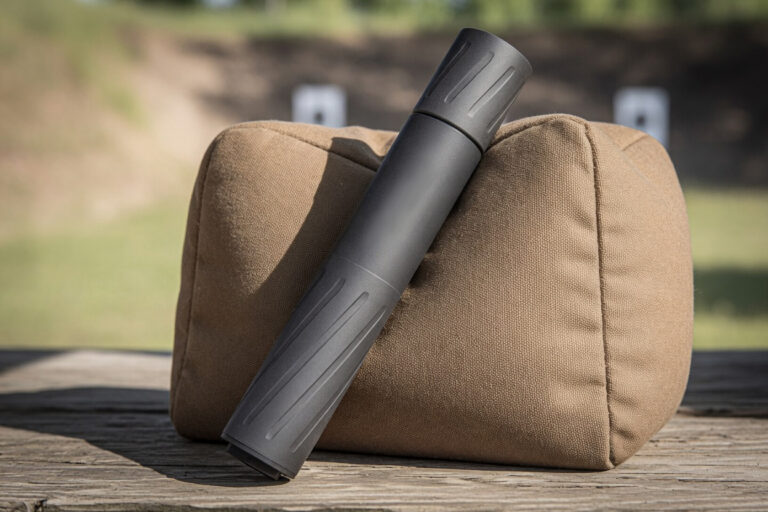
Subsonic Ammo for Suppressors: What It Is and the Best Loads (2026)
Subsonic Ammo for Suppressors: What It Is and the Best Loads

Last updated: October 9, 2026 · Originally published June 26, 2026


Why subsonic ammo matters with a suppressor
The trade-off, stated honestly
Subsonic ammunition comes with real limitations that should be acknowledged upfront:
- Lower muzzle velocity and significantly reduced energy
- More bullet drop and greater wind drift
- Shorter effective range compared to supersonic loads
- The need for heavier bullets to maintain usable energy
These factors make subsonic loads best suited for shorter-range work, suppressed plinking, and hunting scenarios where quiet operation is a priority over long-range capability.
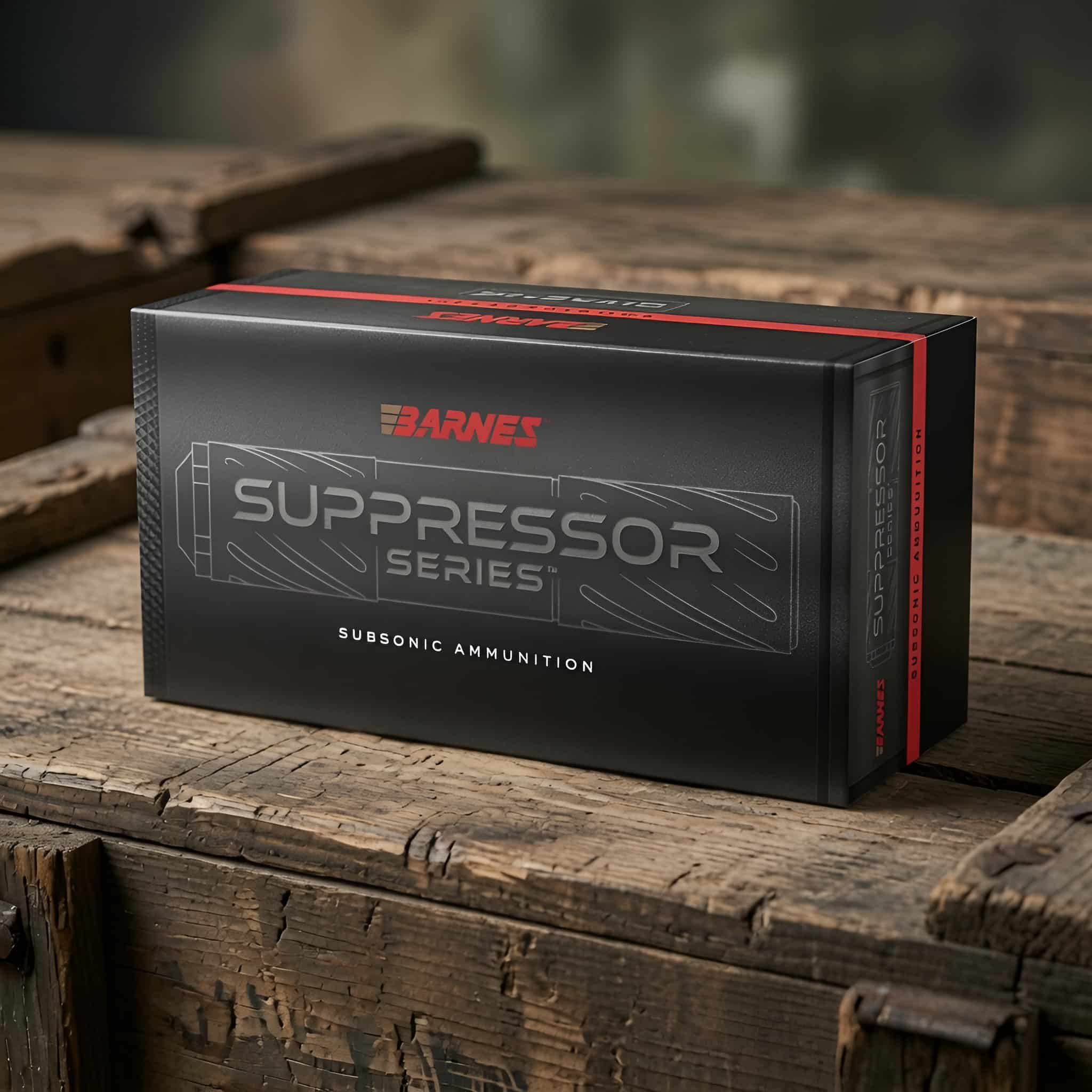
The Barnes Suppressor Series
Verify the specific load and bullet weight for your barrel and quarry on the Barnes Suppressor Series page before you hunt with it.

.308 and .30-caliber subsonic
One of the most practical offerings in the series is the .308 Winchester 205gr Sierra GameKing load:
- Muzzle velocity: ~1,060 fps
- Muzzle energy: ~512 ft-lbs
This heavier bullet helps retain energy better than lighter subsonic projectiles and offers improved wind resistance. The Sierra GameKing was specifically selected because it can expand reliably at subsonic speeds which is something many conventional subsonic bullets struggle to do. This makes the .308 Suppressor Series load a legitimate option for suppressed medium game hunting at ethical ranges.
300 Blackout subsonic
No conversation about subsonic and suppressors is complete without 300 Blackout. The cartridge was designed from the ground up to run heavy subsonic bullets quietly from a short barrel, which is why it’s the darling of the suppressed-AR crowd. If you’re building around quiet first, 300 BLK is purpose-made for it. But for someone who already owns a 308 bolt action rifle the .308 subsonic route is simpler since you can still use existing equipment.
Quiet out of the box, then handload the rest
The Barnes Suppressor Series is the out-of-the-box load — quiet rounds ready to shoot through the BANISH MeatEater on the Savage 110 Carbon Hunter before you ever set up a reloading bench. After that, the RCBS press with Hodgdon powder and Sierra bullets takes over for custom subsonic and supersonic handloads alike. It’s a complete arc: shoot quiet today, learn to build quiet tomorrow.
How a suppressor actually lowers the sound
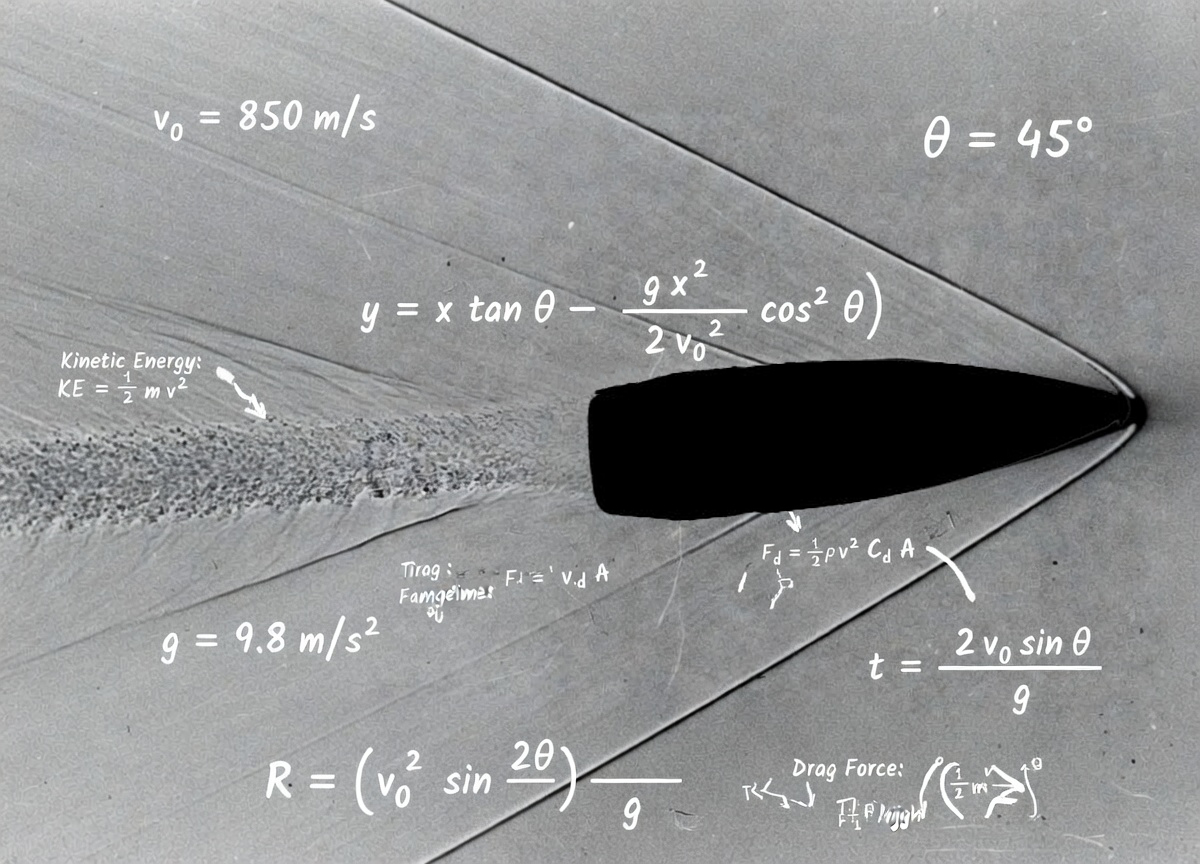
Sound intensity is measured in decibels (dB), but the decibel scale is logarithmic, not linear. This is important to understand. On a linear scale, doubling the sound energy would simply double the number. On a logarithmic scale, every increase of 10 dB represents a tenfold increase in sound intensity. This means:
- A 10 dB reduction cuts the sound intensity by 90%.
- A 20 dB reduction reduces intensity to 1% of the original.
- A 30 dB reduction reduces it to just 0.1% of the original.
Making subsonic terminal performance work
Historically, the biggest weakness of subsonic ammunition has been poor terminal performance. Many loads use heavy, non-expanding bullets that create minimal wound channels.The Barnes Suppressor Series addresses this by using expanding projectiles (such as the Sierra GameKing) that are engineered to perform at low velocities. To maximize effectiveness:
- Select bullets specifically designed to expand at subsonic speeds
- Use heavier-for-caliber bullets for better momentum
- Keep shots within reasonable ranges (generally under 250–300 yards for hunting)
- Emphasize precise shot placement
The Barnes Suppressor Series represents a clear step forward in making suppressed subsonic shooting both quieter and more effective on game.
Frequently asked questions
What is subsonic ammo?
Ammunition loaded to travel below the speed of sound — roughly 1,125 feet per second at sea level — which eliminates the supersonic crack so a suppressor can deliver its quietest report.
Why use subsonic ammo with a suppressor?
A suppressor reduces muzzle blast, but only subsonic ammo removes the bullet’s sonic boom. Together they produce the quietest shot and the softest recoil — the experience most people expect from a suppressor.
What’s the downside of subsonic ammo?
Lower velocity means a steeper trajectory and less energy downrange, so subsonic loads are best inside moderate ranges. A heavy, expanding bullet designed for low velocity — like the one in the Barnes Suppressor Series — offsets much of the terminal trade-off.
Is Barnes Suppressor Series good for hunting?
Yes. It’s purpose-built subsonic ammunition that drives a heavy expanding bullet at subsonic speed, which suits quiet, suppressed field shooting inside sensible ranges. Confirm the specific load and bullet weight for your game and barrel.
Is .308 or 300 Blackout better for subsonic?
Both work well. 300 Blackout was designed around subsonic performance from short barrels, while .308 subsonic keeps a bolt-rifle hunter on one familiar caliber. Choose based on your rifle and how you hunt.


Reader Favorites
Field-to-table reference desk
From tag to table — official season dates for all 50 states, plus safe doneness temps for your harvest.
| Species | Archery | Firearm |
|---|---|---|
| Deer | Sep–Oct | Nov |
| Elk | Sep | Oct–Nov |
| Turkey | — | Apr–May |
All 50 state wildlife agencies, plus how seasons, tags and licenses work.
Find your state → Network| Doneness | Target |
|---|---|
| Rare | 125–130°F |
| Medium-rare | 130–135°F |
| Well-done | 160°F+ |
Safe pull temps for venison and steak, from Popular BBQ.
View full chart →