Spring Black Bear 2026: Where the Opener Still Pays Off This Month
The spring black bear hunt 2026 window is open in five states right now. Nine U.S. states run a spring black bear hunt 2026 season. Five of them — Idaho, Oregon, Montana, Wyoming, and Washington — have windows still open in mid-May 2026. The window matters because spring bears feed on a clock. Spring black bear hunt 2026 reads on green-up. Snow melts. Vegetation greens up. Bears move from south-facing slopes to higher elevations as the food moves. The spring black bear hunt 2026 that works in early May is not the spring black bear hunt 2026 that works in late May. Here is how to read the window.
This is not a beginner’s guide. This is a where-and-when read for hunters already inside the spring bear season — or planning one for 2027. The five states below run different draws, different baiting rules, different costs, and different terrain. For state-by-state season tables, the Hunter Passport bear hunting resource is a useful cross-reference. Pick the one that fits your timeline and your budget.
Spring black bear hunt 2026 — Idaho is the easiest entry, the most generous OTC access
Idaho runs the most accessible spring black bear hunt 2026 in the lower 48. The state’s 2026 controlled-hunt application opened January 15 and closed February 15, with results posted by March 10. Leftover controlled-hunt tags went on sale April 1 on a first-come, first-served basis. The general spring season runs from April 1 through late May with unit-specific variations.
What that means in mid-May 2026: there are still general-season tags available in multiple units. If you live in the Northwest or are willing to drive, this is the opener still in motion.
The Idaho advantage:
- OTC tags available in many units for non-residents.
- Bait hunting legal in most spring units — the most common method for filling a tag.
- Public land access: the Salmon-Challis National Forest, Clearwater National Forest, and Panhandle National Forests put millions of acres on the table.
- Tag cost: approximately $32 resident, $186 non-resident plus license.
The Idaho cost: it is a long way from anywhere if you live east of the Mississippi.


Oregon — controlled hunts only, the highest-quality bear country
Oregon’s spring black bear hunt 2026 is controlled-hunt-only — no OTC spring tags. The application window has closed for 2026. The state runs an April-through-May framework with the highest bear densities in the West.
What that means in mid-May 2026: if you drew a tag, you are in the field now. If you did not, mark 2027 on the calendar; the application window typically opens in the late fall.
The Oregon advantage:
- High bear density — especially in the Coast Range and the southern Cascades.
- Public land access: federal and state forests open most of the bear country.
- No baiting required: spot-and-stalk and predator-calling are the dominant methods.
The Oregon cost: limited tags, no OTC option.
Montana — over-the-counter, but the season is short
Montana runs an OTC spring black bear hunt 2026 from April 15 through May 31 in most management units, with some units extending into June. The state requires a bear identification certification course (free, online) before purchasing the tag.
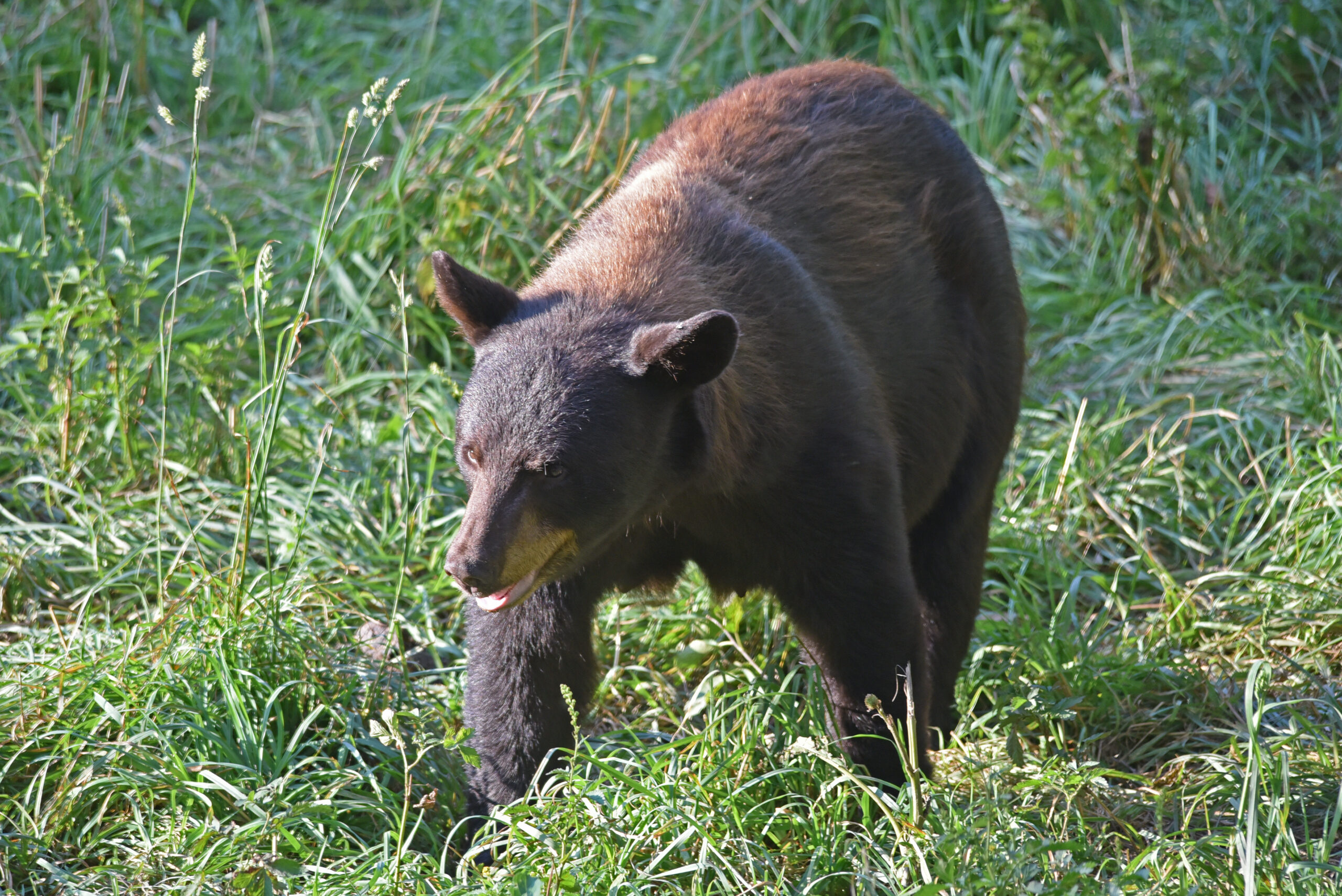
What that means in mid-May 2026: the season is still open, OTC tags are available, and the hot two weeks are starting right now as bears push out of dens and onto the green-up.
The Montana advantage:
- OTC tags — the most accessible non-resident option after Idaho.
- No baiting — required spot-and-stalk hunting, which keeps the season clean.
- Massive public land — the Bob Marshall Wilderness Complex, the Beaverhead-Deerlodge, and the Custer-Gallatin National Forests.
- Tag cost: approximately $19 resident, $350 non-resident plus license.
The Montana cost: spot-and-stalk in steep terrain is harder than bait hunting in flatter country. The success rate runs 15–20% — high for spot-and-stalk, low compared to baited Idaho or Saskatchewan.
Wyoming — limited tags, high success in the right units
Wyoming runs both OTC and limited-quota spring black bear hunt 2026 options depending on the management unit. The season typically opens May 1 in most units, with the strongest opportunities in the Bighorn and Wind River regions. Wyoming allows baiting in most spring units.
What that means in mid-May 2026: the season is open, and the hunters who scouted bait sites in April are pulling triggers now.
The Wyoming advantage:
- Baiting legal — the highest success-rate method.
- Limited-quota hunts with reasonable draw odds in many units.
- Strong bear population in the Bighorns and Absaroka-Beartooth.
- Tag cost: approximately $40 resident, $390 non-resident plus license.
The Wyoming cost: non-resident pricing is steep.
Washington — the toughest tag to draw, the highest-quality bear
Washington’s spring bear hunt has been the political football of the West for the last four years. The state’s Fish and Wildlife Commission has voted on, off, and back on the spring season multiple times since 2021. For 2026, a limited spring season is open in select Eastern Washington units via controlled-hunt draw.
What that means in mid-May 2026: if you have a Washington tag, you have one of the rarest spring opportunities in the lower 48. If you do not, the 2027 application window typically opens in late fall.
The Washington advantage:
- Lower hunter pressure than any other Western state.
- Strong bear population in the Selkirks and the Blue Mountains.
The Washington cost: tags are hard to come by, the politics could shut it down again, and non-resident pricing is steep.
Spring black bear hunt 2026: the gear that earns its keep
Spring black bear hunt 2026 is a glassing-and-shooting hunt. The gear that matters:
- Optics: 10×42 or 12×50 binoculars on a tripod. A spotting scope for the longer glassing sessions. You will spend 80% of your time looking, 15% walking, and 5% shooting.
- Caliber: anything in the .270 to .300 Win Mag range. The .308 with a 165-grain bonded bullet is the consensus do-everything choice. For the hunter running a suppressor, the BANISH 30 Gold-V2 covers every spring bear cartridge from .270 to .300 RUM and is a quiet enough setup to avoid spooking the next bear over the ridge.
- Boots: waterproof, broken in, with stiff support for sidehilling. Spring mountain country is wet, muddy, and steep.
- Pack: internal-frame, 50-to-60 liter, with the ability to carry meat. A bear quarter is heavier than a deer quarter.
- Bear spray: not for the bear you are hunting. For the bear that is hunting you. Every season has stories.
Reading the spring bear pattern
Bears move with food. The pattern reads like this:
- Early May: bears just out of dens, working south-facing slopes for the first green-up.
- Mid-May: bears moving up in elevation as the lower meadows brown off. Focus glassing on 4,000 to 6,000 feet.
- Late May: bears in alpine meadows, working dandelions, glacier lilies, and grasses. Focus on 6,000 to 8,000 feet.
- Early June: breeding window starts. Boars are covering ground, sometimes daylight in unusual places.
In mid-May 2026, the pattern is in the mid-elevation transition. Glass the south-facing benches at 4,500 to 6,500 feet first thing in the morning and the last two hours of light. Find a bear feeding, watch him for a full evening before making a move, and plan the stalk for the next day.
Spring black bear hunt 2026 — frequently asked questions
Spring black bear hunt 2026 — which states have a season?
Nine U.S. states offer spring black bear hunts in 2026: Idaho, Montana, Wyoming, Oregon, Washington, Utah, Arizona, Alaska, and Maine. Of those, Idaho and Montana offer OTC tags for non-residents; the others are draw-only or have limited general-season availability.
Is bear baiting legal in spring 2026?
Bear baiting laws are state-specific. Idaho and Wyoming allow baiting in most spring units. Montana, Oregon, and Washington do not. Always verify with the state Fish and Wildlife agency before placing bait. Bait stations have specific placement rules — proximity to roads, type of bait, marking requirements.
What is the best caliber for spring black bear?
The .308 Winchester with a 165-grain bonded bullet is the consensus do-everything spring bear caliber. It carries enough energy for the largest spring boars at typical hunting distances (50 to 300 yards) without overkill on smaller bears. The .270 Winchester, .30-06, .300 Winchester Magnum, and 6.5 PRC are also strong choices. Match the bullet to the bear, not just the caliber to the box.
Do I need bear spray on a spring bear hunt?
Yes. Spring black bear hunts overlap with grizzly bear range in Montana, Wyoming, Idaho, and parts of Washington. A grizzly encounter is a possibility on any of those hunts, and bear spray is the recommended deterrent. Carry it in a chest holster, not in the pack.
How does the eliminated NFA tax stamp affect suppressed bear hunting in 2026?
The $200 NFA tax stamp on transferable suppressors was eliminated January 1, 2026, under the One Big Beautiful Bill Act. The Form 4 transfer process remains, but the per-stamp cost is gone. That has made suppressed hunting more accessible — and the average Form 4 wait time in 2026 is running 7 to 14 days, well inside the planning window for a 2026 bear hunt.
Spring black bear hunt 2026 — the one-line takeaway
Spring bear is a hunt of glassing, patience, and reading the green-up. The state you pick is the state whose terrain you can hunt well — not the state with the cheapest tag.
Last updated: May 12, 2026. Byline: James Nicholas — Senior Editor, Popular Outdoorsman. Methodology: Season dates and tag costs verified against state Fish and Wildlife agency 2026 regulation guides as of May 11, 2026. Always confirm specific unit dates and license costs at the state agency website before applying or purchasing. Images: Public domain via Wikimedia Commons.

Reader Favorites
Field-to-table reference desk
From tag to table — official season dates for all 50 states, plus safe doneness temps for your harvest.
| Species | Archery | Firearm |
|---|---|---|
| Deer | Sep–Oct | Nov |
| Elk | Sep | Oct–Nov |
| Turkey | — | Apr–May |
All 50 state wildlife agencies, plus how seasons, tags and licenses work.
Find your state → Network| Doneness | Target |
|---|---|
| Rare | 125–130°F |
| Medium-rare | 130–135°F |
| Well-done | 160°F+ |
Safe pull temps for venison and steak, from Popular BBQ.
View full chart →