Morel Mushroom Hunting 2026: Where to Find Them This Week, How to Identify Them, and What to Avoid
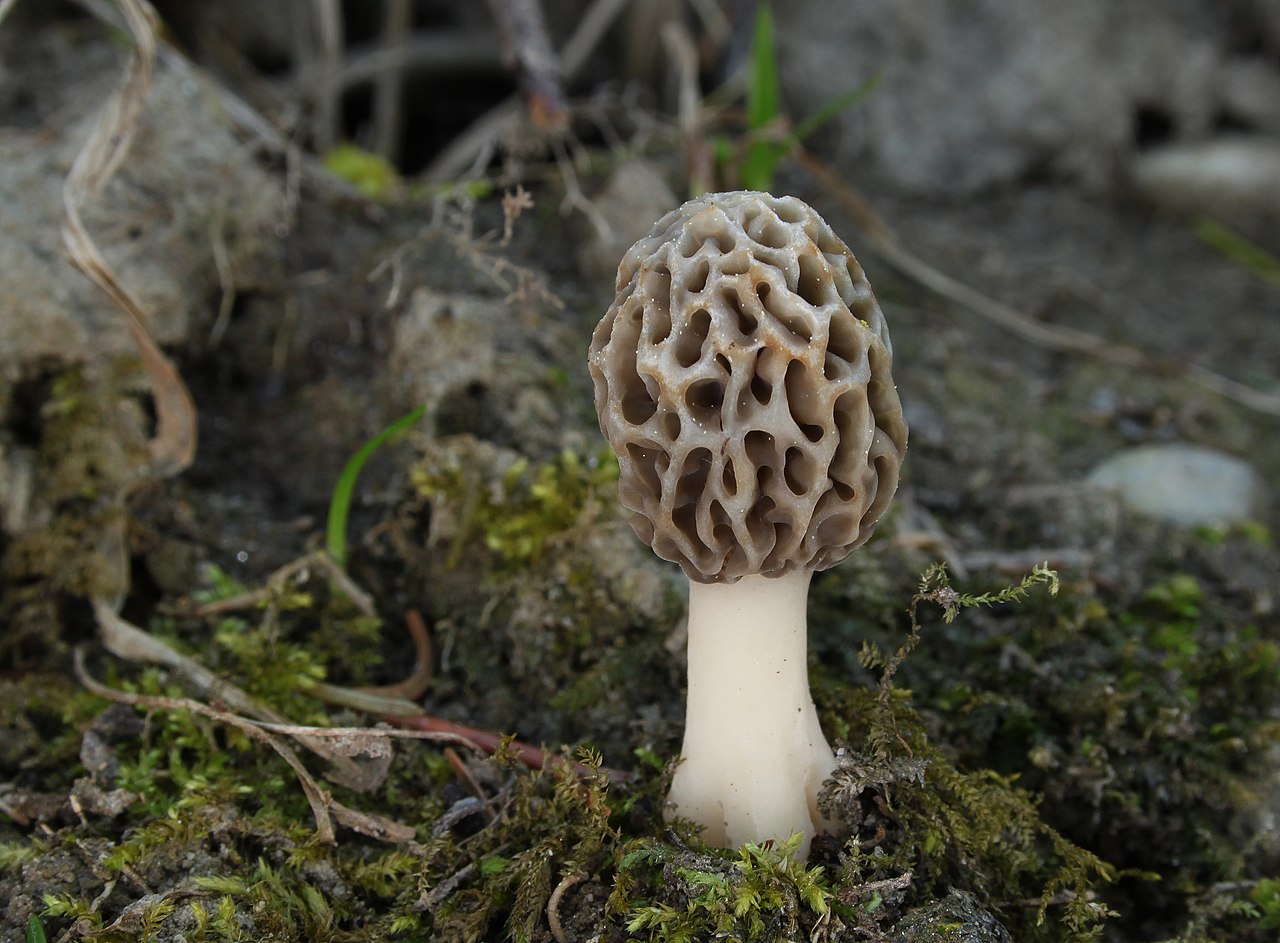
Morel mushrooms (genus Morchella) appear from mid-April through late May across most of North America, when soil temperatures at four inches reach 50–55°F and daytime highs settle into the 60s and 70s. They fruit near dying or recently dead trees — classically American elm, ash, sycamore, cottonwood, tulip poplar, and old apple orchards — and on disturbed ground like burn scars and logging edges. True morels have a completely hollow stem and cap, with the cap fused to the stem at the top. If your mushroom isn’t hollow when you slice it lengthwise, don’t eat it.
This guide is built for the 2026 season. Below: when to start looking in your region, the tree associations that actually matter, how to separate true morels from look-alikes that will put you in the ER, and how to harvest without burning the spot for next year.
When Does Morel Season Start in 2026?
Morels are temperature- and moisture-driven, not calendar-driven. Three factors line up before they fruit:
- Soil temperature 50–55°F at four inches deep. This is the trigger. Below 50°F nothing happens; above 65°F the season is winding down.
- Air temperature in a friendly band. Daytime highs in the 60s and low 70s, nights in the 40s and 50s.
- Spring rain. A solid soaking 4–7 days before you go is what wakes them up. Cold dry springs delay everything; warm wet springs compress the whole season into two or three frantic weeks.
Here is the rough 2026 timing band by region. Adjust forward or backward based on your local soil temperatures, which you can check on USDA NRCS soil probes or by sticking a meat thermometer four inches into the dirt.
- Deep South (Georgia, Tennessee Valley, Arkansas): Late March through mid–April. The window may already be closing.
- Lower Midwest (Missouri, southern Illinois, southern Indiana, Kentucky): Early to late April. Peak right now.
- Upper Midwest and Mid-Atlantic (Iowa, Wisconsin, Michigan, Ohio, Pennsylvania, West Virginia): Late April through mid–May. Coming on this week.
- Northern tier and Mountain West (Minnesota, northern Michigan, Idaho, Montana, Colorado high country): Mid–May through mid–June.
- Pacific Northwest: Lower elevations in April; high country morels (including burn morels) keep producing into July.
If you want a rolling read on what other foragers are finding, the citizen-tracked “Morel Map” updated each spring is a useful reality check — but treat any specific spot as an old report, not a fresh one. People do not give away active patches.
Where to Find Morels: The Tree Associations That Matter
The single biggest mistake new hunters make is looking on the ground instead of looking up at trees. Morels are mycorrhizal and saprobic — they live in symbiotic and decomposer relationships with specific trees. Find the right tree in the right state of health, and you find morels.
Dying and Recently Dead American Elm
The classic. A standing American elm with bark just starting to slip, often with woodpecker work and small fungi on the trunk, is a textbook target. Once the bark falls completely off and the tree is sun-bleached, the spot is usually done producing. The window is roughly the second through fourth year after the tree begins to die.
Ash — Especially After Emerald Ash Borer
The Emerald Ash Borer epidemic has killed hundreds of millions of ash trees across the eastern half of the country. The result for foragers is the largest morel opportunity in a generation. Standing dead ash — the kind with the D-shaped exit holes and blonde under-bark — produces black and yellow morels in the same way dying elm does. If you have access to a woodlot that lost ash to EAB in the last three to five years, hunt it hard.
Sycamore in River Bottoms
Live, mature sycamores along creek and river bottoms are a yellow morel staple in the Ohio Valley, Mississippi Valley, and Appalachian foothills. Look at the leaf litter on the upstream side of the tree where flood-deposited silt collects.
Cottonwood, Tulip Poplar, and Old Apple Orchards
Cottonwood and tulip poplar produce in similar conditions to sycamore. Old apple orchards — especially abandoned ones with mossy ground and low understory — are a yellow morel goldmine in late April and early May. If a property has an old farmhouse and a row of gnarled apple trees, knock on the door and ask permission before the season starts.
Burn Scars (the Year After a Fire)
In the West, a wildfire burn from the previous summer is the single most productive morel ground there is. Morchella tomentosa and other fire morels can blanket a burn scar in densities you will not see anywhere else. If you live near recent Forest Service burn maps, check them.
South-Facing Slopes Early, North-Facing Later
Early in your local season, hunt south-facing slopes where the sun warms the soil first. As the season progresses and lower elevations get too warm, follow the season uphill and onto cooler north-facing slopes.
How to Identify a True Morel (and the Look-Alikes That Will Hurt You)
This is the part that matters. Three rules separate edible true morels from dangerous look-alikes.
Rule 1: A True Morel Is Completely Hollow
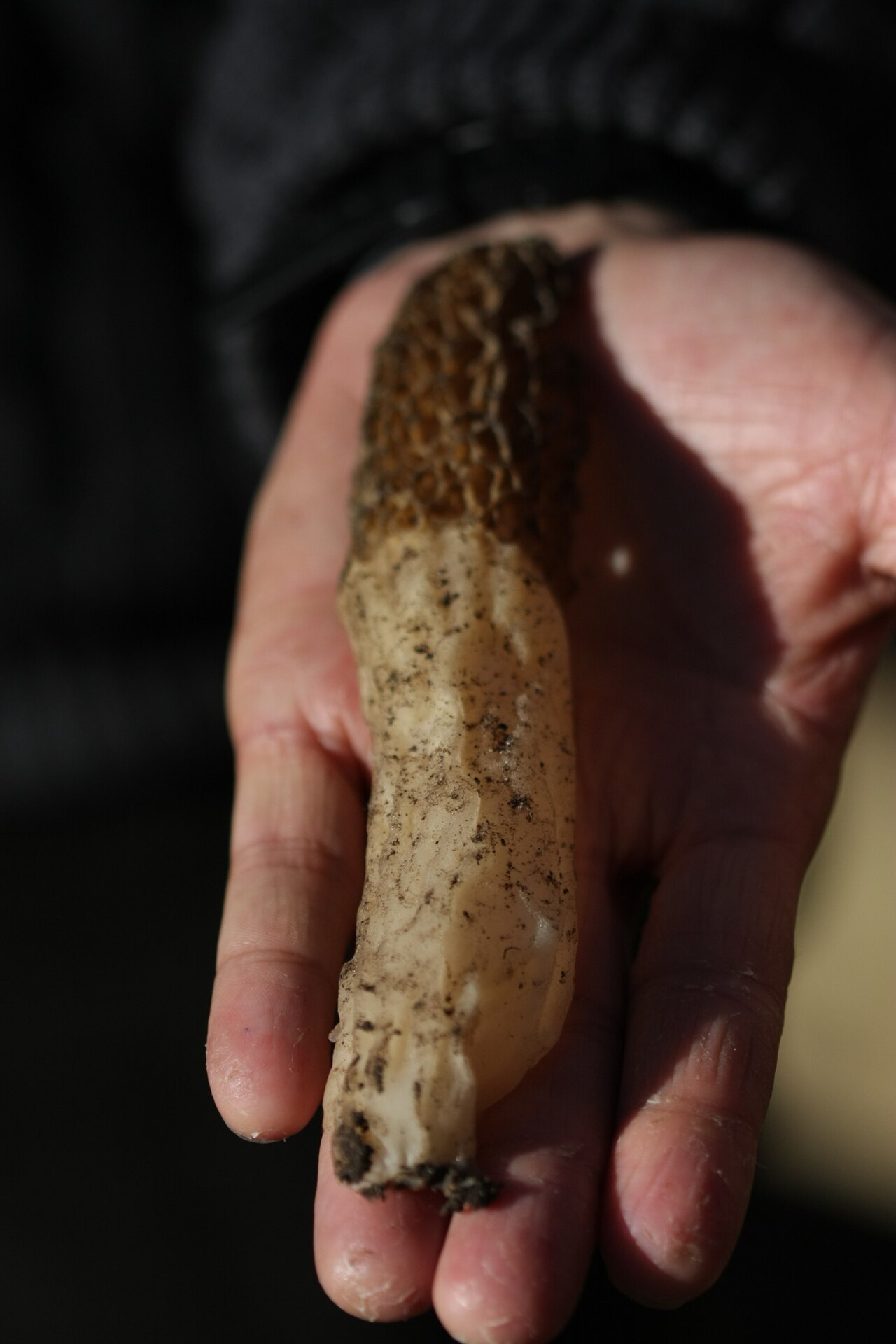
Slice any candidate mushroom in half from the tip of the cap to the bottom of the stem. A true morel will be a single continuous hollow chamber from top to bottom — cap and stem are one empty cavity. If you see chambers, cottony fiber, or a solid interior, it is not a true morel.
Rule 2: The Cap Is Fused to the Stem at the Top
On a true morel (Morchella esculenta, Morchella angusticeps, and relatives), the bottom edge of the cap is fully attached to the stem — the cap does not skirt out free at the bottom. Morchella punctipes, the half-free morel, attaches partway down the cap and is also edible, but rarer.
Rule 3: The Cap Has Pits and Ridges, Not a Brain or a Saddle
True morels look like honeycomb sponges — clearly defined pits separated by ridges. The dangerous look-alikes look different.

The look-alikes to know cold:
- False morels (Gyromitra species). Brain-like, lobed, or saddle-shaped caps. Interior is chambered or cottony, never simply hollow. Contains gyromitrin, which converts to monomethylhydrazine — a rocket fuel. People die from these. Some regional cultures eat them after specific preparation; do not be that experimenter.
- Verpa bohemica (early morel). Thimble-shaped cap that hangs free from the stem like a skirt. The interior of the stem is filled with a cottony pith, not hollow. Causes GI upset and lack of muscle coordination in many people. Skip it.
- Stinkhorns (early stages). Slimy, smell terrible. Easy to rule out by smell alone.
If anything about the mushroom looks off — brain-like cap, free-hanging skirt, cottony stem, solid interior, smells like rot — leave it.


How to Harvest Without Killing the Spot
Morels regrow in the same spots for years if you do not destroy the surrounding ground. A few practical habits separate hunters who keep finding their patches productive from those who do not.
- Cut at the base or pinch-pull — either is fine. The mycelium underground is what produces the mushroom. As long as you do not dig or shred the soil, the spot will produce again. The old “cut versus pull” debate is largely settled by mycologists: it does not meaningfully matter.
- Carry mesh, not plastic. A cheap mesh produce or onion bag lets spores fall through as you walk, reseeding the woods. Plastic bags also crush the mushrooms and start them sweating, which speeds up rot before you get home.
- Brush, do not soak. A soft brush or a quick rinse in cold water gets debris off. Long soaks in salt water (an old wives’ tale for “getting bugs out”) ruin the texture.
- Watch your feet. Trampling the surrounding leaf litter packs the soil and discourages next year’s flush. Walk softly, especially near productive trees.
- Take what you will eat. Morels do not store fresh for long. If you cannot eat or dry them within a few days, leave the rest.
Where Morel Foraging Is Legal
Foraging law varies dramatically by land manager. The general framework, accurate as of 2026:
- National Forest land: Personal-use foraging is generally allowed, often up to a one- or two-gallon daily limit without a permit. Commercial harvest requires a permit. Each forest sets its own rules — check the specific forest’s website before you go.
- Bureau of Land Management (BLM) land: Personal use is typically allowed; check the local field office.
- National Parks: Foraging is prohibited unless a specific park rule allows it. Most do not. Do not forage in a national park without confirming.
- State parks and state forests: Highly variable. Many state parks prohibit foraging; many state forests allow personal use. Read the specific state agency’s rules.
- Wildlife management areas: Usually allow personal-use foraging during open seasons.
- Private land: You need written permission. A handshake is not protection. Ask early in the year, before the season starts, and offer to share.
When in doubt, call the land manager. A two-minute phone call beats a citation and a trespass charge.
How to Cook Morels Safely
One absolute rule: always cook morels. Even true morels contain small amounts of hydrazines that cook off but cause GI upset when raw. Do not eat morels raw, do not eat them dehydrated and rehydrated without cooking, and do not pair a first-time meal with alcohol — some people experience a reaction (the mechanism is debated, but the pattern is well documented).
Practical kitchen workflow:
- Slice them lengthwise. Half-moons let any small insects rinse out and let heat penetrate evenly.
- Soak briefly only if you have to. A 10-minute saltwater soak coaxes bugs out; rinse and pat dry afterward.
- Sauté in butter, hot pan, no crowding. Five to seven minutes until edges crisp. Salt at the end. Pepper if you want.
- Pair simply the first time. Eggs, pasta, cream sauce, a steak. Do not bury the flavor in something complicated.
- If you are eating morels for the first time, eat a small portion. A handful of people develop allergic-style reactions to true morels. Test before you commit to a feast.
To preserve a haul, dehydrate at 110°F until brittle and store in an airtight jar. Rehydrate in warm water 20 minutes before cooking; the soaking liquid is gold for risotto and pan sauces.
A Simple Game Plan for This Week
If you are starting from zero in 2026, here is the plan:
- Check your local NWS forecast for the week. You want a rain event followed by 60s and 70s daytime highs and 40s and 50s nights.
- Pull up Forest Service or county GIS maps and identify woodlots with mature ash that died from EAB in the last three to five years, or stands with mature dying elm. Old apple orchards and creek-bottom sycamores are bonus targets.
- Get permission, get a license if your land requires it, and put a knife, a mesh bag, and a small brush in your pack.
- Walk slowly. Scan the ground in a wide arc on either side of likely host trees. Once you find one, stop and scan in a tight circle — morels almost always come in groups.
- Slice every mushroom in half before it goes in the bag. If it is not hollow, drop it.
The first morel of your life is the hardest one to find. The fiftieth almost finds itself. Get into the woods this week.
Frequently Asked Questions
When are morel mushrooms in season?
Morel mushrooms fruit from late March in the Deep South through mid–June at high elevations in the Mountain West. The peak window across the Midwest, Mid-Atlantic, and Appalachia is roughly mid–April through late May, when soil temperatures at four inches reach 50–55°F.
Where do morels grow?
Morels grow near dying or recently dead trees — classically American elm, ash (especially after Emerald Ash Borer die-off), sycamore, cottonwood, tulip poplar, and old apple trees. They also fruit prolifically on burn scars the year after a wildfire.
How can I tell a true morel from a false morel?
Slice the mushroom lengthwise. A true morel has a single continuous hollow chamber from the tip of the cap to the bottom of the stem, and the cap is fused to the stem at the top. False morels (Gyromitra) have brain-like or saddle-shaped caps and are filled with chambers or cottony fiber. Verpa bohemica has a thimble cap that hangs free from a cottony-filled stem. If it is not entirely hollow, it is not a true morel.
Can you eat morels raw?
No. Even true morels contain small amounts of hydrazines that cause GI upset when eaten raw. Always cook morels thoroughly — sautéing in butter for five to seven minutes is the standard preparation.
Are morels easy to find for beginners?
The first morel is the hardest to find because new foragers tend to scan the ground at random instead of focusing on host trees. Find a dying elm, a recently dead ash, an old apple orchard, or a creek-bottom sycamore, and your odds change immediately. Once you see your first one, the rest of the patch is usually within a few feet.
Can you pick morels in national forests?
Yes, in most cases. National Forest land generally allows personal-use foraging up to a daily limit (often one or two gallons) without a permit. Each forest sets its own specific rules — check the local Forest Service district office or website before you harvest. National Parks, by contrast, almost always prohibit foraging.
Reader Favorites
Field-to-table reference desk
From tag to table — official season dates for all 50 states, plus safe doneness temps for your harvest.
| Species | Archery | Firearm |
|---|---|---|
| Deer | Sep–Oct | Nov |
| Elk | Sep | Oct–Nov |
| Turkey | — | Apr–May |
All 50 state wildlife agencies, plus how seasons, tags and licenses work.
Find your state → Network| Doneness | Target |
|---|---|
| Rare | 125–130°F |
| Medium-rare | 130–135°F |
| Well-done | 160°F+ |
Safe pull temps for venison and steak, from Popular BBQ.
View full chart →