Outdoor BBQ: Essential Gear and Recipes for Outdoorsmen
That is the whole craft in a sentence. You light the coals. You wait. You listen to fat hit iron. Friends show up or they don’t. A dog parks itself just outside the heat. The day cools off. The meat comes off when it is ready, not when a clock says so. You eat standing up, or on a tailgate, or on a stump you should have replaced years ago. That is barbecuing outdoors. It is not a hobby you schedule around the rest of your life. It is one of the better reasons to have a life outside in the first place.
Last updated: August 31, 2026 · Originally published June 24, 2025
A grill full of meat, a cold beer, and no ceiling. That is the job description. So check out our fantastic sister site for BBQ recipes: PopularBBQ.com. Follow them on X for the latest updates and tips.
Why Outdoor BBQs Matter
An outdoor barbecue, camp, riverbank, hunt camp, truck tailgate after a long walk, brings us back to our primal selves. Fire is how humans first made meat worth eating. Doing it outside puts you back in that line without making a speech about it.
It matters because it slows you down. Coals do not care that you are hungry. A brisket will not hurry because you have to be somewhere. You learn patience the same way you learn to sit a stand: by staying put and paying attention.
It matters because it feeds people you actually know. Game you shot. Fish you caught. A packer-cut brisket you drove two counties to buy. Food tastes different when the people around the fire helped get it there.
It matters because the outdoors already asks a lot of you, miles, weather, bad sleep, wet boots. A good meal at the end of that is not luxury. It is maintenance. A man who can build a fire and put a proper dinner on it is useful in camp. That still counts.
And it matters because the work is the point. Rubs, wood, vent control, the moment you pull the lid and the smoke rolls out, that is the craft. The beer is optional. The fire is not.
Essential Gear for Outdoor BBQs
You can cook over a rock ring and a grate if you have to. You will cook better, and safer, with five pieces of kit that earn their space in the truck.
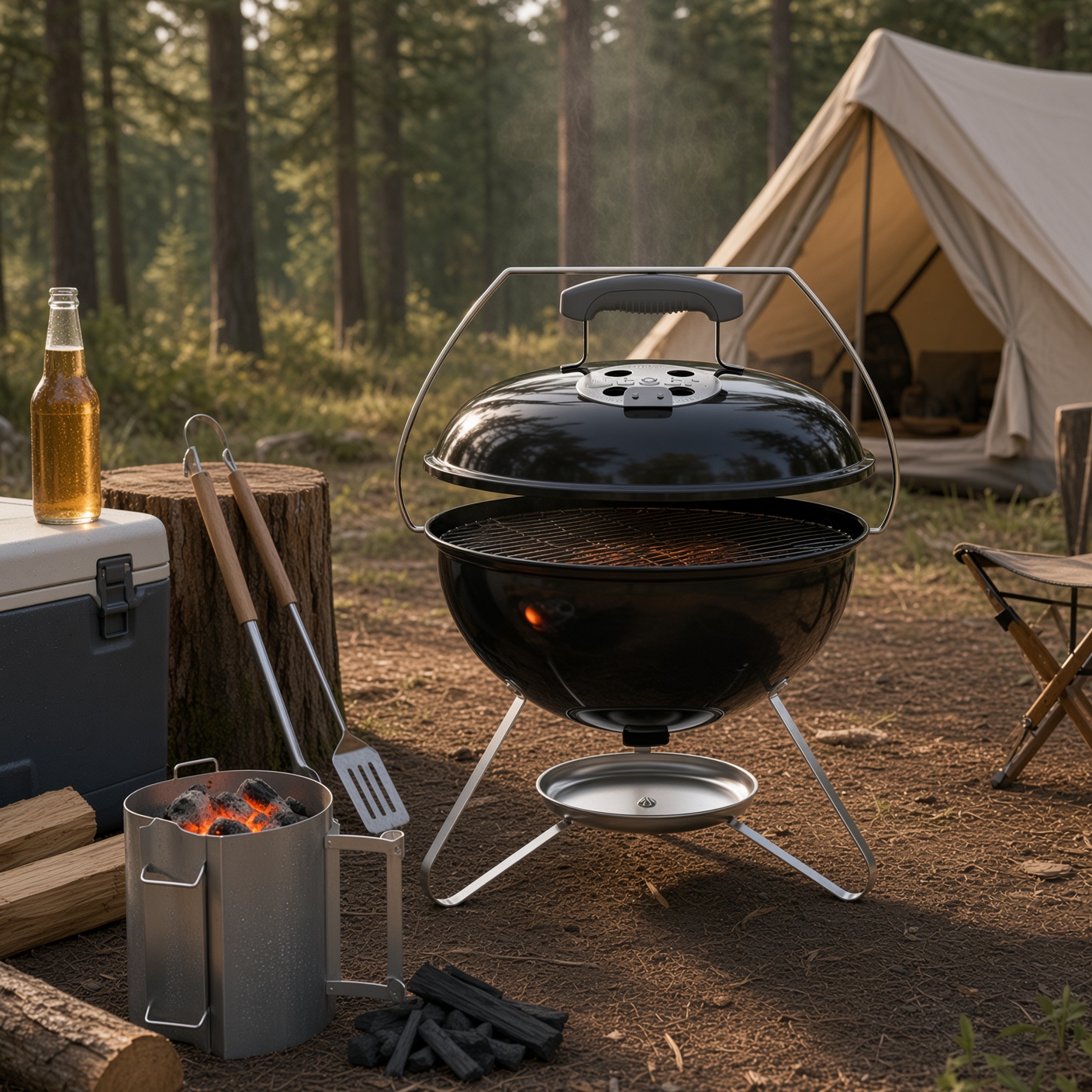
1. A rugged portable grill: This is the hearth. For most outdoorsmen, a compact charcoal kettle or a stout camp grill beats a big backyard gas rig you cannot haul. Charcoal gives you real smoke and two-zone heat with a simple hot side for searing, cool side for finishing all without needing a hookup. Look for a tight lid, working vents, and legs that do not wobble on dirt. A Weber-style kettle in the 18- to 22-inch range, or a well-built portable like a Go-Anywhere or a folding camp grill with a real cooking surface, will cover steaks, birds, and a small packer if you manage the fire.
Leave the 800-dollar pellet trailer at home unless you are tailgating in a parking lot. In the woods, simple wins. A small kettle and a bag of lump charcoal will cook more dinners than most people think.
2. Fuel and a way to light it: Hardwood lump charcoal burns hotter and cleaner than cheap briquettes and leaves less chemical aftertaste. Pack a chimney starter and skip the lighter-fluid bath. Newspaper or a natural fire starter in the bottom of the chimney, coals on top, and you have a working fire in 15 minutes without tasting petroleum on the first bite. Toss in a few chunks of oak, hickory, or pecan if you want smoke that actually belongs on meat. Check local fire restrictions before you light anything on public land.
3. Long-handled tools and heat-resistant gloves: Short kitchen tongs belong in the kitchen. Outside you want locking stainless tongs with real reach, a stiff spatula, and a grill brush you will actually use. Leather or high-heat gloves save you from the dumb burn you get when you grab a grate “just for a second.” A folding table or a clean tailgate for raw-versus-cooked separation is not glamorous. It keeps you from poisoning the camp.
4. An instant-read thermometer: Color is a liar. Juice is a liar. Your cousin who “just knows” is a liar. A fast digital thermometer is the cheapest way to stop serving expensive meat at the wrong temperature. Steaks can take a poke. Birds and pork need one. If you only buy one “fancy” tool, buy this.
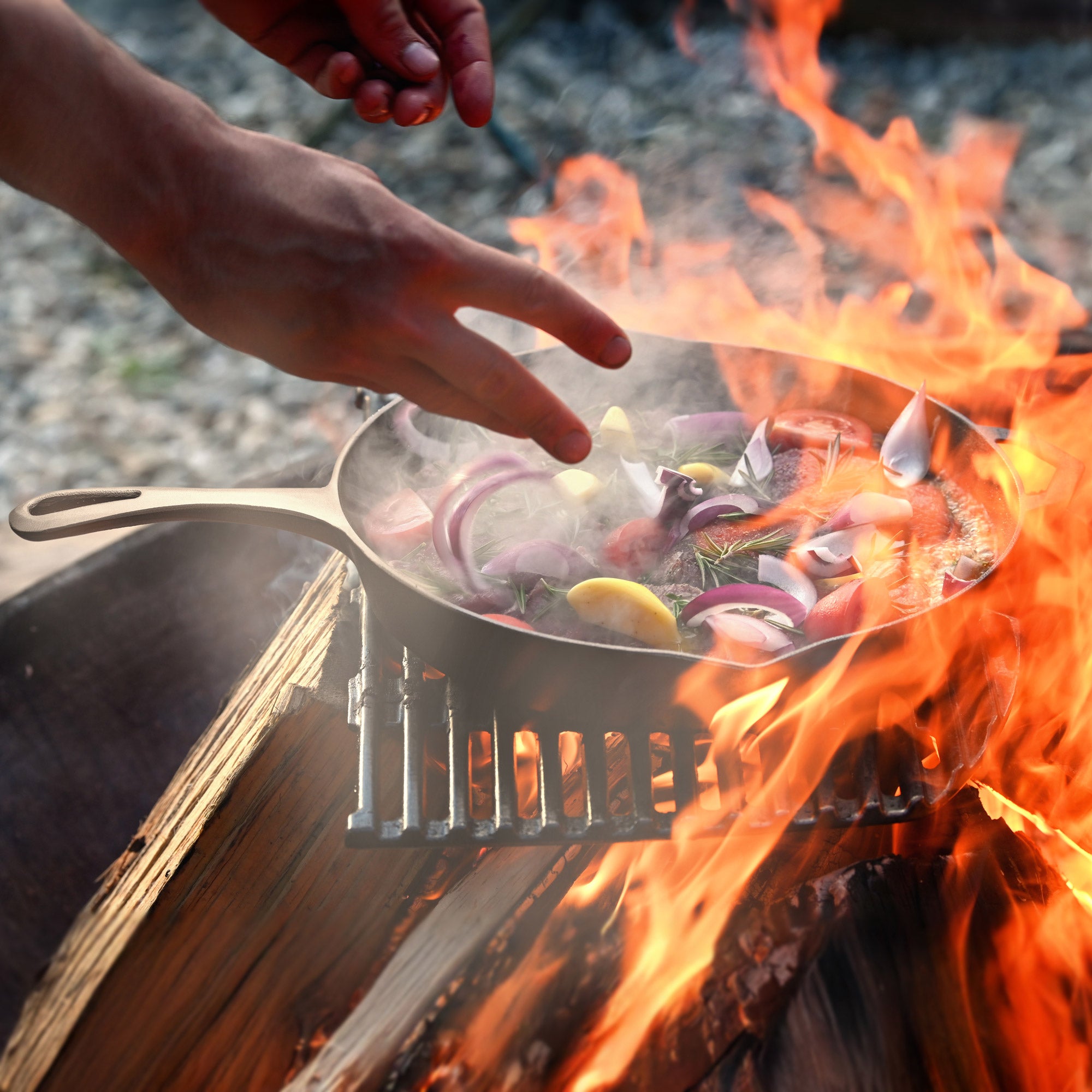
5. A cast-iron skillet (or a small Dutch oven): The grill handles direct heat. Cast iron handles everything else: smash burgers, trout, onions in drippings, cornbread, a breakfast of last night’s brisket and eggs. Set it on the grate or right on a bed of coals. Season it, do not soap it to death, and it will outlast the truck.
If you can only carry one pan, make it iron.
Those five items: grill, fuel and chimney, tools and gloves, thermometer, cast iron, will cover a week in camp. Everything else is nice. Those are necessary.
Two recipes that earn their keep
Coffee-Chili Ribeyes (grill)
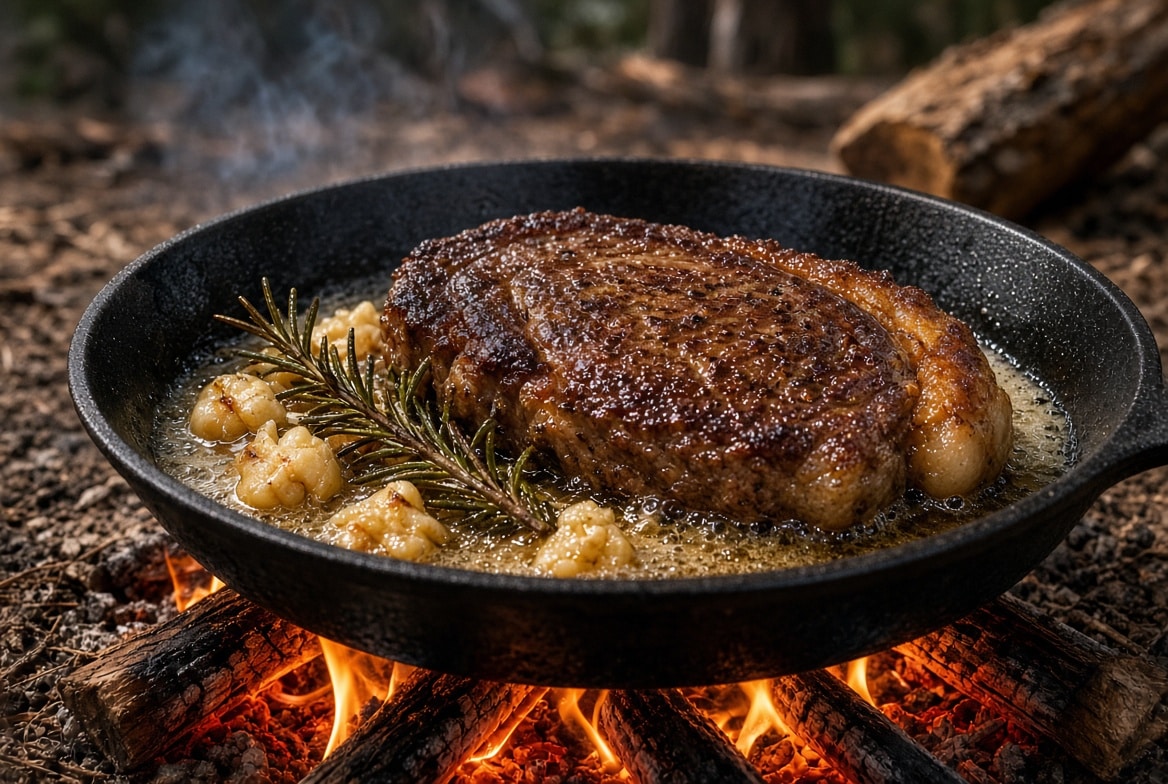
For two thick ribeyes, mix 1 tablespoon kosher salt, 1 tablespoon coarse black pepper, 1 teaspoon smoked paprika, 1 teaspoon chili powder, 1 teaspoon brown sugar, and 1 teaspoon finely ground coffee. Pat the steaks dry, oil them lightly, and coat with the rub at least 30 minutes before they hit the fire, overnight in the cooler is better. Bank the coals for two-zone heat. Sear 2 to 3 minutes per side over the hot zone, then move to the cool side and lid-on until the thermometer reads 125–130°F for medium-rare. Rest 8 minutes. Slice across the grain. Drink the beer you opened when you lit the chimney.
Cast-Iron Camp Hash (skillet)
Dice leftover steak, brisket, or venison. Parboil or foil-roast a couple of potatoes until just tender. Get the skillet ripping hot over coals with a spoon of fat. Brown the potatoes, add chopped onion and a minced garlic clove, then the meat. Salt, pepper, a pinch of cayenne. Crack two eggs on top if you have them and lid the skillet until the whites set. Eat it out of the pan.
If you have a whole afternoon and a bigger fire, a simple two-zone kettle will also take a small pork shoulder: salt, pepper, paprika, garlic powder; 250–275°F; wood chunk on the coals; wrap when it stalls; pull at 200–203°F. That is a longer day. It is a better one.
Safety Tips for Outdoor Grilling
Fire is the point. Fire is also how a good evening becomes a problem. Treat it like a loaded gun you intend to use.
Grill outside, always. Never in a tent, camper, garage, or enclosed porch. Charcoal puts off carbon monoxide. You will not smell your way out of that.
Set the grill on level ground, at least 10 feet from tents, trucks, brush, and low branches. Clear a bare circle around it. Wind moves embers. Dry grass does the rest. Check burn bans before you strike a match remember public land rules change with the weather.
Keep kids and dogs three feet back. Mark the line if you have to. Most grill injuries are not dramatic explosions. They are a toddler grabbing a hot lid.
Never use gasoline or kerosene. Never add lighter fluid to live coals. A chimney starter makes both of those temptations unnecessary. If grease flares, close the lid and shut the vents. Do not throw water on a grease fire. Baking soda or a lid beats a panic move.
Stay with the fire. A grill you walked away from is a fire you do not control. Have water, a shovel, and a way to drown the coals when you are done. Pour until the hissing stops, stir, pour again. Coals can hold heat for hours. Do not dump them in the woods or a plastic trash can. Wait until they are cold. Forty-eight hours is the old rule for ash disposal for a reason.
Keep raw and cooked food apart. Coolers do not make unsafe meat safe. Get poultry to 165°F, ground meat to 160°F, steaks and chops to at least 145°F and use the thermometer, not hope.
Drink if you want. Do not get sloppy around open flame. The beer is part of the evening. It is not supposed to be the reason you knock the grill over.
Recipes and Tips from PopularBBQ.com
Now that you have the gear and safety tips, let’s talk about the food. For mouthwatering recipes and expert grilling tips, PopularBBQ.com is an excellent resource. They offer a variety of recipes that are perfect for your outdoor BBQ, ranging from classic smoked brisket to innovative dishes like their recently featured Dr Pepper BBQ wings, which are ideal for game days or casual gatherings. For instance, their Father’s Day BBQ Guide provides step-by-step instructions for creating a memorable BBQ spread that will impress your family and friends.
Furthermore, PopularBBQ.com reviews the best BBQ equipment on the market, helping you choose the right tools for your outdoor adventures. Whether you’re in the market for a new portable grill or need accessories like temperature probes or grill covers, their in-depth reviews can guide you to make informed decisions, ensuring you get the most out of your investment.
Conclusion
Outdoor barbecue is not complicated especially with the essential gear, proper safety precautions, and delicious recipes from PopularBBQ.com,
It is fire, meat, time, and enough sense not to burn the county down. The gear list is short on purpose. A grill that travels, clean fuel, tools with reach, a thermometer, and a piece of iron will feed a camp. The recipes above will make people quiet for a few minutes, which is as close as camp gets to a standing ovation.
What you are really after is the hour when the coals have settled, the lid is doing its work, and there is nothing to do but stand there with a beer and watch the light change. That is the craft. It does not photograph as well as a plated steak, and it does not need to.
Light the chimney. Give the meat the time it asks for. Put the fire all the way out when you are done. Then sit down and eat what you made, outside, where it belongs.
Reader Favorites
Field-to-table reference desk
From tag to table — official season dates for all 50 states, plus safe doneness temps for your harvest.
| Species | Archery | Firearm |
|---|---|---|
| Deer | Sep–Oct | Nov |
| Elk | Sep | Oct–Nov |
| Turkey | — | Apr–May |
All 50 state wildlife agencies, plus how seasons, tags and licenses work.
Find your state → Network| Doneness | Target |
|---|---|
| Rare | 125–130°F |
| Medium-rare | 130–135°F |
| Well-done | 160°F+ |
Safe pull temps for venison and steak, from Popular BBQ.
View full chart →