Finders, Keepers: Metal Detecting For Fun & Profit
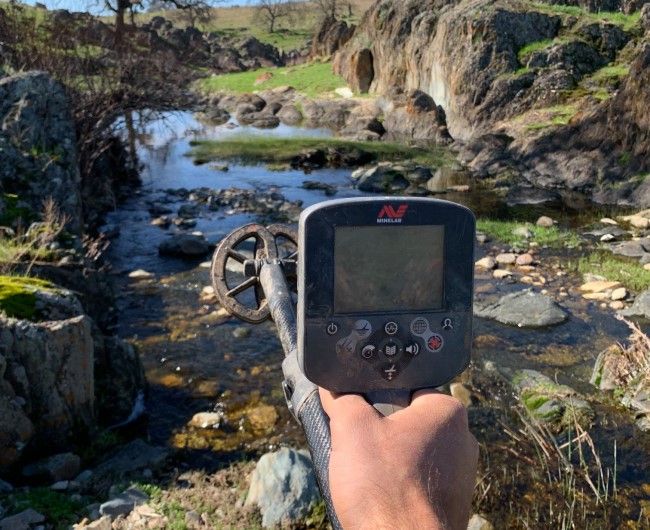
The lure of buried treasure…
Untold wealth buried centuries ago hundreds of feet deep on an island, Civil War gold lost in the depths of Lake Michigan, sunken 16th century Spanish galleons off the Florida coast, strongboxes stolen off of stage coaches and buried, and lost mines in the far west… all just a few of the dreams which fill the heads of many treasure hunters both old and young. It doesn’t have to be a dream, though; you can start finding real buried treasures today with metal detecting.
To begin in this great hobby, the first item needed is a metal detector. Over the last five or six decades, many different models of detectors have shown up in the hands of treasure hunters. When purchasing your first detector, locate a dealer nearby and visit them. A dealer can allow you to try different models, teach you how to use them, answer any questions you may have (before, during and after your purchase), and even teach you how to properly retrieve items you find in the ground.
Once you have your first machine, there are a few more items you’ll need to begin your new hobby. First is a digging tool of some kind to unearth your treasure. This can be as simple as a flat-blade screwdriver or a garden trowel. Most detectorists use a digging tool made specifically for use with a detector. Another needed item is a pouch of some kind to hold your finds. A nail apron often can be acquired free from a local hardware store. Coin pouches which have belt loops and usually a couple of openings – one zippered to separate and secure your good finds from the trash – can be purchased from your dealer.
Another accessory, which could be considered optional, but is used by almost everyone with a detector, is a set of headphones. Most of these wire directly into the detector, but Bluetooth earphones can be purchased which work with many higher quality machines. Headphones allow detectorists to more easily hear signals from smaller or deeper targets, while lessening outside noise from common sources like wind and nearby traffic.
One final accessory, which is also optional but highly recommended, is a small item called a pinpointer. These are around 8 inches long, an inch or so in diameter, and often of a bright color to make it easier to find if you lay it down in grass or leaves. This is basically a mini detector, which helps the user locate small items in a hole, or in the material removed from a hole. A pinpointer is a solid investment, especially after one learns how difficult it can be to locate small treasures when coated with dirt or mud.
Once you have all of your equipment, you are ready to start. Usually, the first place to begin detecting is in your own yard. If it is 25 years or older, it probably contains lost coins, toys, and other metal items for you to find. Practice pinpointing the object and retrieving it properly (ask your dealer to show you the correct way to dig). Always fill your holes and carry out any trash with you. Once you have some experience in your own yard, ask your neighbor or relatives if you can search theirs. No matter where you hunt, always get permission before beginning.
Debbie Smikoski is an expert detectorist who travels around the country for Minelab helping both beginning and experienced treasure hunters better understand their machines so they can experience better results and more fun in the field. She says one of the best things a beginning detectorist can do is set up a “test garden” in their yard.
“Grab some old jewelry, various coins, nails, bottle caps and other metal objects and put them in the ground at various depths,” offers Smikoski, who advises that each item be marked with a piece of paper containing the name of the object and the depth at which it’s buried. “Practice detecting each item, taking note of the sound each item makes, as well as the numeric value your machine is returning on screen. It won’t take long and you’ll gain confidence in knowing what your detector is telling you,” she adds. “You’ll quickly learn what common items like pennies, quarters, nails, bottle caps, pull tabs, and gold rings sound and look like on your machine. It’s a fun process that will give you more confidence and save you a lot of time you’d otherwise spend digging ‘trash’ once you take to the field for a real hunt.”
Metal detecting can take place almost any time throughout the year, and there’s no license required. It can be done by one’s self or with friends and family, and it can also be a good source of exercise. Perhaps best of all, however, is that the rewards are real; the treasures are yours to keep.
Reader Favorites
Field-to-table reference desk
From tag to table — official season dates for all 50 states, plus safe doneness temps for your harvest.
| Species | Archery | Firearm |
|---|---|---|
| Deer | Sep–Oct | Nov |
| Elk | Sep | Oct–Nov |
| Turkey | — | Apr–May |
All 50 state wildlife agencies, plus how seasons, tags and licenses work.
Find your state → Network| Doneness | Target |
|---|---|
| Rare | 125–130°F |
| Medium-rare | 130–135°F |
| Well-done | 160°F+ |
Safe pull temps for venison and steak, from Popular BBQ.
View full chart →



I borrowed a detector when a neighbor kid dropped a box of live 357 Magnum shells in my yard, spreading them over a 20 ft area of 4 in. tall grass. Didn’t want to find them with my lawnmower. The detector was perfect for the job, and the lead and other metals in the shells made them sound out loudly on the device.
Just thinking about getting started reading about them before I buy.
I have an older Garret. Don’’t remember what model is however. I bought it when my x- wife and I divorced and I was living in an older apartment building. There was a green space out front with a little sand box. I think I found about 10 or 12 small hot wheels cars some of them were probably from the real early 70’s. Man I miss that. Still have that old detector maybe I need to get it back out and dust it off. Great article . Thanks
Thank you for the info.
Be cautious about talking about any finds or locations. I watched a show that was treasure hunting for a wagon load of civil war gold. They located it and due to it being on park land, they notified the government for permission to get it. Well the government stepped in and took it away lying about not finding a thing. So keep quiet about large finds.
Learning the “language” of your particular detector is foremost in being a successful detectorist. The only true way to know what is in the ground is to dig every signal. Yes, you can know (within reason) that the object is iron or other. But, the bane of all detectorists is the infamous ‘pull tab!’ It can look like a coin, especially a nickel or a ring and it can live in the ground forever!
However, this is where the fun is….the unknown! The gold ring that should have been a penny…believe me, any detector will lie to you. Of course, some are better than others. I use a Minelab CTX-3030 and (to me) it is amazing.
I used to use a Fisher F-75 and found more than enough to cover its’ cost within the first year!.
Old parks, old schoolyards, sidewalk tearouts, abandoned old houses, even a walk in the woods, good things can be had most anywhere. Just remember to get permission, take out and dispose of ANY trash you dig and do your best to leave your dig site just as you found it. When replacing sod, remember, green side goes up!
I just used my dad’s old metal detector that has been gathering dust for over 10 years, I lost a cotter pin in the yard. I decided to try it as a last resort, because just scanning the ground with eyeballs proved hopeless. Two new batteries and, start detecting… I found the pin in a few minutes. Sweet!
Are there restrictions as to where you can derect? Like state / federal parks, beaches, or even local govt ordinance prohibiting detecting?
Yes which is another annoyance when detecting.
Very good intro article, I will be watching for more , ‘A must read for everyone”