How to Clean a Rifle: A Simple Field-to-Bench Routine
Clean a rifle by pushing a solvent-soaked patch and a bore brush through from the chamber end, then dry patches until they come out clean.
Last updated: September 30, 2026 · Originally published September 29, 2026
A rifle that looks clean on the outside can still be dirty where it matters. Powder residue, copper from jacketed bullets, unburnt grains, moisture, and grit collect in the bore, chamber, locking lugs, bolt face, and action. Left alone, that mix dulls accuracy, roughs up bolt lift, invites rust, and—on a semi-auto—starts causing stoppages at the worst time.
Maintenance is a chore, and it is part of owning a working tool. You wipe the stock and barrel so fingerprints and rain do not etch the finish. You clean the inside so the rifle still chambers, locks, and puts the next shot where the last one went.
There is no single “correct” way to clean a firearm. Armorers, hunters, and benchrest shooters all run different solvents, schedules, and levels of fuss. The routine below is a simple field-to-bench system that works for most hunting and range rifles. It is not the only system. A deep investigation with a bore scope, dedicated copper solvents, and abrasive paste is a different job from a ten-minute camp wipe-down, and both have a place.
Safety First, Every Time
Always follow your owner’s manual for disassembly and lubrication. What follows is general practice, not a substitute for the instructions that came with your specific rifle.
Before a patch ever touches steel:
- Point the muzzle in a safe direction.
- Remove the magazine.
- Open the action, lock it open if the design allows, and check the chamber by eye and by finger.
- Check again.
- Move all ammunition out of the work area. Solvents can ruin primers and powder; live ammo has no business on a cleaning bench.
Work in a ventilated space. Wear gloves if you are using strong solvents. Keep solvent off wood finishes, sling swivels you do not want stained, and especially off scope lenses.


Two Kits, Two Jobs
Think in two layers. The field kit keeps fouling from hardening and moisture from sitting. The bench kit actually takes the rifle apart far enough to clean it.
Field kit (range bag or pack)
- Caliber-correct bore snake or pull-through
- Small bottle of CLP or a mild bore solvent
- Microfiber cloth or old T-shirt
- Nylon toothbrush
- Nitrile gloves
- A few patches
Bench kit (shop or garage)
- Cleaning cradle or padded vise
- One-piece coated or carbon-fiber rod sized to the caliber (avoid cheap segmented rods for regular bench work)
- Bore guide
- Jag and patches (a jag beats a slotted tip for most rifle work)
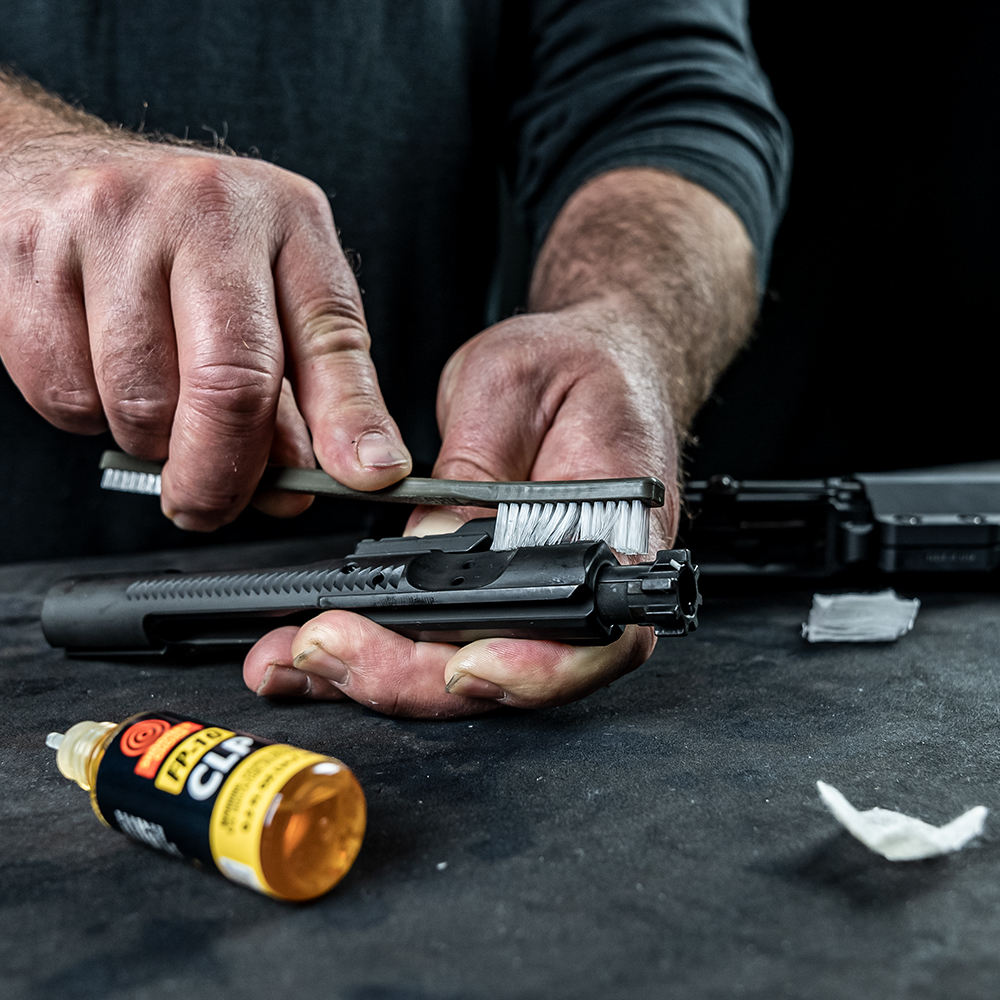
- Bronze or phosphor-bronze bore brush and a nylon brush
- Chamber brush
- Powder/carbon solvent and, separately, a copper solvent
- Picks, cotton swabs, pipe cleaners
- Light gun oil and a small amount of grease for high-pressure contact points
- Shop rags and a trash can under the muzzle
A bore snake is fast. A guided rod is more thorough. Use both. Do not treat the snake as a complete substitute for a bench clean when the rifle has a high round count, a suppressor on it, or groups that have opened up.
The Field Routine: After the Shot, But Before Packing Up
Do this at the truck, the blind, or the tailgate after a wet hunt or a short range session. Goal: get moisture and loose fouling off the gun before they sit overnight.
- Clear the rifle again. Habit beats memory.
- Wipe every exposed metal surface—receiver, bolt body, muzzle face, sling hardware, and the area around the crown. Fingerprints and rain leave salts. A dry cloth first, then a cloth with a hint of CLP.
- Pull the bolt if the rifle allows it. Wipe the bolt body, lugs, and bolt face. A Q-tip under the extractor catches the carbon that later causes sticky extraction.
- Run a bore snake chamber-to-muzzle once or twice. If you add solvent, use a little, then follow with a dry pass. Pull in line with the barrel. Do not saw the snake against the crown.
- On an AR-pattern rifle, pop the pins, pull the bolt carrier group, wipe the carrier rails, bolt tail, and lugs, and put a light film of lube back on the contact surfaces. An AR usually prefers to run a little wet. A hunting bolt gun does not.
- Check the muzzle and any brake or suppressor mount for packed carbon or mud. A plugged muzzle is a trip-ending problem.
- Let the rifle air before it goes into a closed case. A wet gun in a sealed case is a rust factory.
That is enough for a dry afternoon and a handful of shots. It is not enough after a long range day, a season of mixed weather, or any time the action feels gritty.
The Bench Routine: The Simple Thorough Clean
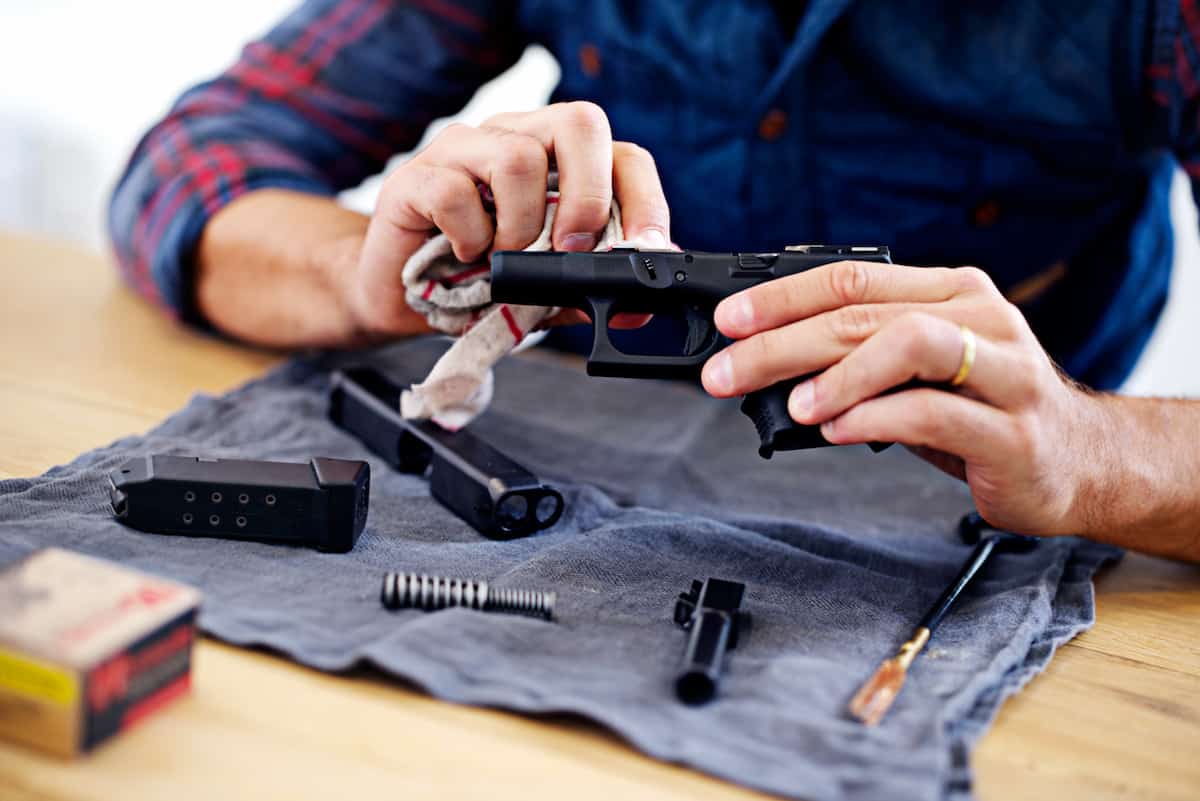
Set the rifle in a cradle with the muzzle slightly down so solvent runs out the bore, not back into the trigger. Drape a rag over the stock and scope. Remove the bolt (bolt gun) or separate the upper and pull the BCG (AR). Insert a bore guide.
Clean breech-to-muzzle whenever the design allows it. The crown is the last thing the bullet sees. Banging a rod or brush against it is a slow way to ruin groups.
1. Knock down powder and carbon first
Copper solvent cannot do its job if a layer of carbon is sitting on top of the copper. Start with a carbon or general-purpose bore solvent.
- Push a wet patch through once and let it dwell a few minutes. Chemistry does more work than frantic scrubbing.
- Run a wet bronze or nylon brush through the bore. Push it all the way out the muzzle before you pull it back. Ten to fifteen passes is just enough agitation to loosen the carbon
- Wipe the rod after each stroke. A dirty rod is sandpaper.
- Follow with wet patches, then dry patches, until they come out close to clean.
Do not reverse a dirty patch back through the bore if you can avoid it. Push it out, pull it off, start the next one from the chamber.
2. Clean the chamber and lugs
The chamber and locking recesses collect the crud your brush shoves backward. A chamber brush or a patch wrapped on a brush, twisted in place, takes care of it. On an AR, scrub the barrel-extension “star chamber” and feed ramps. On a bolt gun, wipe the raceways and the locking-lug seats. Hard bolt lift is often a dirty chamber or dirty lugs.
3. Clean the bolt and action
- Bolt face, firing-pin hole (do not flood it with oil), extractor hook, ejector face
- Locking lugs and cam surfaces
- Inside the receiver, magazine well lips, and any gas-system parts you can reach without a full armorer teardown
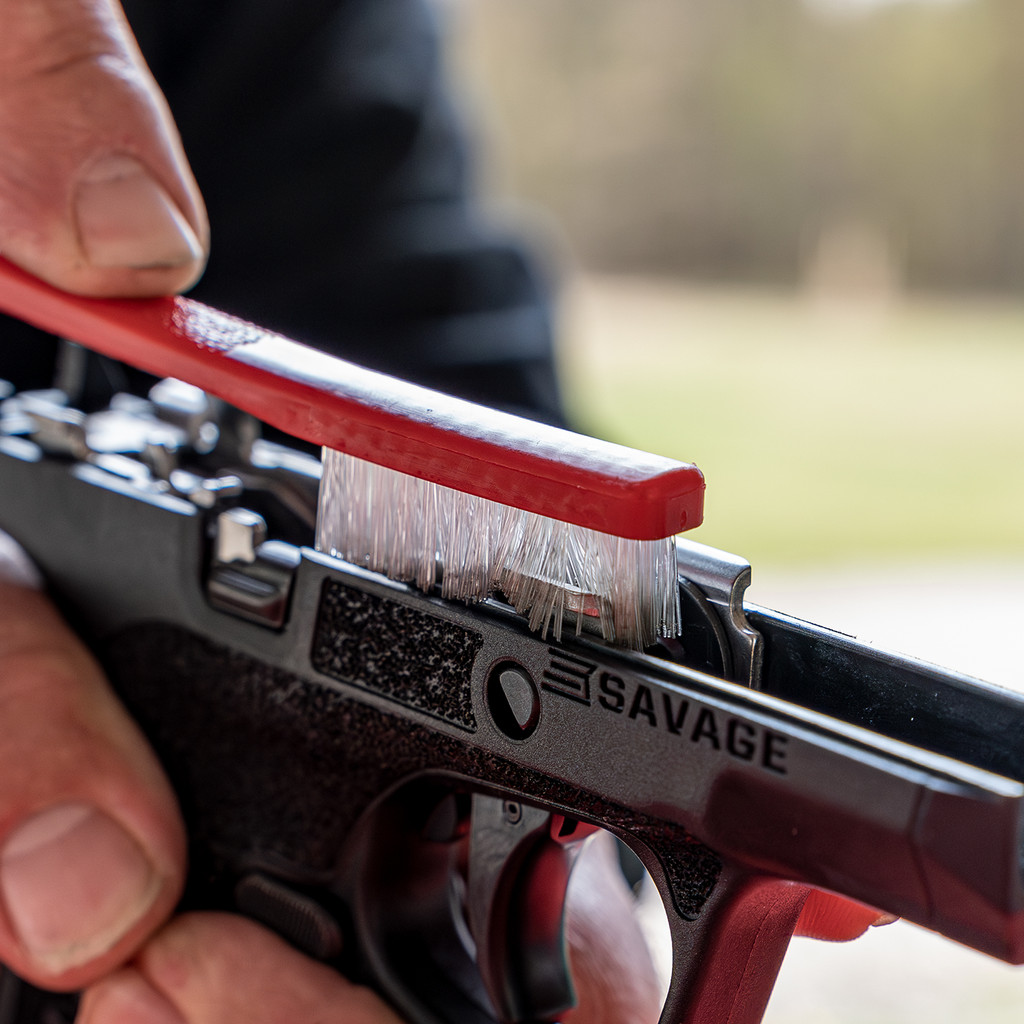
A nylon brush and solvent handle most of it. A wooden or polymer pick is safer than a steel screwdriver around extractor springs and firing-pin channels.
4. Dry, protect, and go light on oil
When patches run clean and dry, run one lightly oiled patch through the bore if the rifle is going into storage. If you are shooting again soon, finish with a dry patch. Oil left in the bore can spike first-shot pressure and throw the cold-bore hit.
Lube contact points only: lugs, bolt body, cam pin, carrier rails. A drop or two. Grease belongs on high-pressure spots, not in the trigger or the firing-pin channel. Too much oil becomes a dirt magnet.
5. Reassemble and function-check
Cycle the action. Confirm the safety works. On a semi-auto, check that the hammer falls on FIRE and does not fall on SAFE, then put the rifle back on safe. Look down the bore one last time for a forgotten patch.
How Often Is Enough?
It depends on the rifle and the weather more than on a round-count religion.
- Hunting bolt gun: Wipe after every outing. Clean the bore when groups open, after a wet hunt, and at least once a year even if you barely shot it. Carbon sitting for a season can start etching steel. Some hunters leave a slightly fouled bore during the season so the cold-bore shot stays familiar, then do a real clean when the season ends. That is a valid choice if you still keep moisture off the metal.
- AR or other gas gun: Quick wipe and re-lube after each range trip. A fuller clean every few hundred rounds, sooner if you shoot suppressed or dirty ammo. Reliability on these guns is often more about lubrication than a white-glove bore.
- Precision or suppressed rifle: Carbon rings form faster, especially just forward of the throat. Shorter intervals and a closer look at the first few inches of rifling pay off.
If the rifle got rained on, dropped in snow, or packed in dust, clean it now. Do not wait — taking care of it now beats dealing with the consequences later.
Advanced Work: When “Clean Enough” Is Not Enough
The simple routine above keeps most rifles honest. These next methods are for the times you need to know what is actually inside the barrel, or when patches stay dirty no matter what you do.
Bore scope inspection. A modern digital bore scope is the single biggest upgrade in rifle maintenance. Patches lie. A scope shows the carbon ring in the throat, copper wash on the lands, throat erosion, and pits you would never see with a flashlight. Use it before a deep clean so you know the problem, and after so you know you solved it. You do not need one to hunt deer. You do need one if you are chasing small groups or diagnosing a rifle that suddenly started throwing fliers.
Separate carbon and copper chemistry. General solvents lift powder fouling. Copper needs a dedicated copper solvent. Blue-green on a patch means copper is coming out. Repeat until the color fades. You do not have to strip every last trace of copper after every range session; many barrels shoot their best with a light, consistent film. Strip it when accuracy slips or when a scope shows heavy plating. Follow the bottle. Strong ammonia formulas can etch a bore if they sit too long.
Foaming cleaners and long dwell. Foam or a wet soak lets solvent work in the corners of the rifling while you clean the bolt. Useful on a filthy barrel. Still patch it out completely afterward.
Abrasive pastes and bore polish. Products like J-B Compound or dedicated bore polish are the “last resort” for a baked carbon ring or stubborn copper that chemistry will not move. Use them sparingly, with a bore guide, and do not turn them into a weekly habit. They cut fouling. They can also cut steel if you get enthusiastic.
Ultrasonic cleaning. Excellent for a stripped bolt carrier, bolt, and small parts. Not a replacement for inspecting and lubricating those parts, and not something to drop a whole barreled action into without knowing how your finishes and sealants will react.
Suppressor-aware cleaning. A can speeds up carbon at the muzzle and, on many rifles, the carbon ring in the throat. Pull the suppressor for a proper bench clean. Watch the mount threads and the first inches of bore more closely than you would on an open muzzle.
Full detail strip. Triggers, firing-pin assemblies, gas blocks, and chassis screws do not need to come apart after every hunt. Save the deep strip for grit inside the action, a drowned rifle, or scheduled inspection. Extra teardown is extra chance to lose a spring or change a torque value you did not mean to change.
Mistakes That Cost Accuracy
- Cleaning muzzle-to-breech with a rigid rod when you could have gone the other way
- Using a dirty, gritty bore snake or a segmented rod that collects abrasive crud at the joints
- Flooding the firing-pin channel or trigger with oil
- Leaving solvent or ammonia in the bore overnight
- Calling the job done because the last patch was “kind of gray” and never looking at the chamber
- Putting a damp rifle in a closed case
- Skipping the function check
- Using household oils or water-displacing sprays as bore lube
A Working Standard, Not a Religion
Wipe the outside so the rifle survives weather. Clean the inside so it still shoots. Use a snake and a rag when you are in the field. Use a guide, a rod, and patience when you are home. Bring in a bore scope and stronger chemistry when groups slip or you simply want to see the truth.
That is the whole idea: a simple field-to-bench routine you will actually do, with a clear path to the deeper methods when the easy way is no longer enough. A rifle that is maintained is a rifle you can trust when the shot is not a range toy anymore.
Frequently asked questions
How often should you clean a rifle?
For most hunting rifles, a full clean every few hundred rounds plus a quick bore wipe after a wet or hard day is enough. Clean more often if you shoot suppressed or subsonic, since both foul faster, and always run a full clean and a fouling shot before a hunt.
What is the best gun cleaning solvent?
A quality carbon or general-purpose bore solvent paired with a dedicated copper solvent does the real work. Start with the carbon solvent and let it dwell, then use the copper solvent until blue-green stops showing on the patch.
Do you need to clean a bolt-action rifle?
Yes. A bolt-action rifle needs the same care as any other: clear it, remove the bolt, clean the bore from the chamber end, wipe the action, and apply a light film of oil before storage. Bolt guns are simple to clean because the bolt pulls completely free for full bore access.
Does suppressed shooting make a rifle dirtier?
Yes. Shooting suppressed, and especially shooting subsonic loads, fouls the bore and action faster than unsuppressed supersonic shooting. If you run a suppressor, clean the rifle more often, and clean the suppressor itself on its own schedule as a separate task.
Final Thoughts
Basically, clean from the chamber end, patch it dry, oil it thin, and do not overdo it. Ten minutes on the bench is what keeps a rifle shooting to the zero you worked for.
Product specifications are drawn from each manufacturer; verify current details before purchase.


Reader Favorites
Field-to-table reference desk
From tag to table — official season dates for all 50 states, plus safe doneness temps for your harvest.
| Species | Archery | Firearm |
|---|---|---|
| Deer | Sep–Oct | Nov |
| Elk | Sep | Oct–Nov |
| Turkey | — | Apr–May |
All 50 state wildlife agencies, plus how seasons, tags and licenses work.
Find your state → Network| Doneness | Target |
|---|---|
| Rare | 125–130°F |
| Medium-rare | 130–135°F |
| Well-done | 160°F+ |
Safe pull temps for venison and steak, from Popular BBQ.
View full chart →