How to Build a Campfire
Building a campfire is an essential skill for an outdoors lifestyle.
Last updated: November 6, 2026 · Originally published March 23, 2019
Whether you’re in the middle of the woods or making smores with the family, building a proper campfire can be a daunting task. With some wood and a little bit of knowledge, it’s not really that hard and can be a big help for many different tasks. Here’s how to do it in a few easy steps.
Start with a fire pit

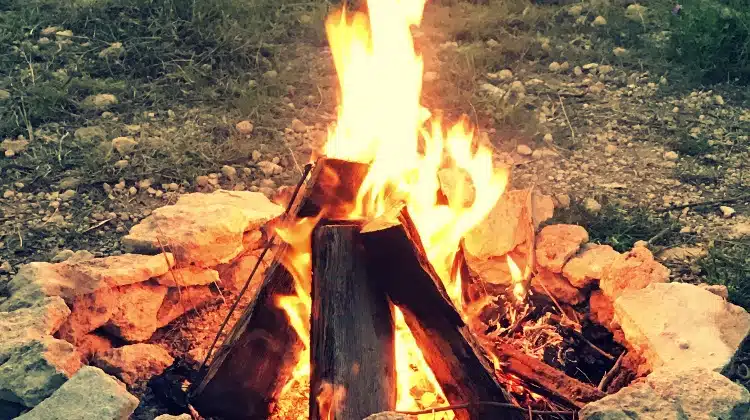
To start building a fire, you are going to need some sort of way to contain it. Whether it be a big bucket, stones, or even a fancy structure. This is so that you don’t ignite the surrounding area including your house. Also, an uncontained fire is a problem especially in dry environments such as California wooded areas.
If you can’t get a proper area to hold a fire, make sure to keep a fireproof blanket or a fire extinguisher near in case of an emergency. It’s always better to be safe than sorry.
Getting the wood

Choosing your wood is definitely one of the most critical parts of your campfire. You want to get relatively decent sized chunks of wood for your endeavors. Hickory, White Birch, or Oak are some of the best woods to burn. Cedar lacks in flame but excels in heat, making it great for a winter campfire. Try avoiding softer woods like Spruce or Willow because density is proportionate to burn time.
Storing your wood is also an important step because it won’t burn after a rainstorm. You can put in in a storage shed or even set it outside in a stack with a large tarp to keep moisture and other unwanted debris away from your wood.
Setting up the pyre

The most common way to set up wood is in a cone fashion. This is done by inserting a support stick into the ground and leaning the chunks against it over a pile of small combustible material, or kindling, such as wood shavings, leaves, newspaper, etc. As long as they don’t fall over and have a plethora of airflow, you should be all set.
It is imperative to have extra materials around nearby like kindling to keep the fire going as long as you need it. It would be unfortunate to set up a campfire and invite all your friends and family just to have it go out and be unprepared.
Lighting the masterpiece

So you’ve built your pyre and are ready to set it ablaze. You can use a lighter or toss a lit match in the kindling. Whatever you do avoid using things like gasoline or other accelerants that are not designed for this task. You can severely injure yourself or someone else by igniting a flame with gasoline. Surprisingly, cheese puffs are a decent firestarter after you have a flame going.
Remember to never leave the fire unattended, as you never know what may happen when you are absent.
Extinguishing the fire

You should always put out the fire if it hasn’t gone out. When you are done, there are a few things you can do to end the inferno. If it is still going strong you can pour water on it or use a fire extinguisher to reduce the flames. If that doesn’t work you can use a fireproof blanket to kill off the big flames and put out the embers with water. At the end of the day, there is always the water hose if available.
Website or phone call and no check-in rule tied for the top answer, just ahead of a phone app and an in-person check station.
Reader Favorites
Field-to-table reference desk
From tag to table — official season dates for all 50 states, plus safe doneness temps for your harvest.
| Species | Archery | Firearm |
|---|---|---|
| Deer | Sep–Oct | Nov |
| Elk | Sep | Oct–Nov |
| Turkey | — | Apr–May |
All 50 state wildlife agencies, plus how seasons, tags and licenses work.
Find your state → Network| Doneness | Target |
|---|---|
| Rare | 125–130°F |
| Medium-rare | 130–135°F |
| Well-done | 160°F+ |
Safe pull temps for venison and steak, from Popular BBQ.
View full chart →